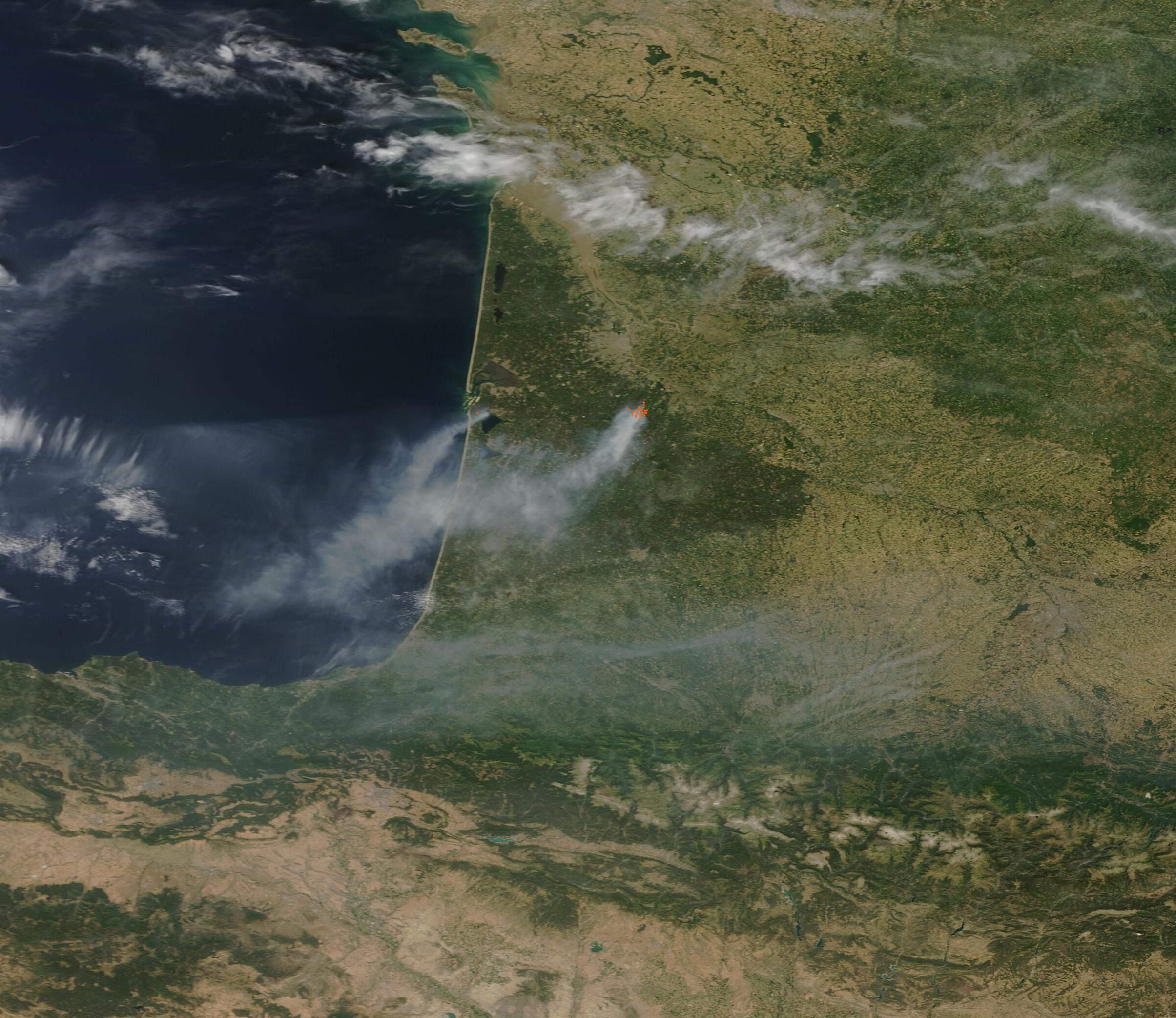
French authorities evacuated approximately 35,000 people [1] from the Cap Ferret peninsula in southwestern France on Thursday after uncontrolled forest fires swept through the region.
The scale of the evacuation and the rapid spread of the flames highlight the increasing vulnerability of coastal regions to extreme weather. A prolonged heat wave has left the landscape susceptible to fast-moving fires that outpace traditional containment efforts.
The fires burned roughly 10,000 hectares of land [2], according to reports. The blaze moved through the coastal region, forcing thousands of residents and visitors to flee their homes and hotels as the perimeter expanded.
Damage to infrastructure has been significant. The French interior minister said that 80 homes were damaged, including 50 that were completely destroyed [3].
Emergency crews worked to contain the perimeter throughout Friday, July 23, 2026. The interior ministry coordinated the mass movement of people to ensure safety as the fires remained uncontrolled in several sectors.
Local officials have not yet released the total economic cost of the destruction, but the loss of 50 homes marks one of the more severe residential impacts of the current fire season. The interior minister said that the priority remains the safety of the remaining population and the prevention of further residential loss [3].
“35,000 people were evacuated from the Cap Ferret peninsula”
The rapid destruction of 10,000 hectares and the need to evacuate 35,000 people in a single coastal area demonstrate the compounding effect of prolonged heat waves on wildfire volatility. As these events become more frequent in southwestern France, the government may face increased pressure to reform land management and update evacuation infrastructure for high-density tourist zones like Cap Ferret.


