
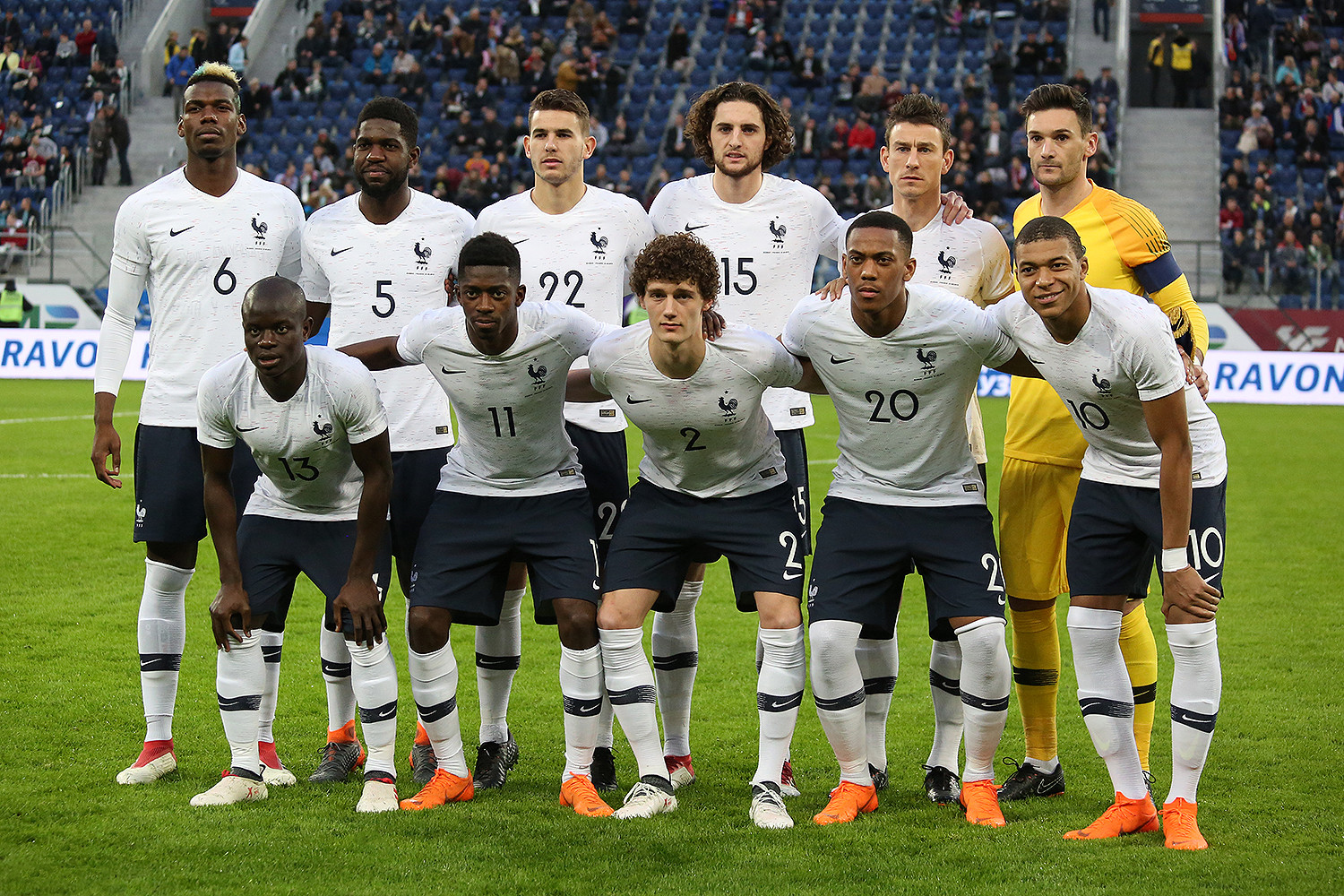
France's national football team arrived in Boston on Wednesday to begin preparations for the 2026 FIFA World Cup [1].
As a top contender in the tournament, the team's early arrival and acclimatization process are critical for maintaining peak performance during the expanded competition. The squad's presence in the city marks the start of a high-stakes campaign in a tournament hosted across the U.S., Canada, and Mexico [1, 2].
Led by coach Didier Deschamps, the 26-man squad [1] checked into the Four Seasons hotel upon arrival. Hundreds of fans gathered to greet the players as they landed in Massachusetts [3]. The team has since moved into a training phase at Bentley University to prepare for the physical demands of the competition [1].
Kylian Mbappé reflected on the experience of the tournament's scale, saying, "It was life‑changing honestly" [3].
The 2026 event represents a significant expansion for the sport. The tournament will feature 48 national teams [2], a substantial increase from previous editions. This larger field means a more grueling schedule, with 104 matches played over 39 days [2].
Boston serves as a primary hub for the early stages of the event. The opening match of the 2026 World Cup is scheduled to be played in the city on June 25, 2026 [2]. France's decision to establish their base in Boston allows them to synchronize their training with the local environment before the opening whistle sounds.
“The tournament will feature 48 national teams.”
The arrival of a powerhouse like France in Boston underscores the logistical complexity of the 2026 World Cup. With the tournament expanding to 48 teams and over 100 matches, the emphasis on early acclimatization and specialized training bases, such as the partnership with Bentley University, highlights how national teams are adapting their sports science and recovery strategies to handle a longer, more demanding schedule across three different countries.


