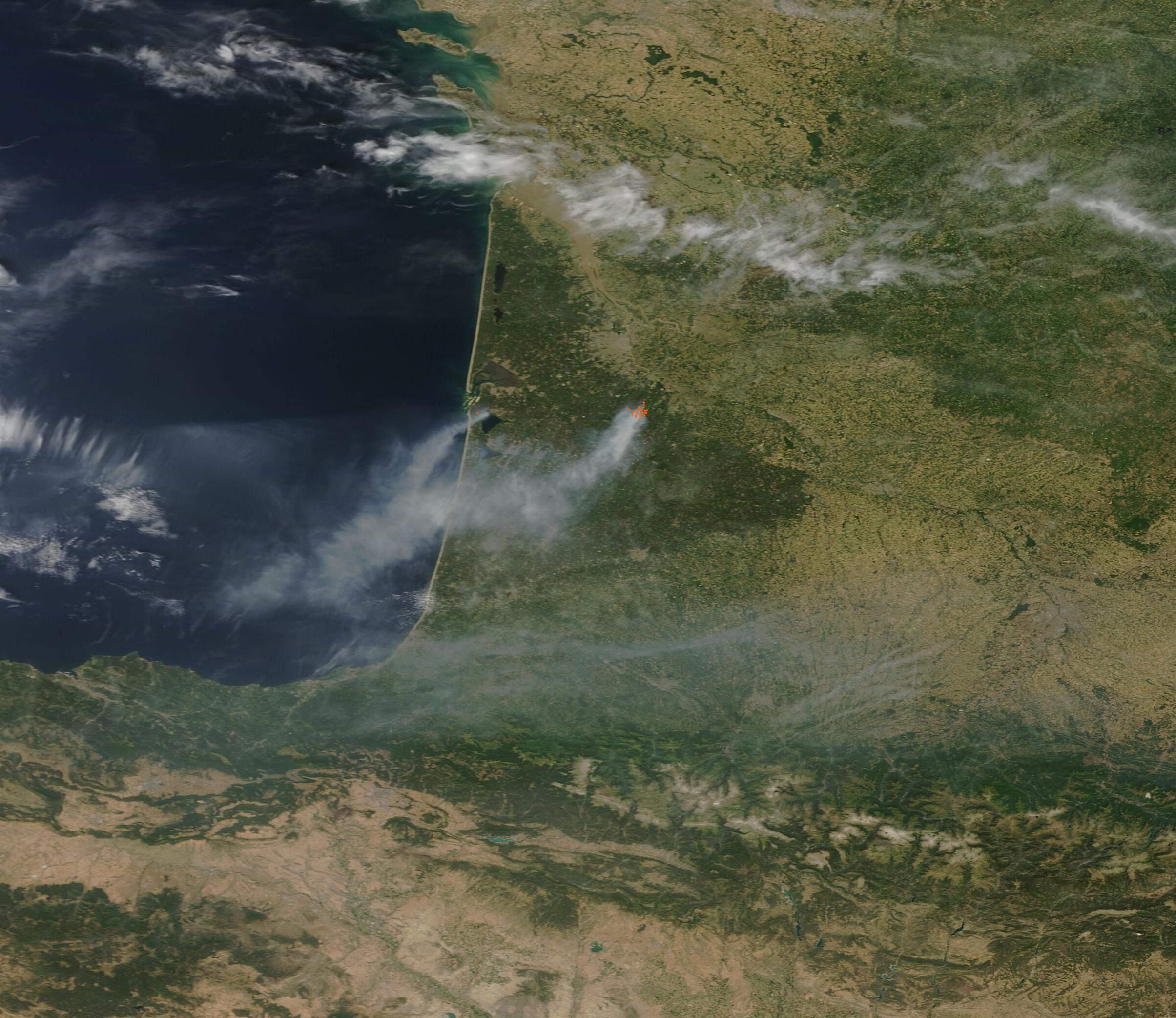
A massive wildfire in southwest France has generated its own weather system as it advances toward the city of Bordeaux.
The scale of the blaze represents a critical threat to urban infrastructure and civilian safety. Because the fire is creating its own atmospheric conditions, traditional containment strategies are becoming less effective against the unpredictable movement of the flames.
Emergency responders worked throughout the night on Sunday, July 25, 2026, to manage the crisis in the Gironde region. Authorities said the evacuation of 55,000 people [2] was ordered during the overnight period. This latest wave of displacements brings the total number of people forced from their homes in the region to 220,000 [2].
Extreme heat and strong winds have driven the fire's progression. The intensity of the combustion has allowed the blaze to create a localized weather system, a phenomenon often associated with the largest and most volatile wildfires.
The impact of the current fire season extends across borders. Combined totals for burned areas in France and Spain have now exceeded 200,000 hectares [1].
Firefighters continue to battle the perimeter of the blaze to prevent it from reaching the outskirts of Bordeaux. The combination of dry terrain and high winds has created a volatile environment for ground crews and aerial support teams.
“The fire is creating its own weather system as it advances toward the city of Bordeaux.”
The development of a fire-induced weather system indicates a high-intensity event where the heat release is sufficient to alter local atmospheric pressure and wind patterns. This often leads to erratic fire behavior and 'pyrocumulus' clouds, making it significantly more dangerous for firefighters and increasing the likelihood of rapid, unpredictable jumps in the fire line.


