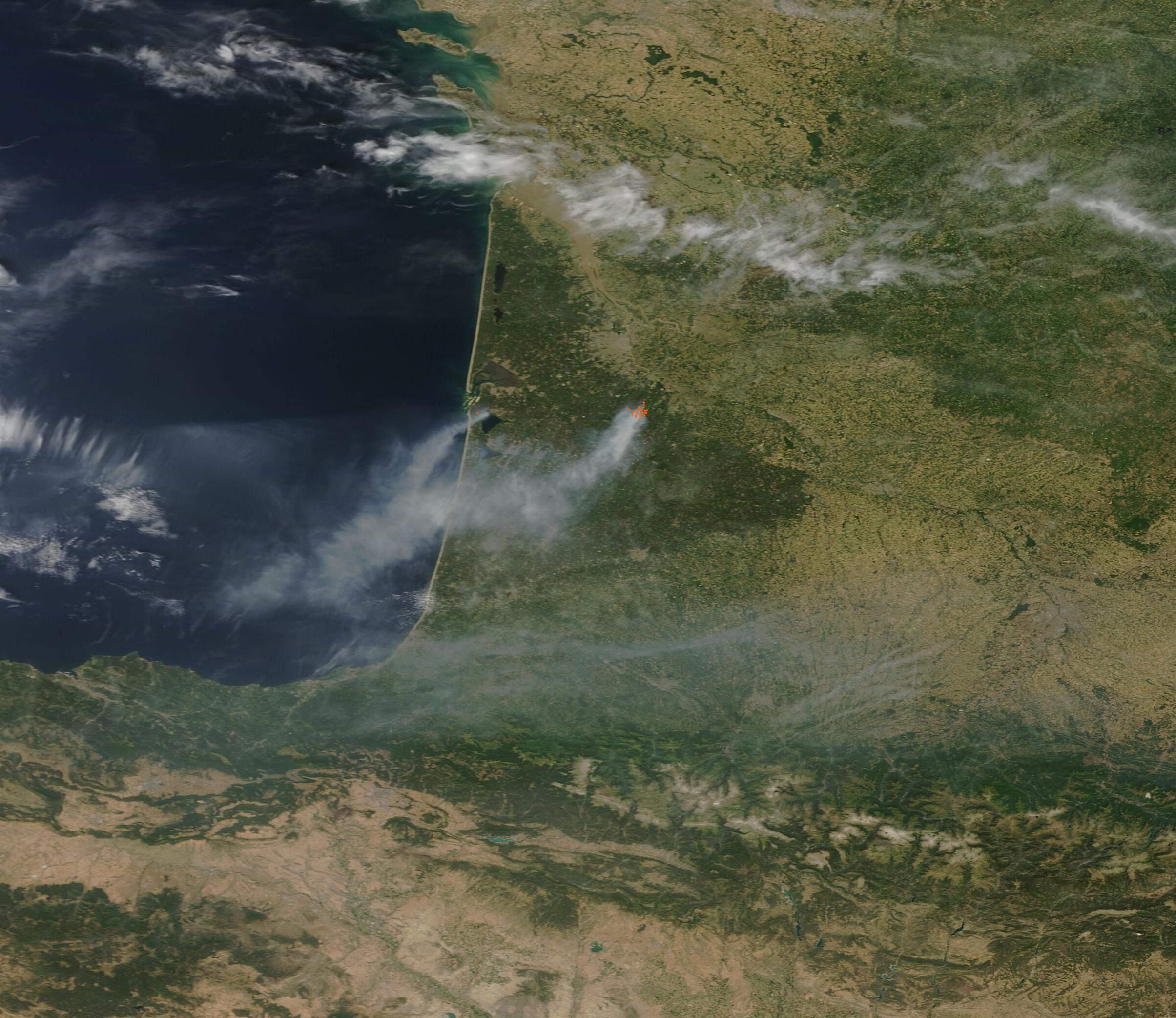
French authorities ordered nearly 4,000 additional people to evacuate tourist sites along the Atlantic coast on Tuesday [1], [2].
The emergency measures come as extreme weather threatens to push a massive wildfire toward densely populated vacation areas. The rapid spread of the blaze underscores the increasing volatility of summer fire seasons in Southwest Europe, where heatwaves and wind are complicating containment efforts.
The evacuations focused on tourist resorts within the Gironde department near Bordeaux [1], [3]. Officials issued the orders because soaring temperatures and strong winds were expected to worsen the Gironde wildfire [1], [2], [3]. Fire crews continue to battle the flames as the weather creates a high-risk environment for further expansion.
This latest surge in evacuations is part of a broader regional crisis. Total numbers of people displaced or forced to flee their homes across France and Spain vary by report, ranging from more than 250,000 [4] to roughly 330,000 [1]. Other reports indicate about one-third of a million people have been displaced across Southwest Europe [2].
The Gironde fire is among the most critical in the region, forcing a massive mobilization of resources to protect coastal infrastructure. Local authorities have prioritized the removal of visitors from resorts to prevent casualties as the fire's perimeter shifts with the wind.
Emergency responders are monitoring wind patterns closely to determine if further evacuation zones are required. The coordination between French and Spanish authorities remains active as both nations deal with simultaneous outbreaks of wildfires fueled by the current heatwave.
“French authorities ordered nearly 4,000 additional people to evacuate tourist sites along the Atlantic coast”
The scale of displacement in Southwest Europe—reaching up to 333,000 people—indicates a systemic struggle to manage wildfires during peak tourism months. The reliance on mass evacuations in the Gironde department suggests that traditional containment lines are insufficient against the combined effect of extreme heat and high winds, shifting the strategy from fire suppression to urgent population relocation.