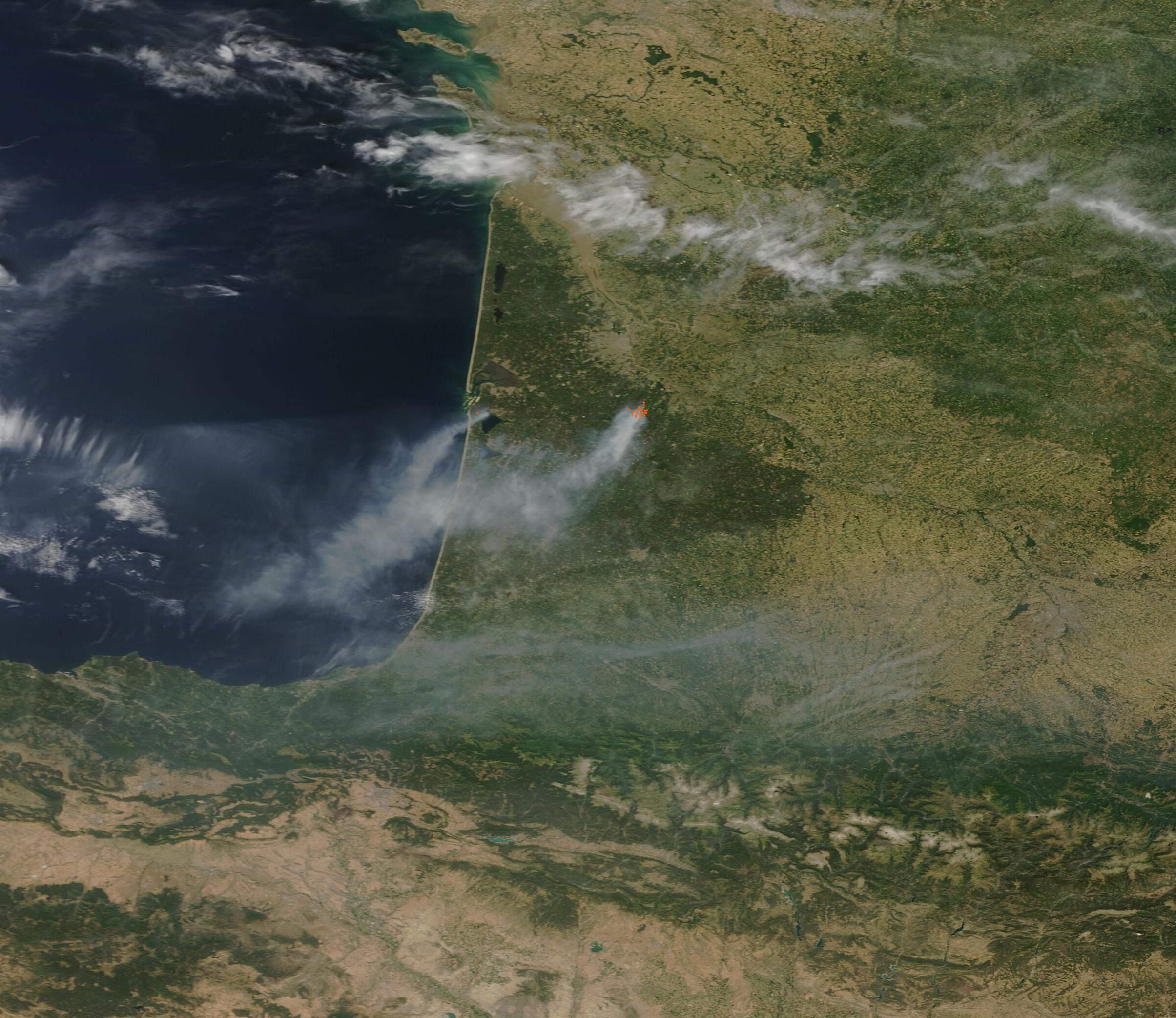
A massive wildfire in the Gironde department of southwest France was reported as stable following a second calm night [2].
The stabilization provides a brief respite for emergency crews, but the region remains under extreme threat from a fourth consecutive heatwave. Prolonged high temperatures have dried out vegetation, creating a volatile environment where a single spark can trigger rapid fire spread.
Officials from the Gironde prefecture said the second calm night [2] was a critical window for containment efforts. However, meteorologists said temperatures are expected to climb above 40 °C [1] in the affected area. This heat threatens to undo the progress made by firefighters and may lead to renewed flare-ups in unstable sectors.
France 24 reporters joined firefighters on the ground to identify the areas most at risk. The teams are monitoring the fire's perimeter to prevent the blaze from jumping containment lines, a task made more difficult by the oppressive heat.
The scale of the disaster has been significant, with reports indicating that 220,000 people were evacuated from their homes [3]. While the main fire front is currently stable, the combination of low humidity and extreme heat continues to challenge the response effort.
Some meteorological reports indicate the wildfire created a massive cloud that produced lightning, which in turn ignited secondary fires. These spot fires complicate the mission for ground crews who must now balance the containment of the primary blaze with the suppression of new, smaller ignitions across the region.
“Temperatures are expected to climb above 40 °C in the affected area”
The intersection of a fourth heatwave and massive wildfires in Gironde highlights the increasing vulnerability of southwest France to extreme climate events. The reported evacuation of 220,000 people suggests a scale of displacement that tests regional infrastructure and emergency management capabilities, while the potential for lightning-spawned secondary fires indicates a feedback loop where the fire creates its own weather system, making traditional containment strategies less effective.


