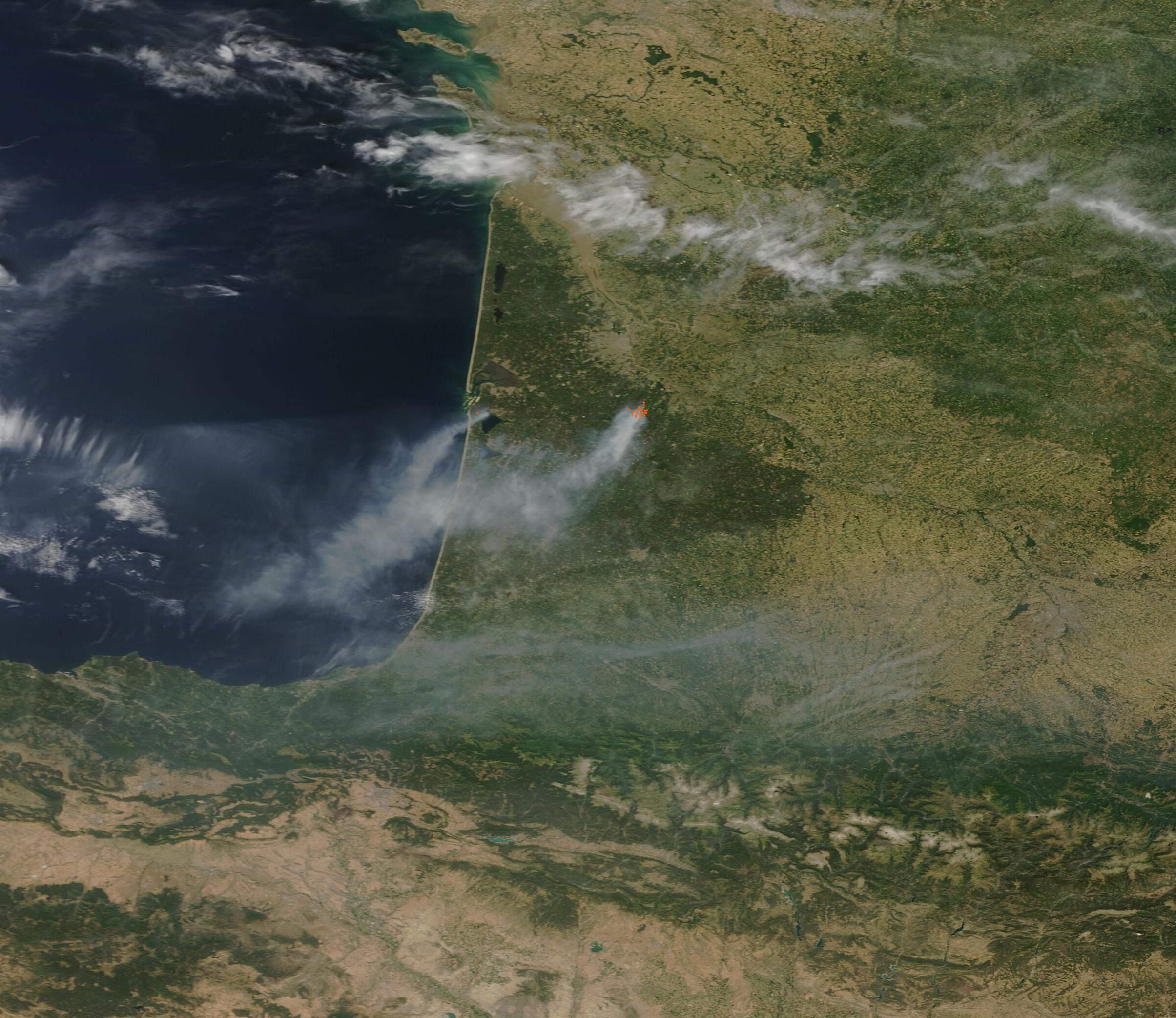
French authorities evacuated around 23,000 residents and visitors in the Landes region after a vehicle fire ignited a massive forest blaze [1].
The scale of the evacuation and the speed of the fire's spread highlight the extreme vulnerability of southwestern France's forested regions during the summer heat.
The wildfire began on Thursday, July 23, 2026 [1]. It quickly expanded across the Landes department, specifically impacting the communes of Biscarrosse and Parentis-en-Born [1]. Prefect Gilles Clavreul said that more than 23,000 people were evacuated in total as the flames advanced [4].
Emergency crews have struggled to contain the perimeter. The fire consumed approximately 2,600 hectares of forest [1], though some reports place the burned area closer to 2,500 hectares [11]. The blaze also damaged about 100 buildings [1].
"L'incendie en cours près de la ville de Biscarrosse n'est pas sous contrôle," authorities said in a report regarding the status of the fire front [5].
Local officials identified the cause of the disaster as a vehicle that caught fire, which subsequently ignited the surrounding dry vegetation [1]. The mass evacuations reached their peak on Friday morning, July 24, 2026, as the fire's progression remained volatile [2].
While the primary focus remained on the Landes region, other reports indicated broader instability in the area. One update noted 18,000 evacuations at Biscarrosse and 35,000 in the neighboring Gironde [6]. However, the official count for the Landes total provided by the Prefect remains the primary benchmark for the local crisis [4].
Prefect Clavreul said, "Plus de 23,000 personnes ont été évacuées au total dans les Landes" [4].
“More than 23,000 people were evacuated in total in the Landes.”
This event underscores the increasing risk of 'megafires' in France, where a single accidental ignition—such as a vehicle fire—can rapidly escalate into a regional catastrophe. The displacement of tens of thousands of people in a short window demonstrates the critical pressure on emergency evacuation infrastructure during peak tourist seasons in the Landes region.


