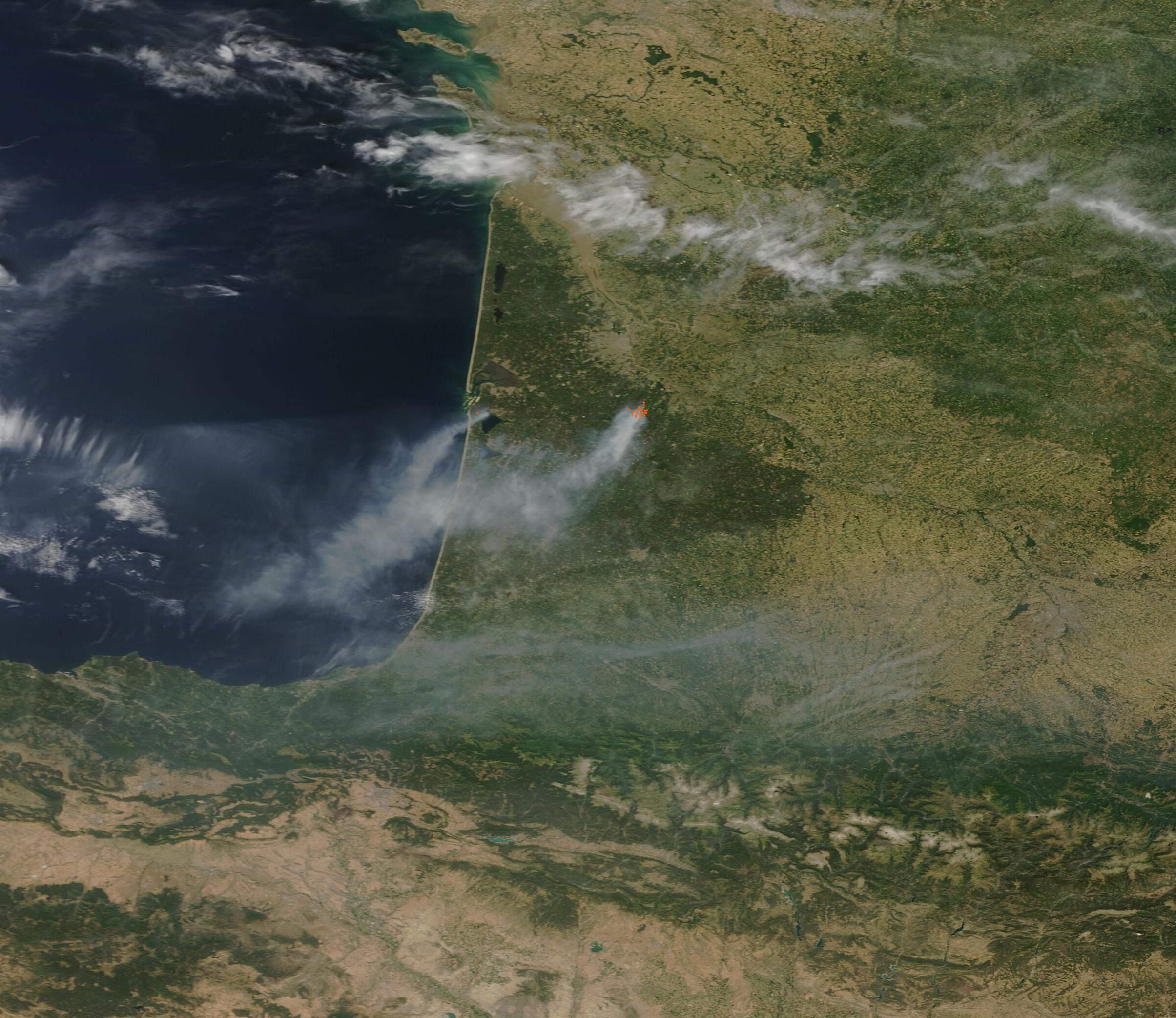
French authorities ordered a mass evacuation of the Lège-Cap-Ferret peninsula on Friday after a large wildfire engulfed several homes [1].
The scale of the displacement highlights the vulnerability of coastal residential areas to rapid-onset wildfires during the peak summer season. Because the peninsula is geographically constrained, the fire created a critical bottleneck for those attempting to flee the Atlantic coast.
The rapidly spreading blaze threatened residential areas and forced officials to prioritize the protection of human life. While some residents used roads, scores of people escaped the encroaching flames by boat [1].
Reports on the total number of evacuees vary. The BBC said that tens of thousands of people were evacuated [2], while other reports cited approximately 10,000 people [3]. This discrepancy reflects the chaotic nature of the evacuation as both permanent residents and seasonal tourists were caught in the path of the fire.
The Lège-Cap-Ferret peninsula, located in southwestern France, is a high-density area for tourism during July. The fire's ability to destroy multiple homes quickly prompted the urgent government response to clear the region.
Emergency services worked to contain the perimeter as the fire moved through the brush and residential structures. Authorities said they have not yet released a final tally of the property damage or the exact cause of the ignition.
“French authorities ordered a mass evacuation of the Lège-Cap-Ferret peninsula”
The evacuation of the Lège-Cap-Ferret peninsula underscores the increasing risk of 'wildland-urban interface' fires in Europe. When high-density tourist populations overlap with flammable coastal vegetation, traditional land-based evacuation routes can become insufficient, necessitating the use of maritime escapes to prevent mass casualties.


