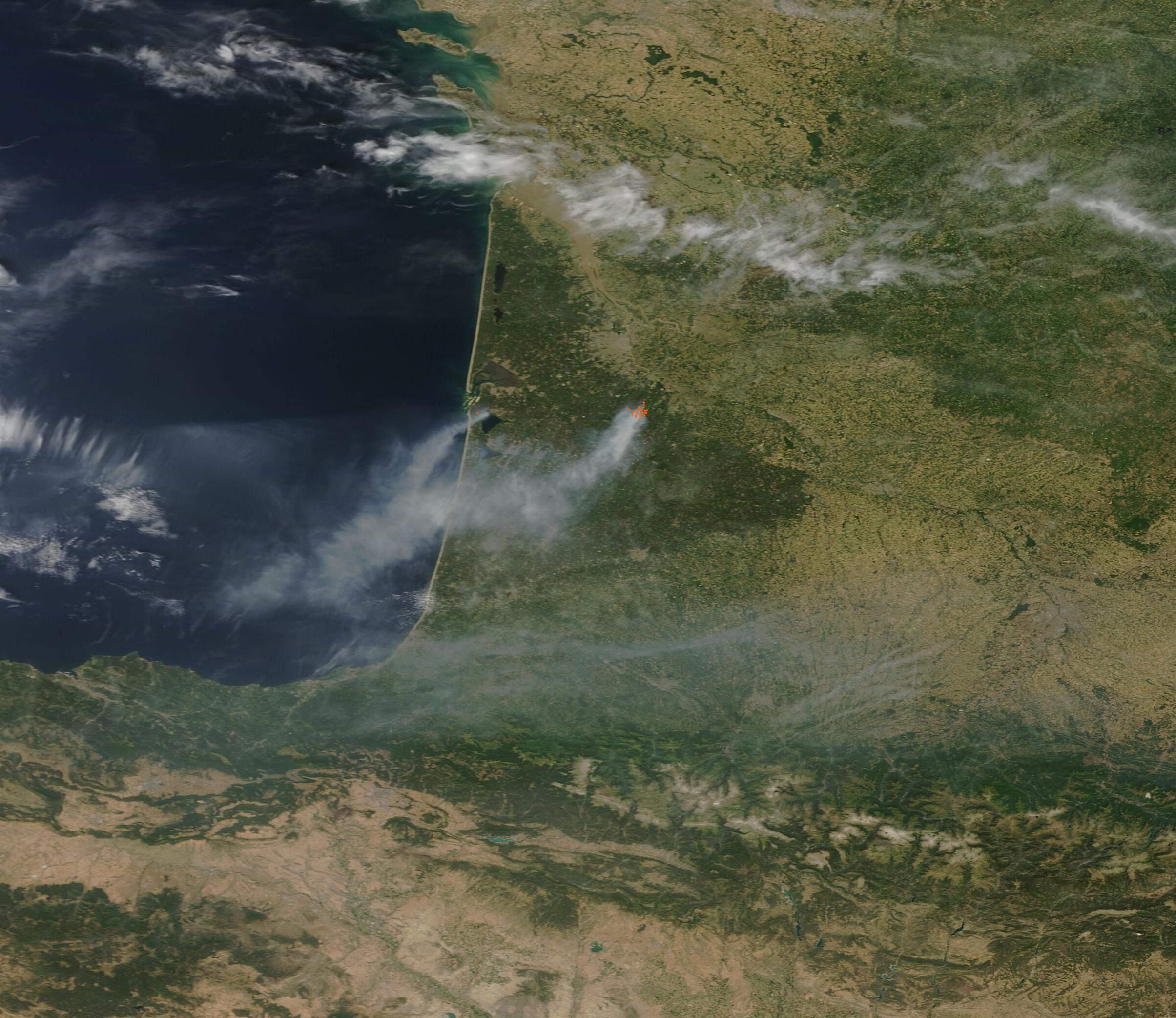
Intense wildfires in the villages of Lège-Cap-Ferret have forced more than 20,000 people to evacuate their homes [1].
The scale of the displacement and the rapid spread of the flames highlight the increasing vulnerability of France's Atlantic coast to extreme weather conditions. These fires threaten not only residential areas but also the critical ecological balance of the region's forests.
French authorities said the fires have burned at least 4,800 hectares of forest [2]. The blazes occurred earlier this week, fueled by a combination of dry conditions and strong winds that allowed the fire to move quickly through the vegetation [1].
Emergency responders have focused their efforts on the villages of Lège-Cap-Ferret, located on the Atlantic coast of southwestern France [1]. Residents were moved from their homes as the flames advanced toward populated areas, a necessary measure to prevent loss of life as the fire perimeter expanded.
Officials said the rapid spread was exacerbated by the environmental conditions. The combination of low humidity and high wind speeds created a volatile environment where containment became difficult for firefighting crews [1].
Local residents have faced sudden displacement as the fires consumed the surrounding landscape. The evacuation of more than 20,000 people [1] represents a significant logistical challenge for regional authorities, requiring the coordination of multiple emergency services to ensure public safety.
“More than 20,000 people were forced to evacuate their homes.”
The scale of the Lège-Cap-Ferret fires underscores a growing trend of volatile wildfire seasons in Europe. As dry conditions and high winds become more frequent, the intersection of dense forests and residential coastal villages creates a high-risk zone that requires updated urban planning and more aggressive forest management strategies to prevent large-scale displacements.


