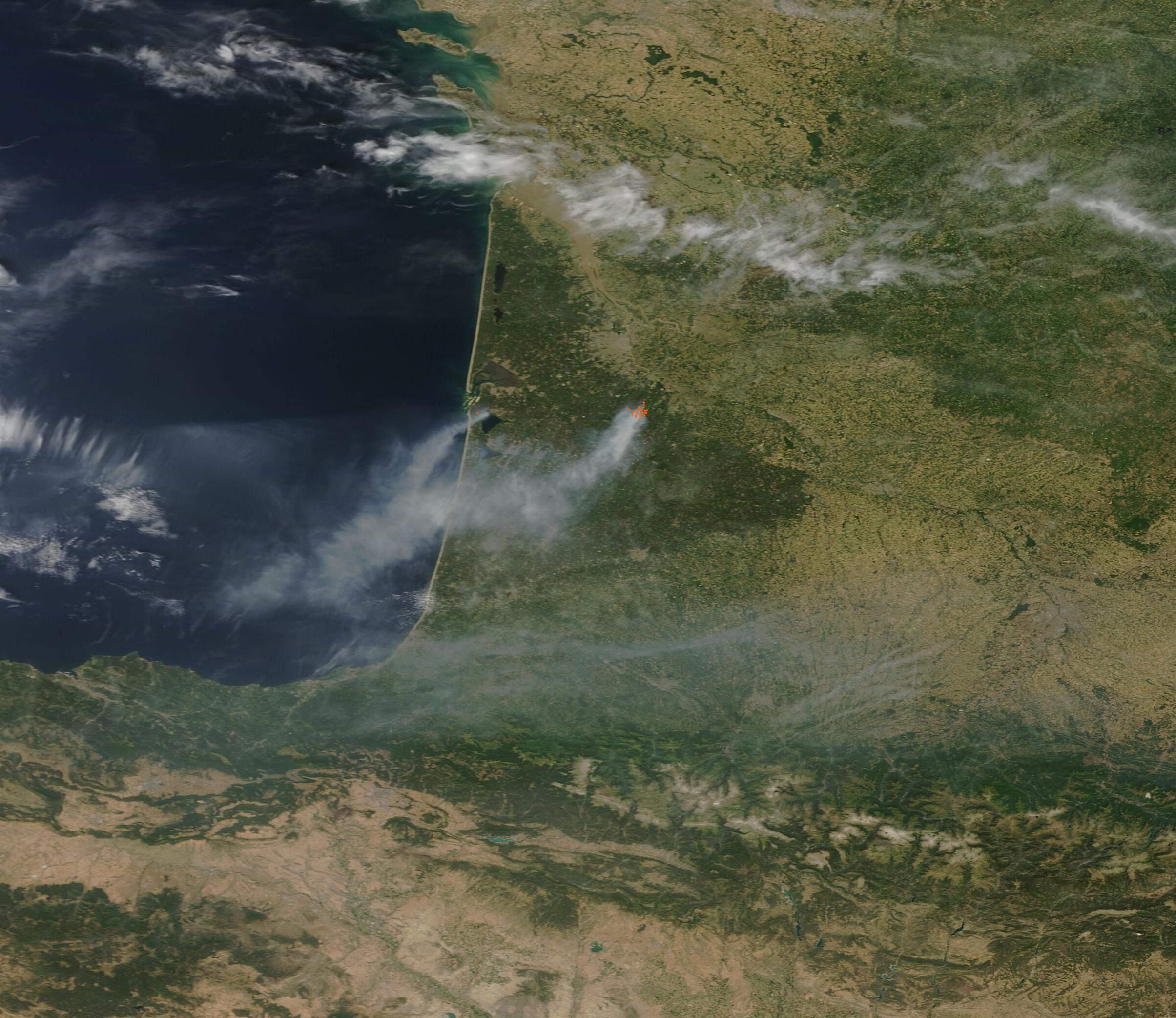
French Interior Minister Laurent Nunez announced the mobilization of military and internal security forces to fight unprecedented wildfires in the Gironde department [1, 2].
The deployment signals the severity of the crisis as flames move toward the city of Bordeaux, threatening critical infrastructure and residential areas in southwestern France [2, 4].
Nunez said there was an "absolute, imperative necessity" to requisition military forces to protect citizens and property [1, 2]. President Emmanuel Macron said that the armed forces must mobilize to provide maximum reinforcement to civil security [6].
The scale of the disaster has put immense pressure on local emergency services. Reports on the total area burned vary, with estimates ranging from 14,000 [4] to 19,000 hectares [5]. At least 100 houses have been destroyed [4].
Evacuation orders have been issued for several villages, including those on the Cap Ferret peninsula [3]. The number of displaced residents is also subject to conflicting reports, with figures cited between 40,000 [7] and 110,000 people [4].
To support the effort, the government has dispatched 1.5 million FFP2 masks to the region [2]. Additionally, 500 military personnel have been sent to Gironde [2], while other reports indicate a total of 1,000 soldiers will be on-site by Saturday to support firefighters [3].
The toll on first responders has been significant, with 42 firefighters reported injured during the operations [2].
Nunez said that the current situation is unprecedented, necessitating the use of the military to prevent further loss of life and property [1, 2].
“« nécessité absolue, impérative de faire appel à des réquisitions militaires »”
The decision to requisition the military for domestic wildfire suppression highlights a gap in France's civilian emergency capacity when facing extreme climate events. The discrepancy in evacuation and acreage data suggests a chaotic operational environment where the speed of the fire is outpacing real-time reporting. This mobilization serves as a critical stopgap to prevent the fires from reaching the urban center of Bordeaux.


