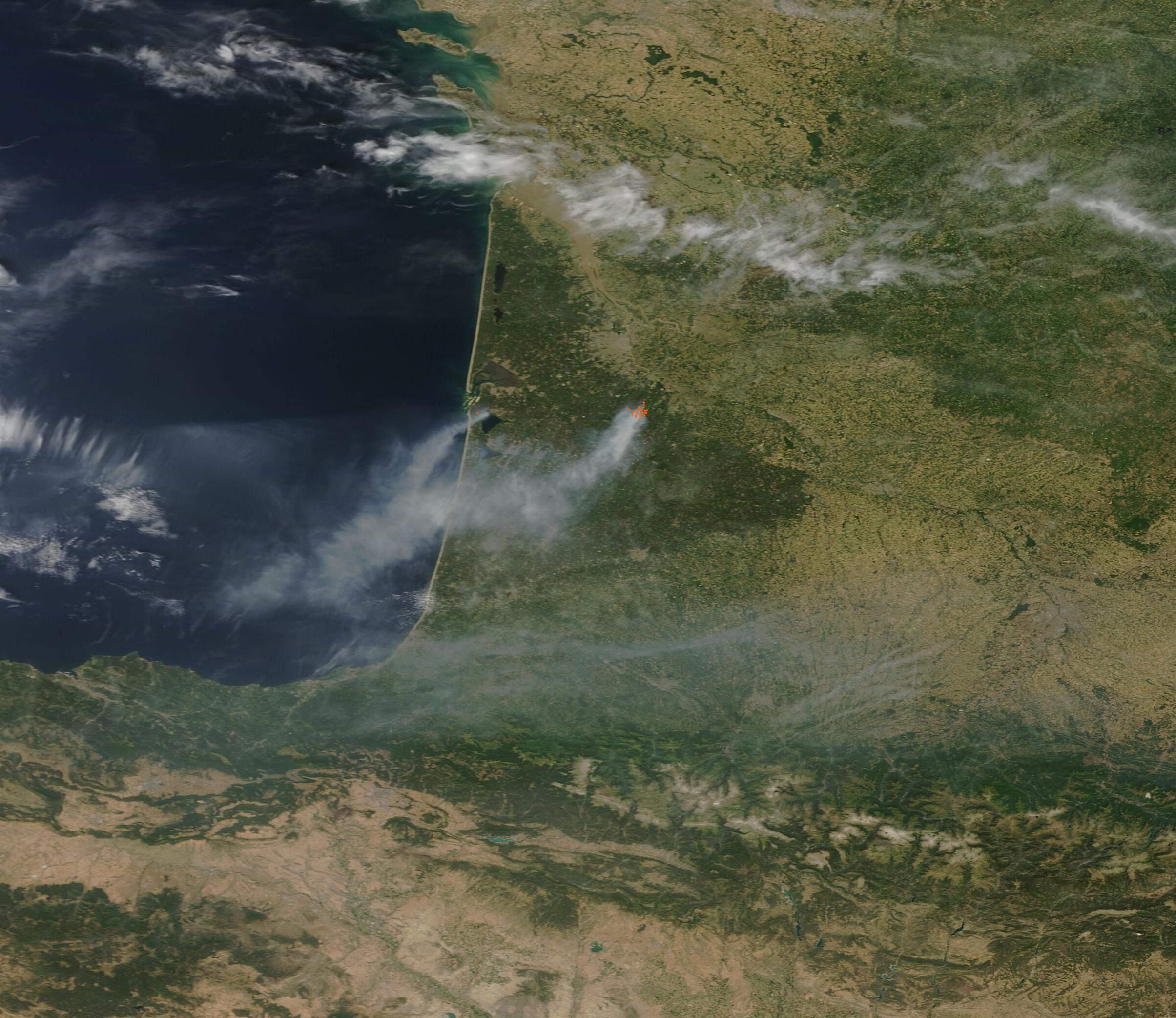
Thousands of residents and tourists evacuated southwestern France on Thursday as a fast-moving wildfire tore through a pine forest near Arcachon Bay [1].
The scale of the evacuation and the speed of the fire highlight the increasing vulnerability of coastal tourist regions to extreme heat and wind during the summer season.
The blaze broke out overnight into Thursday, July 23, 2026, impacting the Cap Ferret peninsula and the area of Le Porge near Bordeaux [1, 2, 3]. Driven by high temperatures and strong winds, the fire spread rapidly through the dense pine forest, producing flames that reached 10 meters in height [1, 4].
Reports on the number of evacuees vary. Some sources said about 20,000 people were forced to leave their homes and hotels [2, 4], while other reports said the number was just under 12,000 [3].
Firefighters worked to contain the perimeter as the blaze consumed 3,400 hectares, or approximately 8,400 acres, of land [1]. The region is a popular summer destination, meaning the evacuation coincided with a peak period for international and domestic tourism.
While crews battled the Arcachon Bay fire, the tragedy of the season was compounded by reports from a separate nearby fire. Two firefighters died while battling that distinct blaze [1].
Local authorities coordinated the mass exit from the Cap Ferret peninsula, where the geography can complicate evacuation efforts during emergencies. Emergency services continued to monitor the wind patterns to prevent the fire from jumping containment lines and threatening further populated areas [1, 3].
“Thousands of residents and tourists evacuated southwestern France”
The volatility of this fire, characterized by 10-meter flames and a massive evacuation effort, underscores the growing risk of 'megafires' in Southern Europe. The discrepancy in evacuation numbers—ranging from 12,000 to 20,000—suggests the chaotic nature of the displacement in a high-density tourist zone. With two firefighters killed in a separate nearby incident, the event emphasizes the extreme danger facing first responders as climate-driven weather patterns make wildfires more frequent and aggressive.

'%2F%3E%0A%20%20%20%20%3Crect%20width%3D'1600'%20height%3D'900'%20fill%3D'url(%23v)'%2F%3E%0A%20%20%20%20%3Cg%20opacity%3D'0.08'%20fill%3D'%23ffffff'%3E%0A%20%20%20%20%20%20%3Ccircle%20cx%3D'1420'%20cy%3D'180'%20r%3D'220'%2F%3E%0A%20%20%20%20%20%20%3Ccircle%20cx%3D'1500'%20cy%3D'760'%20r%3D'120'%2F%3E%0A%20%20%20%20%3C%2Fg%3E%0A%20%20%20%20%3Cline%20x1%3D'80'%20y1%3D'172'%20x2%3D'220'%20y2%3D'172'%20stroke%3D'%23ffffff'%20stroke-width%3D'3'%20stroke-opacity%3D'0.6'%2F%3E%0A%20%20%20%20%3Ctext%20x%3D'80'%20y%3D'140'%20font-family%3D'Inter%2C%20-apple-system%2C%20Helvetica%2C%20sans-serif'%20font-weight%3D'700'%20font-size%3D'28'%20fill%3D'%23ffffff'%20letter-spacing%3D'6'%3EHANNA%20%C2%B7%20NEWS%3C%2Ftext%3E%0A%20%20%20%20%3Ctext%20x%3D'80'%20y%3D'230'%20font-family%3D'Inter%2C%20-apple-system%2C%20Helvetica%2C%20sans-serif'%20font-weight%3D'600'%20font-size%3D'40'%20fill%3D'%23ffffffb3'%20letter-spacing%3D'4'%3EWORLD%3C%2Ftext%3E%0A%20%20%20%20%3Ctext%20x%3D'80'%20y%3D'622'%20font-family%3D'Playfair%20Display%2C%20Georgia%2C%20serif'%20font-weight%3D'800'%20font-size%3D'86'%20fill%3D'%23ffffff'%20letter-spacing%3D'-1'%3ESonam%20Wangchuk%20Ends%2026-Day%3C%2Ftext%3E%3Ctext%20x%3D'80'%20y%3D'721'%20font-family%3D'Playfair%20Display%2C%20Georgia%2C%20serif'%20font-weight%3D'800'%20font-size%3D'86'%20fill%3D'%23ffffff'%20letter-spacing%3D'-1'%3EHunger%20Strike%20After%3C%2Ftext%3E%3Ctext%20x%3D'80'%20y%3D'820'%20font-family%3D'Playfair%20Display%2C%20Georgia%2C%20serif'%20font-weight%3D'800'%20font-size%3D'86'%20fill%3D'%23ffffff'%20letter-spacing%3D'-1'%3EGovernment%20Assurances%3C%2Ftext%3E%0A%20%20%20%20%3Ctext%20x%3D'80'%20y%3D'870'%20font-family%3D'Inter%2C%20-apple-system%2C%20Helvetica%2C%20sans-serif'%20font-weight%3D'500'%20font-size%3D'22'%20fill%3D'%23ffffff66'%20letter-spacing%3D'2'%3Enews.hanna-ai.com%3C%2Ftext%3E%0A%20%20%3C%2Fsvg%3E)