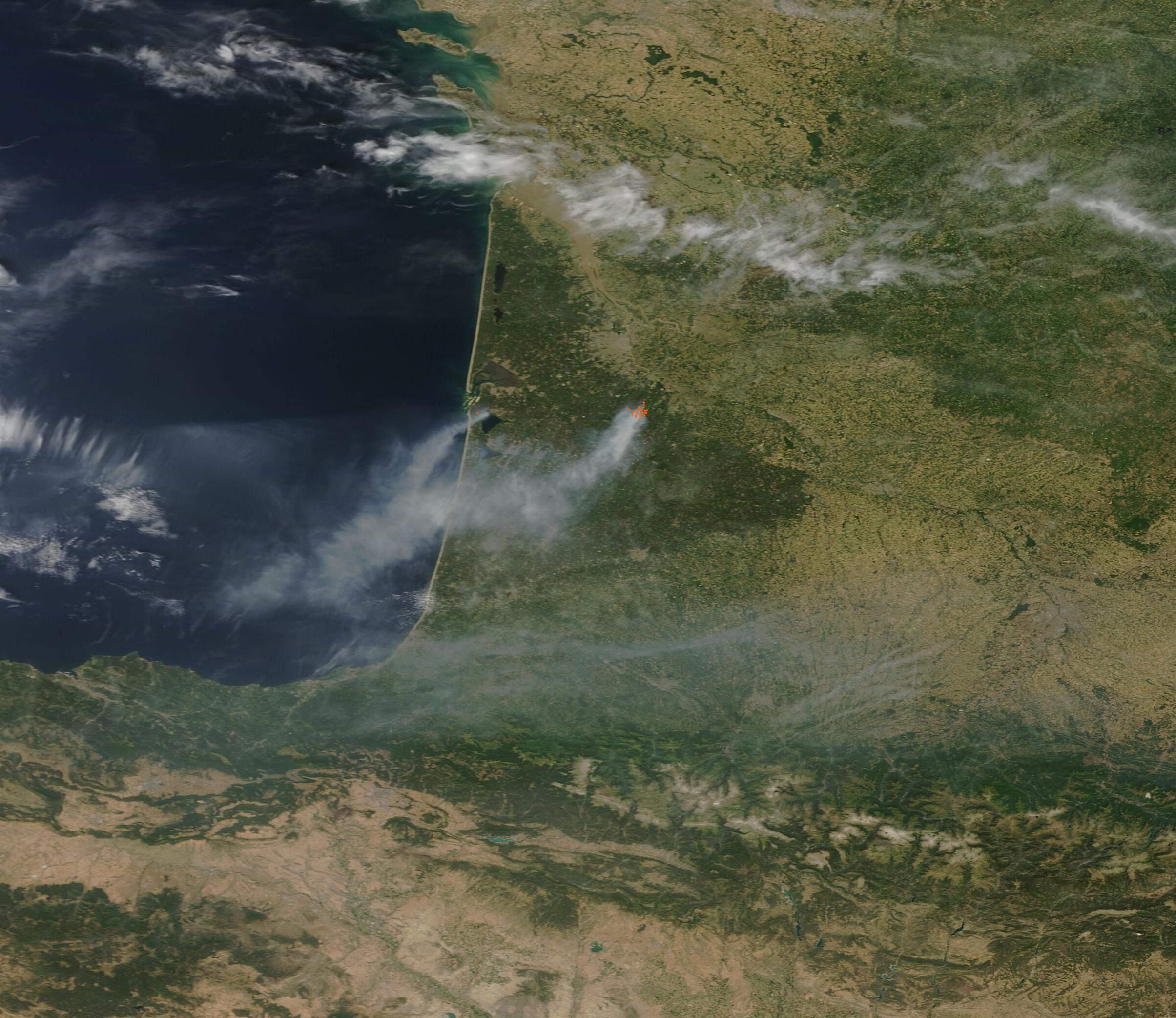
A rapidly spreading wildfire in southwest France forced the evacuation of 55,000 residents overnight on Sunday [1].
The scale of the displacement highlights the volatility of the region's current fire season and the immediate threat to densely populated areas near the city of Bordeaux.
Emergency services ordered the evacuation of six towns as the blaze moved toward residential zones [1]. Authorities said the measures were necessary for public safety as the fire continued to rage across the landscape [2].
The latest wave of evacuations has significantly increased the number of people forced from their homes. According to the Associated Press, 220,000 people in the region are now displaced [2]. However, The Globe and Mail reported the total number of people forced from their homes has reached 250,000 [4].
The fires are concentrated in the southwest of the country, specifically threatening the world-renowned wine region surrounding Bordeaux [3]. Local officials have focused efforts on preventing the flames from entering the city and protecting the surrounding vineyards.
Firefighters continue to battle the blaze under difficult conditions. The rapid spread of the fire has necessitated a massive logistical operation to move tens of thousands of people to safety in a short window of time [1].
While the exact number of displaced persons varies by source, the consensus among reporting agencies is that the crisis has reached a critical level. The displacement of over 200,000 people marks one of the most significant evacuation efforts in the region's recent history [2], [4].
“A rapidly spreading wildfire in southwest France forced the evacuation of 55,000 residents overnight on Sunday.”
The massive scale of these evacuations suggests a failure of containment and an escalation in fire intensity that threatens both civilian life and the economic engine of the Bordeaux wine region. The discrepancy in displacement numbers—ranging from 220,000 to 250,000—reflects the chaotic nature of the emergency response and the difficulty of tracking populations in real-time during a fast-moving disaster.


