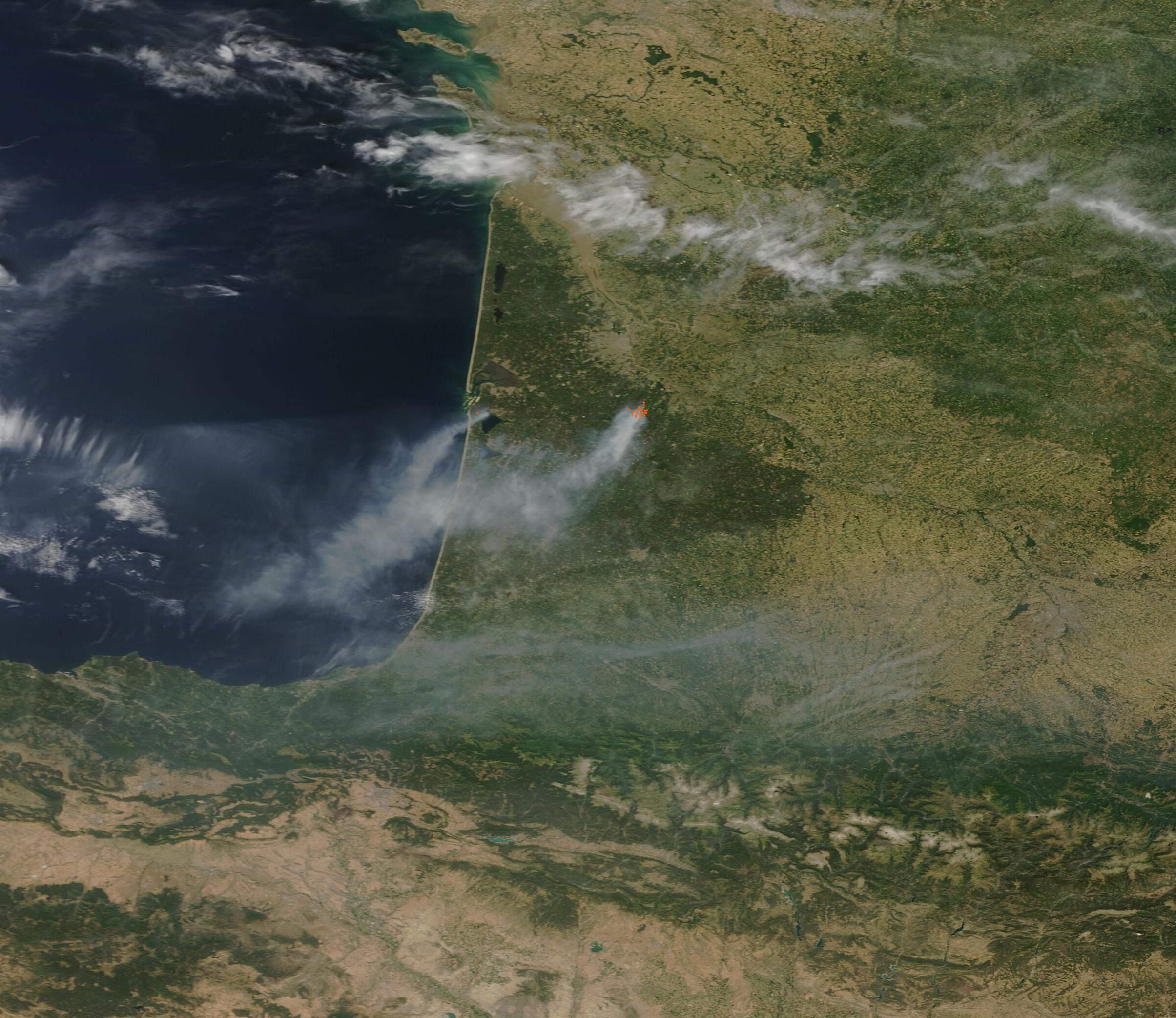
Wildfires in southwestern France have burned an area approximately four times the size of Paris [1].
The blazes threaten residential areas and critical infrastructure along the Atlantic coast. These fires occur amid a severe heat wave linked to climate-change-driven conditions, creating a high-risk environment for both civilians and emergency responders.
Emergency authorities and firefighters are currently operating in the Gironde and Landes departments west of Bordeaux [2]. The extreme weather has seen temperatures climb close to 40 °C [3], intensifying the volatility of the terrain. Due to the proximity of the flames to populated areas, nearly 4,000 people have been evacuated [4]. Broader regional disruptions have left more than 300,000 people displaced [5].
Reports on the current status of the fire are mixed. Firefighters said that the fire did not spread overnight [1], and some officials said that the weather was expected to be more favorable this week [1]. However, other reports suggest that returning heat continues to threaten the fragile hold emergency crews have on the blaze [6].
Local authorities continue to monitor the wind and humidity levels. While some crews report progress in containing the perimeter, other agencies said that the situation could worsen as the heat wave persists [7]. The Gironde and Landes regions remain under high alert as crews work to prevent the fire from leaping into new sectors of the coastal forests.
“Wildfires in southwestern France have burned an area approximately four times the size of Paris.”
The scale of these fires—affecting an area four times the size of Paris—highlights the increasing vulnerability of Southern Europe to 'mega-fires' during extreme heat events. The contradiction between reports of overnight stability and warnings of worsening conditions underscores the volatility of climate-driven wildfires, where a slight shift in temperature or wind can instantly undo containment progress.


