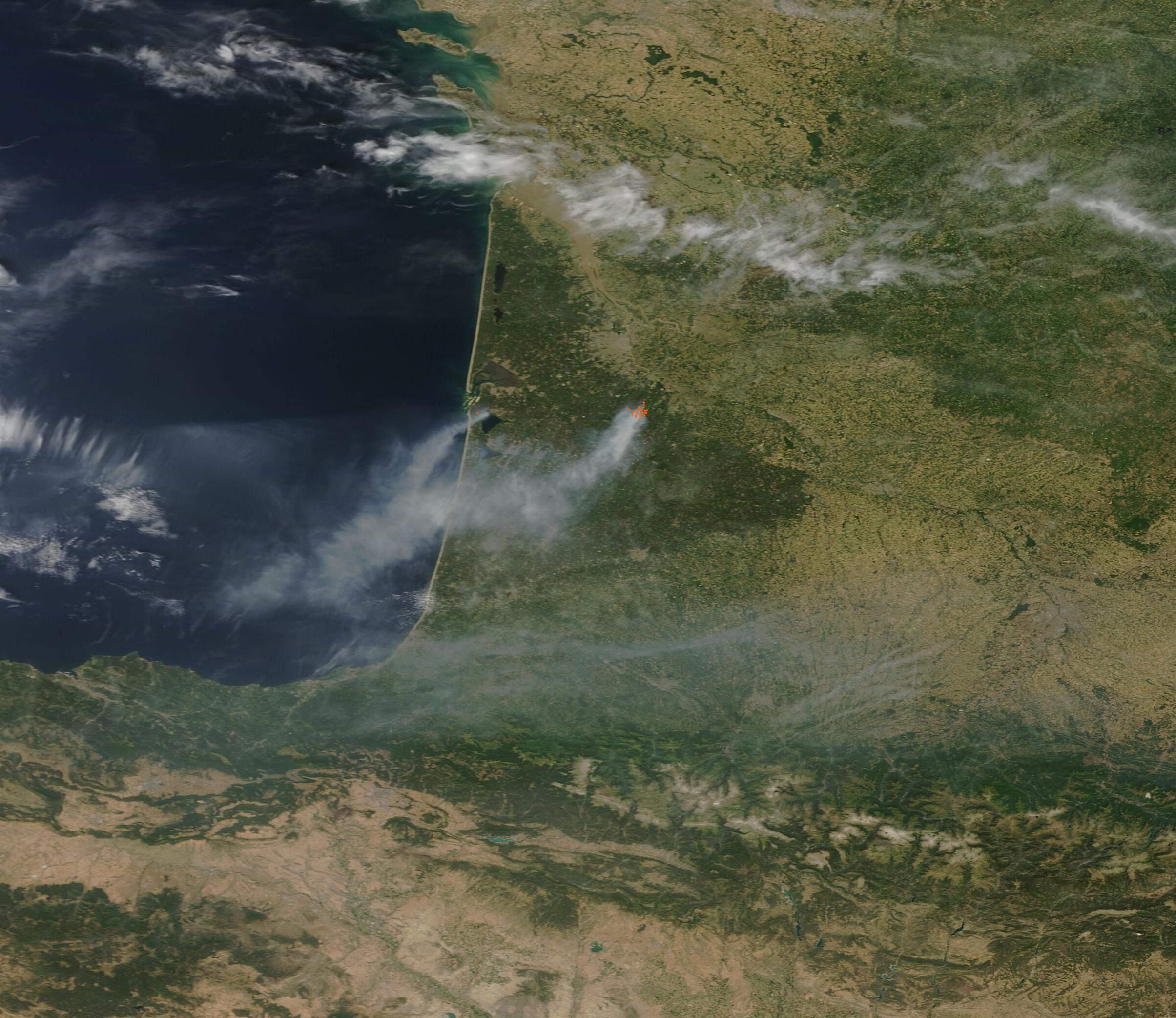
European Union authorities deployed water-bombing aircraft to assist French firefighters battling intense wildfires in the Gironde and Landes departments this month.
The scale of the destruction highlights the increasing vulnerability of southwestern France to extreme weather. Aerial footage has captured the extent of the damage, showing destroyed homes and vast tracts of burned forest.
Local authorities in the Landes department implemented orange vigilance for fire risk, which became effective at midnight on July 7 [2]. To mitigate the danger, officials established restrictions on certain activities between 2 p.m. and 10 p.m. in specific zones of the department [2]. These measures came as a severe heat wave gripped the region, with temperatures forecast to reach between 35 °C and 41 °C [3].
The heat wave's impact extended across the country, with 61 departments placed under orange heat-wave vigilance on July 7 [4]. The combination of extreme heat and dry conditions created a high-risk environment for forest fires, necessitating a coordinated international response.
To support local efforts, the EU authorized the deployment of three water-bombing aircraft to assist firefighters in the Gironde region [1]. These assets were dispatched through the European Civil Protection Mechanism, which allows member states to share resources during large-scale emergencies [1].
Firefighters and prefecture officials continue to manage the crisis as they work to contain the blazes and prevent further loss of property, and wildlife. The use of aerial assets remains critical for reaching remote areas of the forest where ground crews cannot easily operate.
“Aerial footage has captured the extent of the damage, showing destroyed homes and vast tracts of burned forest.”
The activation of the European Civil Protection Mechanism underscores a growing reliance on cross-border cooperation to manage climate-driven disasters. As heat waves push temperatures toward 41 °C in regions not traditionally equipped for such extremes, the integration of EU aerial resources becomes a primary strategy for preventing total ecological and residential loss in southwestern France.