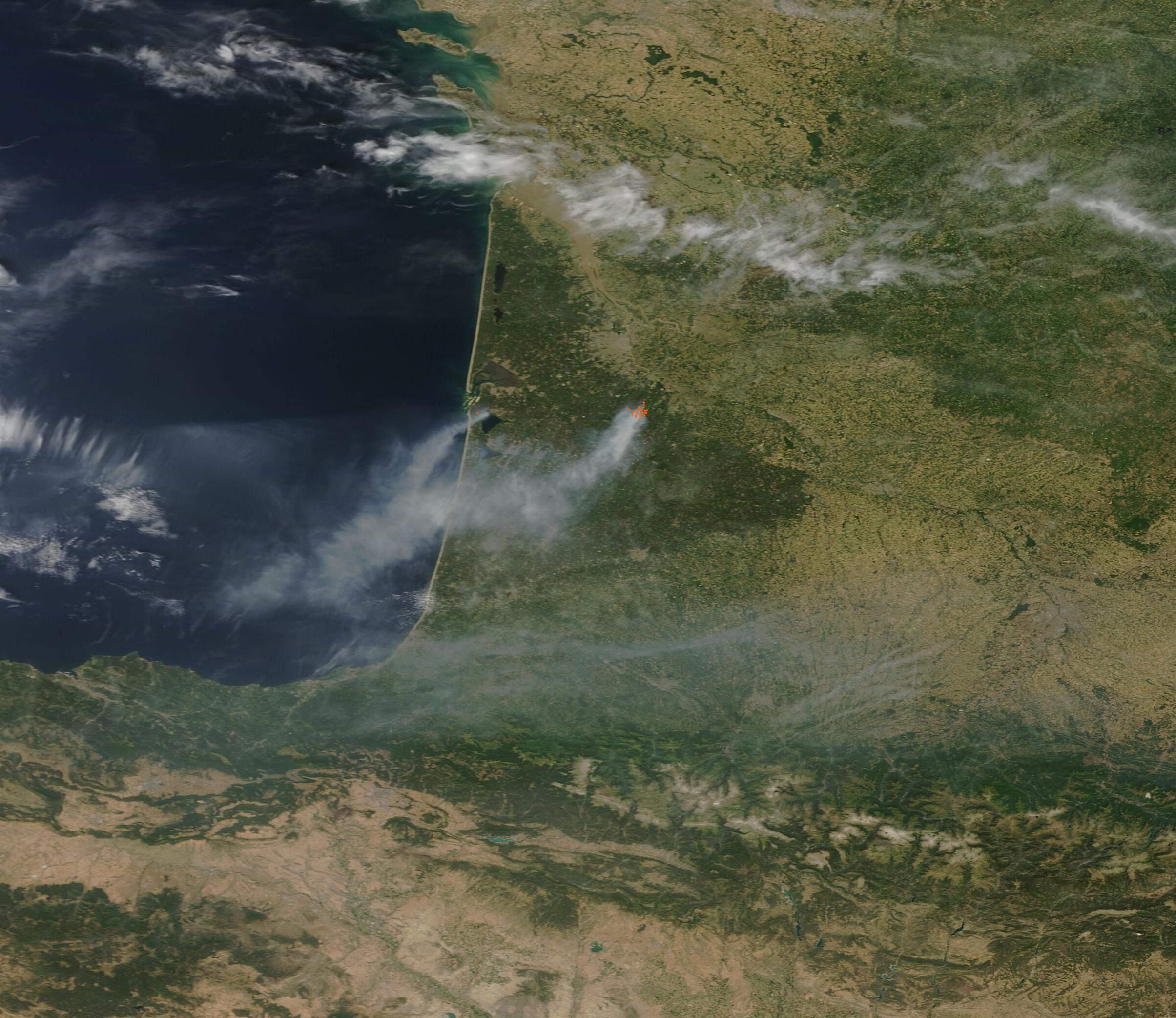
Firefighters in France and Spain are racing to contain massive forest fires on Tuesday before a new heat wave raises temperatures [1, 2].
These efforts are critical because extreme dryness and rising heat increase the risk of rapid fire spread, potentially trapping residents and overwhelming emergency resources in rural areas [3, 4].
The most severe activity is concentrated in the Gironde and Bordeaux areas of southwestern France [1, 5]. Emergency crews are working to secure these perimeters before a fourth heat wave arrives [3, 4]. This expected weather pattern is characterized by high temperatures and severe dryness, which officials said could reignite previously contained blazes [3, 4].
Evacuation efforts have been extensive across the affected regions. Some reports indicate that hundreds of thousands of people were evacuated [1], while other data specifies that approximately 3,000 people were evacuated from southern France [6]. The discrepancy in figures likely reflects the difference between total regional displacements and specific local evacuation orders in the south.
Crews in France and Spain continue to coordinate their response to prevent the fires from crossing borders or reaching densely populated urban centers [1, 2]. The urgency is heightened by the current environmental conditions, specifically the lack of moisture in the soil and vegetation, which turn forests into volatile fuel sources [3, 4].
Local authorities have remained on high alert as they monitor the movement of the heat wave. The race against time is now the primary focus for firefighters who must create firebreaks and extinguish hotspots before the temperature spikes again [1, 2].
“Firefighters in France and Spain are racing to contain massive forest fires.”
The convergence of a fourth consecutive heat wave and extreme dryness creates a feedback loop that complicates firefighting efforts. When vegetation is severely dehydrated, fires ignite more easily and spread faster, making containment nearly impossible once a new temperature spike occurs. This pattern suggests that traditional firefighting may be insufficient without long-term land management and climate adaptation strategies in the Mediterranean basin.