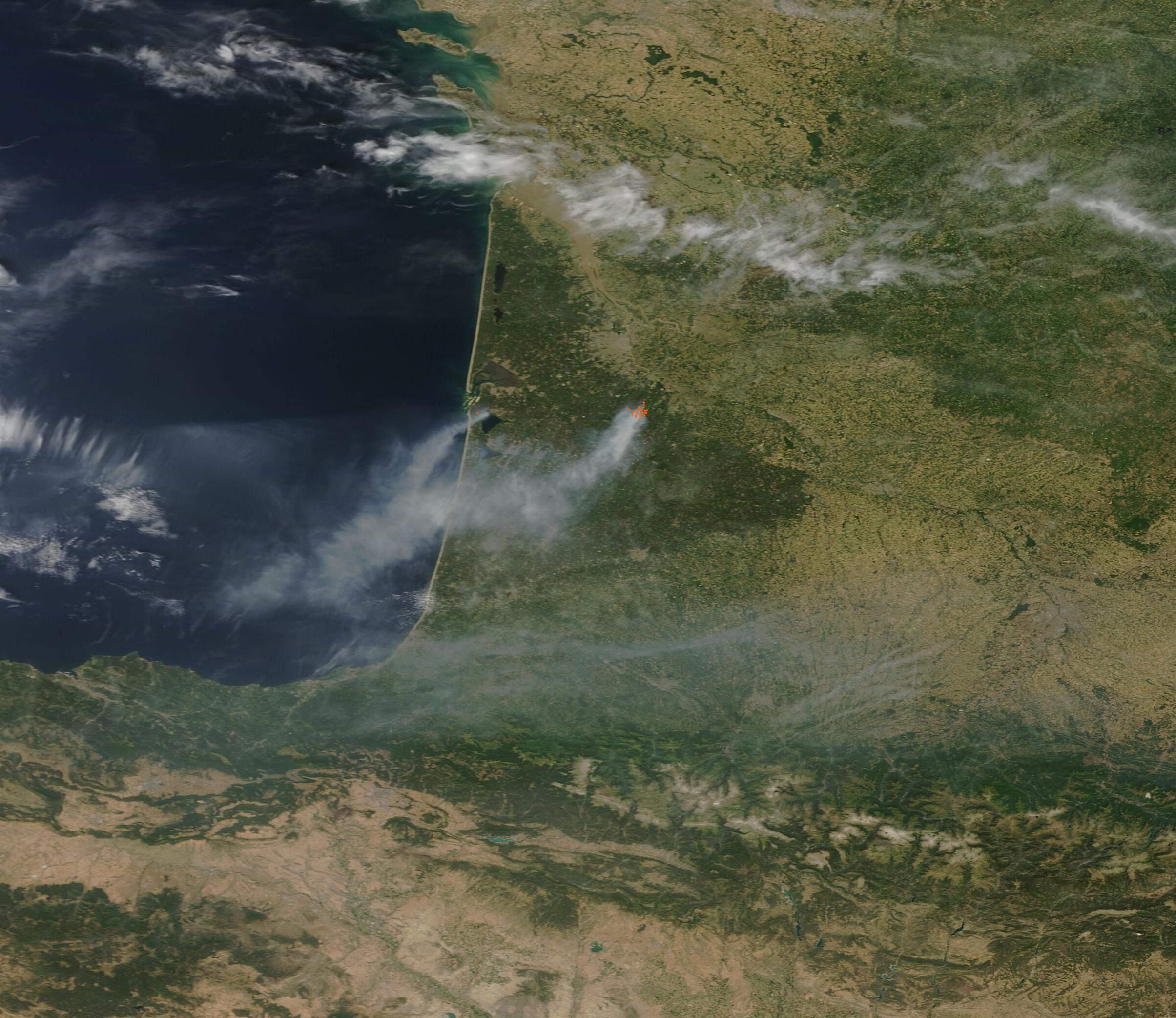
Massive wildfires in southwest France and parts of Spain have forced more than 250,000 people to flee their homes [1].
The scale of the evacuations highlights the increasing volatility of European summers, where successive heat waves have turned the landscape into a tinderbox.
Emergency crews are battling blazes near the wine-producing city of Bordeaux, where extreme heat and dry conditions have accelerated the spread of the fires [2], [3]. On Sunday, authorities oversaw the evacuation of 55,000 people overnight [2]. In one region alone, the total number of people forced out of their homes has reached 220,000 [2].
To combat the flames, officials deployed a massive cargo aircraft to dump flame retardants over the affected areas [1]. These aerial drops are part of a broader effort to contain the perimeter as winds and temperatures continue to challenge ground crews.
The fires have crossed borders, with similar conditions prompting emergency responses in Spain [1], [3]. Residents in these regions have faced rapid escalations, moving from heat warnings to mandatory evacuations within short windows of time.
Local officials said the combination of drought and high temperatures created the ideal environment for the fires to ignite and spread rapidly [2], [3].
“More than 250,000 people have fled their homes”
The simultaneous occurrence of large-scale wildfires in France and Spain suggests a systemic regional vulnerability to extreme heat. The reliance on heavy cargo aircraft for flame retardants indicates that traditional ground-based firefighting is insufficient against the speed of these 'tinderbox' blazes, signaling a need for updated forest management and disaster response strategies across Southern Europe.


