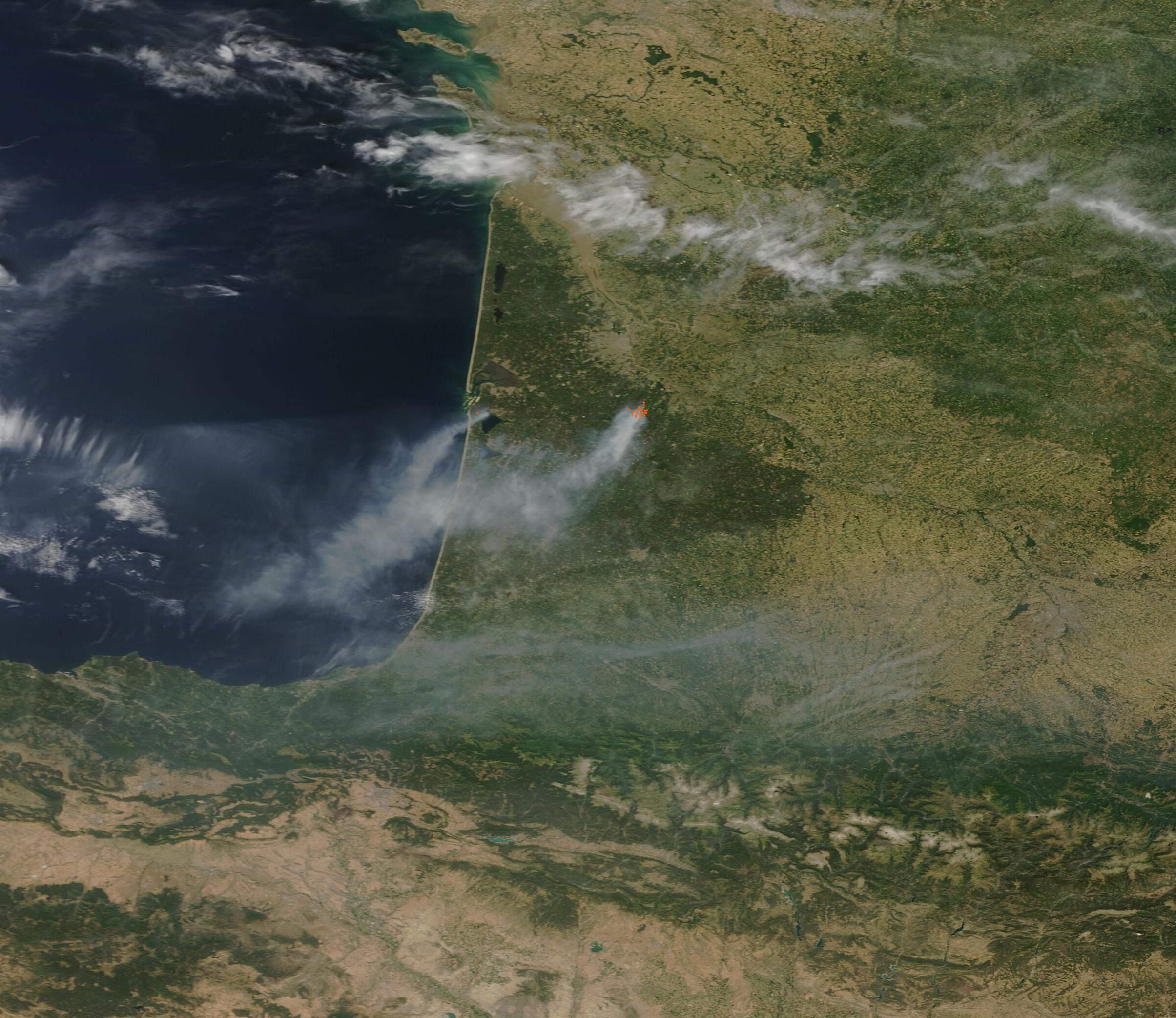
Massive wildfires forced more than 300,000 people [1] to flee their homes across southwestern France and Spain on July 26 [3].
The scale of the evacuations highlights the increasing volatility of European summers, where intensifying heatwaves and dry conditions are overwhelming emergency response systems.
In southwestern France, firefighting efforts focused heavily on the region near Bordeaux. Authorities said 55,000 people [2] were evacuated overnight as flames advanced toward urban centers. Mayor Thomas Cazenave said the fires reached "at the gates of the metropolitan area" [4].
Across the border in Spain, the situation remained critical with fires threatening regions near Madrid and Valencia. Prime Minister Pedro Sánchez said, "Difficult hours lie ahead" [5].
Firefighters in both nations have struggled against a combination of prolonged dry spells and shifting winds that have rapidly changed the direction of the blazes. These conditions have hampered containment efforts and left crews exhausted as they battle the perimeter of the fires.
While some reports indicated that more than 250,000 people [6] were forced to flee, other data suggests the total exceeds 300,000 [1]. The discrepancy reflects the rapid movement of the fire fronts, and the ongoing nature of the evacuation orders across multiple provinces.
“"Difficult hours lie ahead"”
The simultaneous eruption of large-scale fires in France and Spain underscores a growing regional vulnerability to extreme weather. As heatwaves become more intense and dry conditions more prolonged, the traditional firefighting infrastructure in Southern Europe is facing a systemic strain that requires coordinated cross-border responses to prevent urban centers from becoming casualties of rural wildfires.


