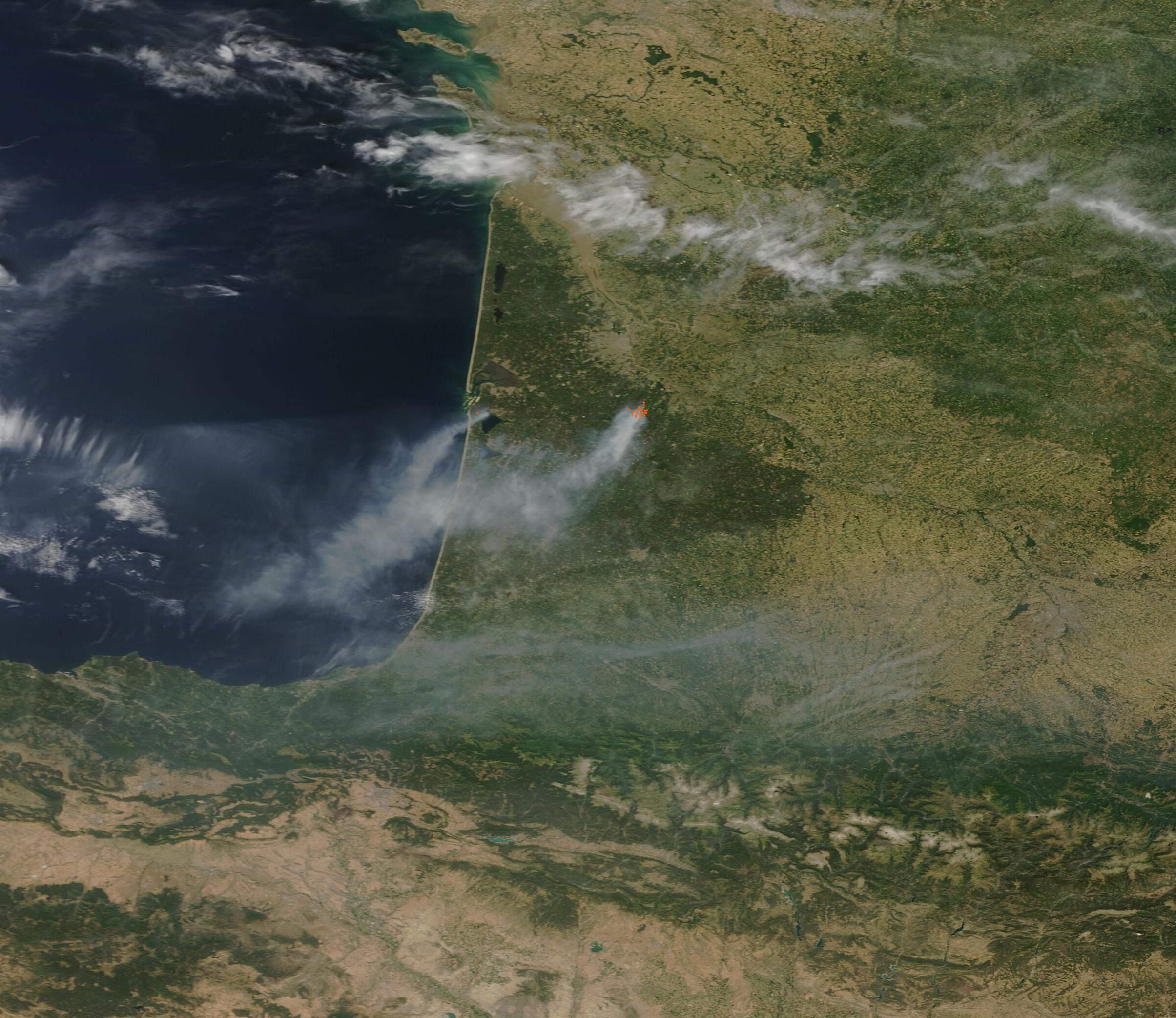
French and Spanish authorities are battling massive wildfires that have forced tens of thousands of residents to flee their homes this week.
The scale of the disaster highlights the increasing vulnerability of Southern Europe to extreme heat, as simultaneous blazes across borders strain regional emergency resources.
The fires ignited on Tuesday in mid-July [1], fueled by a severe heatwave with temperatures climbing above 40 °C [2]. These conditions dried out vegetation, creating a volatile environment for rapid fire spread across central Spain and southwestern France [2].
In France, the blazes have devastated the Cap Ferret peninsula in the Gironde region. The fires have burned approximately 10,000 hectares, or about 25,000 acres [3]. Due to the geography of the peninsula, hundreds of residents were forced to escape the encroaching flames by boat [3].
Spain has declared a state of emergency as fires rage through the central part of the country, including the Madrid region [4]. The scale of the displacement is significant, with an estimated 80,000 people evacuated from affected areas [4]. While some reports describe the number of displaced persons as tens of thousands, the Associated Press estimate places the figure at 80,000 [4, 5].
France has sought assistance from the European Union to help contain the spread of the flames [1]. Emergency crews continue to work in high-temperature conditions to establish firebreaks, and protect residential zones from further destruction.
“Hundreds of residents were forced to escape the encroaching flames by boat.”
The simultaneous occurrence of high-intensity wildfires in both France and Spain demonstrates the systemic risk posed by pan-European heatwaves. When extreme temperatures exceed 40 °C across multiple borders, the demand for aerial firefighting assets and emergency personnel can exceed national capacities, necessitating the EU-level coordination currently being sought by France.


'%2F%3E%0A%20%20%20%20%3Crect%20width%3D'1600'%20height%3D'900'%20fill%3D'url(%23v)'%2F%3E%0A%20%20%20%20%3Cg%20opacity%3D'0.08'%20fill%3D'%23ffffff'%3E%0A%20%20%20%20%20%20%3Ccircle%20cx%3D'1420'%20cy%3D'180'%20r%3D'220'%2F%3E%0A%20%20%20%20%20%20%3Ccircle%20cx%3D'1500'%20cy%3D'760'%20r%3D'120'%2F%3E%0A%20%20%20%20%3C%2Fg%3E%0A%20%20%20%20%3Cline%20x1%3D'80'%20y1%3D'172'%20x2%3D'220'%20y2%3D'172'%20stroke%3D'%23ffffff'%20stroke-width%3D'3'%20stroke-opacity%3D'0.6'%2F%3E%0A%20%20%20%20%3Ctext%20x%3D'80'%20y%3D'140'%20font-family%3D'Inter%2C%20-apple-system%2C%20Helvetica%2C%20sans-serif'%20font-weight%3D'700'%20font-size%3D'28'%20fill%3D'%23ffffff'%20letter-spacing%3D'6'%3EHANNA%20%C2%B7%20NEWS%3C%2Ftext%3E%0A%20%20%20%20%3Ctext%20x%3D'80'%20y%3D'230'%20font-family%3D'Inter%2C%20-apple-system%2C%20Helvetica%2C%20sans-serif'%20font-weight%3D'600'%20font-size%3D'40'%20fill%3D'%23ffffffb3'%20letter-spacing%3D'4'%3EWORLD%3C%2Ftext%3E%0A%20%20%20%20%3Ctext%20x%3D'80'%20y%3D'622'%20font-family%3D'Playfair%20Display%2C%20Georgia%2C%20serif'%20font-weight%3D'800'%20font-size%3D'86'%20fill%3D'%23ffffff'%20letter-spacing%3D'-1'%3ESpain%20Declares%20First%3C%2Ftext%3E%3Ctext%20x%3D'80'%20y%3D'721'%20font-family%3D'Playfair%20Display%2C%20Georgia%2C%20serif'%20font-weight%3D'800'%20font-size%3D'86'%20fill%3D'%23ffffff'%20letter-spacing%3D'-1'%3EWildfire%20National%20Emergency%3C%2Ftext%3E%3Ctext%20x%3D'80'%20y%3D'820'%20font-family%3D'Playfair%20Display%2C%20Georgia%2C%20serif'%20font-weight%3D'800'%20font-size%3D'86'%20fill%3D'%23ffffff'%20letter-spacing%3D'-1'%3Eas%20Flames%20Hit%20France%3C%2Ftext%3E%0A%20%20%20%20%3Ctext%20x%3D'80'%20y%3D'870'%20font-family%3D'Inter%2C%20-apple-system%2C%20Helvetica%2C%20sans-serif'%20font-weight%3D'500'%20font-size%3D'22'%20fill%3D'%23ffffff66'%20letter-spacing%3D'2'%3Enews.hanna-ai.com%3C%2Ftext%3E%0A%20%20%3C%2Fsvg%3E)