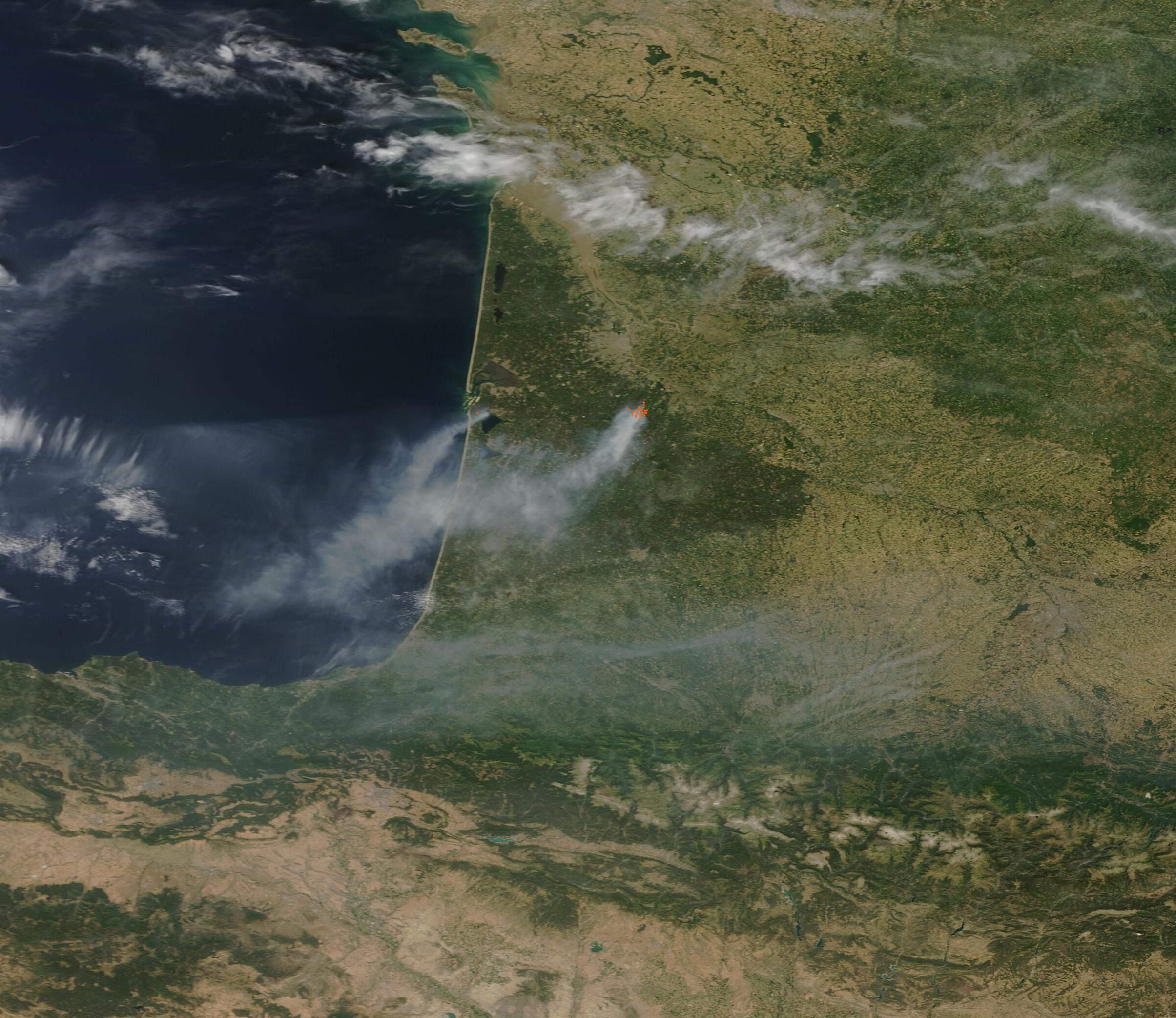
Massive wildfires in southwest France have forced more than 250,000 people to evacuate their homes this month [1].
The scale of the disaster highlights the increasing vulnerability of Southern Europe to extreme weather. Successive heatwaves have created high-risk conditions that allow blazes to spread rapidly across the landscape [2, 3].
In the Gironde department near Bordeaux, the fires have burned approximately 162 square miles [1]. French authorities have deployed 2,500 firefighters and 1,500 soldiers to battle the flames [1]. These emergency crews are working to contain the perimeter as the fires threaten residential areas and forests.
Reports on the total number of people affected vary by region. Some data indicates more than 250,000 people were displaced within France [1]. However, other reports suggest a wider regional crisis, stating that more than 360,000 people have been evacuated across both France and Spain [2]. Other estimates place the combined evacuation number for the two countries at over 250,000 [3].
The Gironde region remains the primary focus of the French response. The combination of dry vegetation and high temperatures has made the area particularly susceptible to fast-moving fire fronts. Soldiers are assisting firefighters with logistics, and perimeter security to ensure residents can leave danger zones safely.
Authorities continue to monitor wind patterns that could push the fires toward more populated areas. The coordinated effort between military and civil fire services is intended to prevent further loss of property and life as the heatwave persists.
“More than 250,000 people displaced in France”
The simultaneous outbreaks of fire in France and Spain suggest a systemic climate risk across the Mediterranean basin. When successive heatwaves desiccate vegetation, traditional firefighting resources can be overwhelmed by the speed of fire spread, necessitating the mobilization of national militaries to manage mass civilian evacuations.


