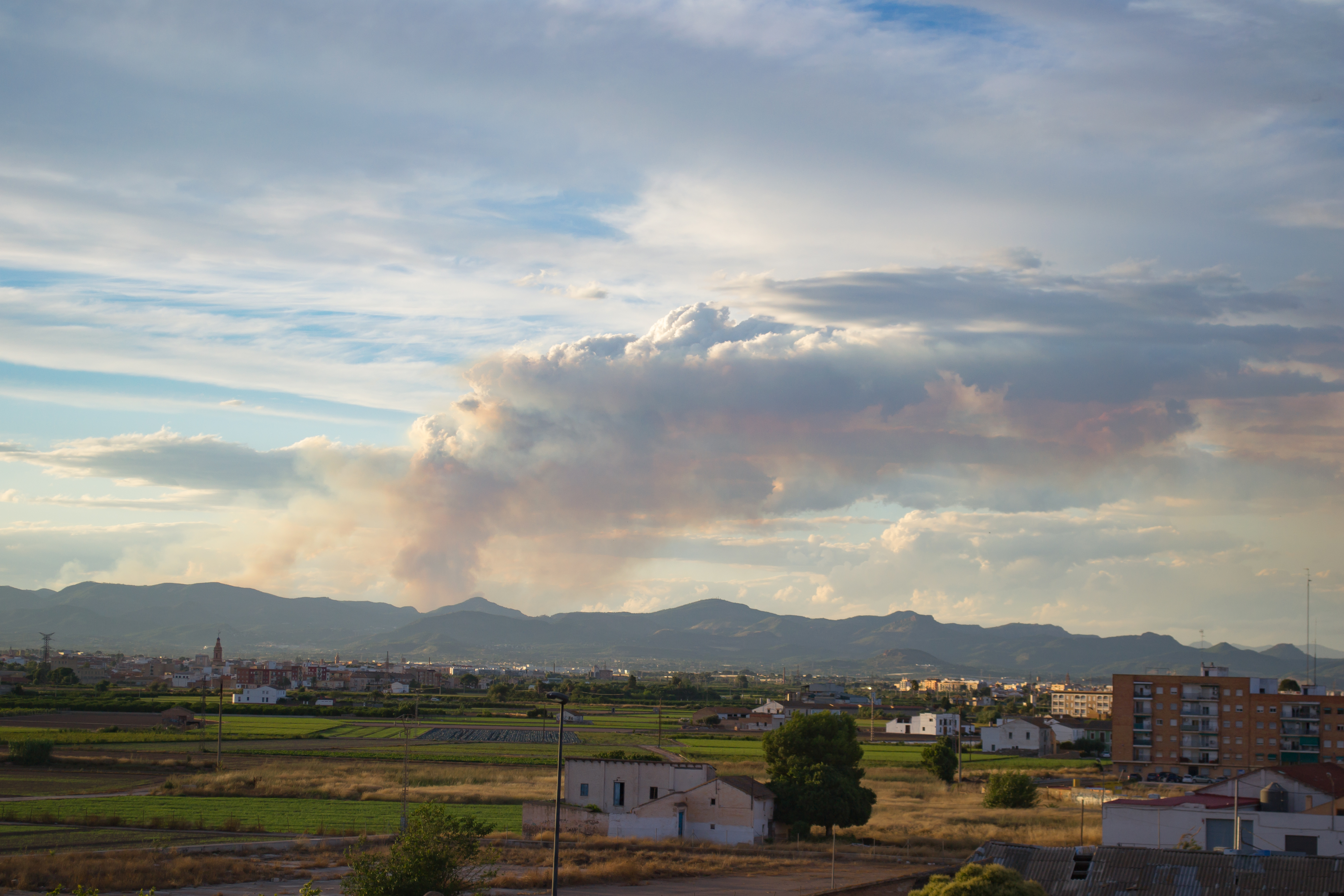
Massive wildfires are sweeping across southern France and northern Spain, forcing hundreds of thousands of residents to evacuate their homes this week.
The scale of the blazes threatens major urban centers and critical infrastructure, while an imminent heat wave risks further intensifying the fires across the region.
Emergency crews are battling flames in the Aude and Hérault departments, as well as near Bordeaux [1, 2]. In southern France, up to 800 firefighters have been deployed to contain the spread [8]. The fires have intensified since last week, driven by a combination of record-high temperatures, prolonged drought, and scant rainfall [2, 3, 5].
Displacement figures vary by source, reflecting the volatility of the situation. DW News said around 375,000 people have been forced from their homes [1]. Other reports indicate a total of more than 300,000 displaced [4] or more than 250,000 [7].
In France, approximately 220,000 people have been evacuated [2, 5]. Meanwhile, the impact in Spain has been significant, particularly in Valencia and surrounding regions [2, 3]. Reuters said around 100,000 people were told to leave their homes in Spain [2], though Yahoo said a lower figure of approximately 75,000 displaced in that country [5].
Weather officials said that conditions remain critical. A returning heat wave is expected to bring temperatures of 100 °F [5]. These tinder-box conditions make it increasingly difficult for ground crews to establish containment lines as the fires jump barriers and move toward populated areas [3, 5].
“Hundreds of thousands of residents are being evacuated.”
The simultaneous eruption of large-scale fires in two major European nations highlights the increasing vulnerability of the Mediterranean basin to climate-driven extreme weather. The convergence of drought and 100-degree heat creates a feedback loop that overwhelms traditional firefighting capacity, shifting the focus from containment to mass civilian evacuation.


