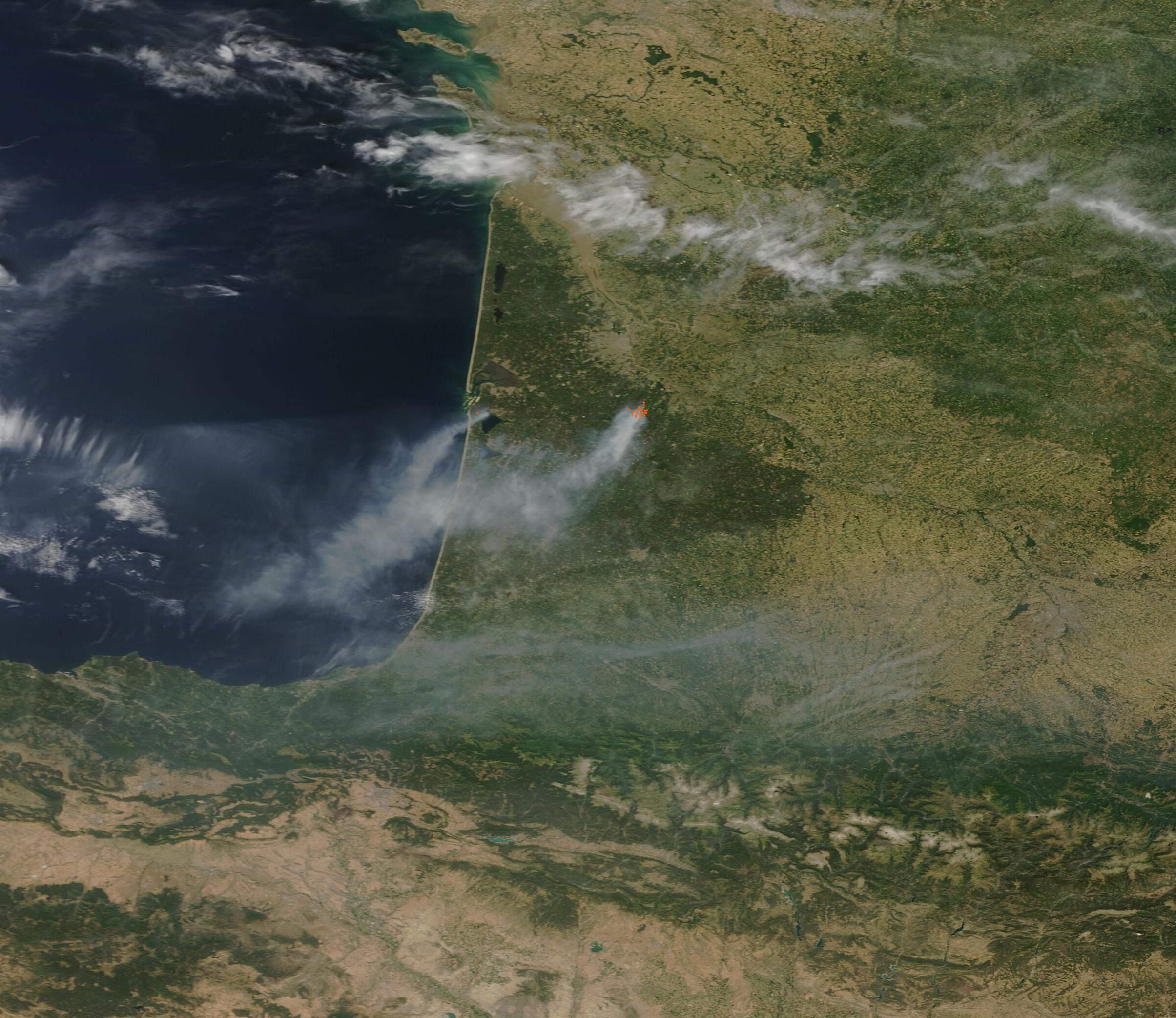
Firefighters in France and Spain are battling massive wildfires as a new heatwave threatens to intensify the blazes this week [1].
The urgency of the containment effort stems from a forecast that temperatures will climb to approximately 104°F (40°C) [4]. Such extreme heat increases the risk of fire spread, potentially endangering thousands of residents and tourists during the peak summer season.
In France, the Gironde department on the Atlantic coast near Bordeaux has been severely impacted. Authorities said 42,000 hectares have burned in the region [1]. The fires forced the evacuation of 4,000 people from local campsites [1].
French President Emmanuel Macron emphasized the need for persistence in the face of the disaster. "We have to hold out," Macron said [2].
Across the border in Spain, emergency services have also been deployed to various sites to curb the spread of flames. Spain's Interior Minister said the previous night was a "positive night of progress for our firefighters" [3].
Despite some tactical gains, officials remain wary of the weather window. One firefighting official said the teams have a brief window of opportunity to bring the flames under control before temperatures spike [5].
Scale of displacement varies by report. While some data focuses on the 4,000 evacuated from Gironde campsites [1], other reports indicate more than 360,000 people have been evacuated across France and Spain combined [3].
Coordination between the two nations continues as they attempt to secure the Atlantic coast, and interior regions, before the peak of the heatwave arrives.
“"We have to hold out."”
The simultaneous outbreaks of wildfires in France and Spain, coupled with an incoming heatwave, highlight the increasing vulnerability of Southern Europe to extreme weather patterns. The reliance on a narrow 'window of opportunity' for containment suggests that firefighting infrastructure is struggling to keep pace with the accelerating speed and scale of climate-driven fire seasons.