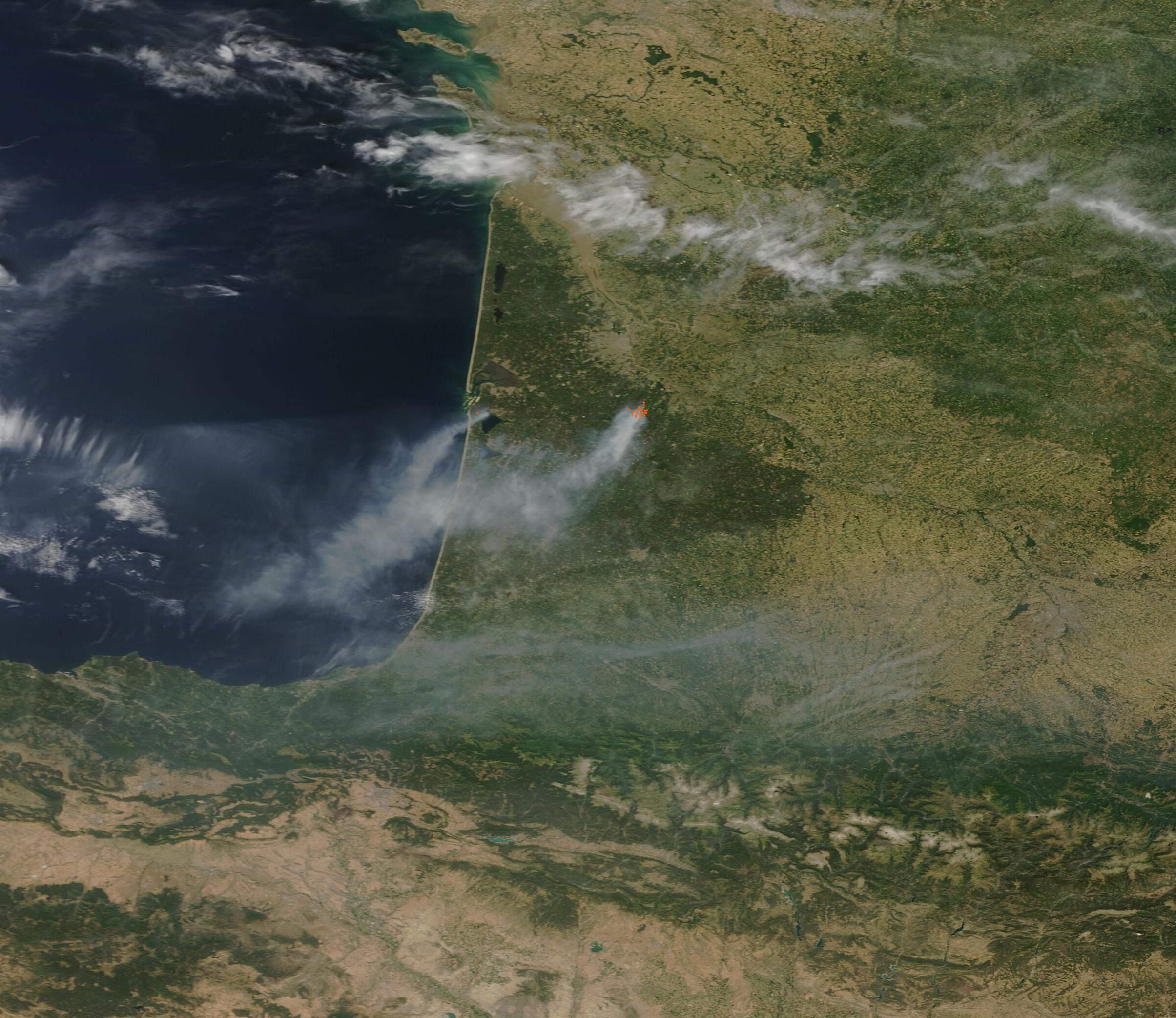
Volunteer firefighters in western France are battling extensive wildfires that have resulted in fatalities and massive land destruction this month [1].
These blazes represent a critical threat to populated areas, forcing emergency crews to operate under hazardous conditions and extreme fatigue to prevent further spread [2].
In the Gironde region, the toll of the disaster has been severe. Two firefighters died while fighting a fire in Mérignac [1]. The danger in the area has prompted legal action, as prosecutors have moved to immobilize vehicles and conduct systematic custody hearings for individuals exhibiting imprudent behavior during the crisis [1].
Concurrent efforts are unfolding in the Drôme department. Near the mountain area of Die, approximately 600 firefighters were deployed to contain a rapidly moving blaze [3]. By the evening of July 8, the fire near Die had burned about 3,000 hectares [3].
Crews in the Médoc region and other western sectors continue to work on the front lines despite the risk to their lives [2]. The scale of the deployments highlights the reliance on volunteer forces to manage large-scale environmental disasters, a system currently strained by the intensity of the 2026 summer heat.
Firefighters remain on the ground to protect residential zones, though the combination of rugged terrain in the mountains and volatile wind patterns in the west has complicated containment efforts [2], [3].
“Two firefighters died while fighting a fire in Mérignac.”
The loss of life and the massive scale of land burned in July 2026 underscore the increasing vulnerability of western France to extreme wildfires. The heavy reliance on volunteer firefighters, coupled with the necessity for legal intervention to curb public imprudence, suggests that current emergency management frameworks are being pushed to their limits by escalating environmental volatility.


