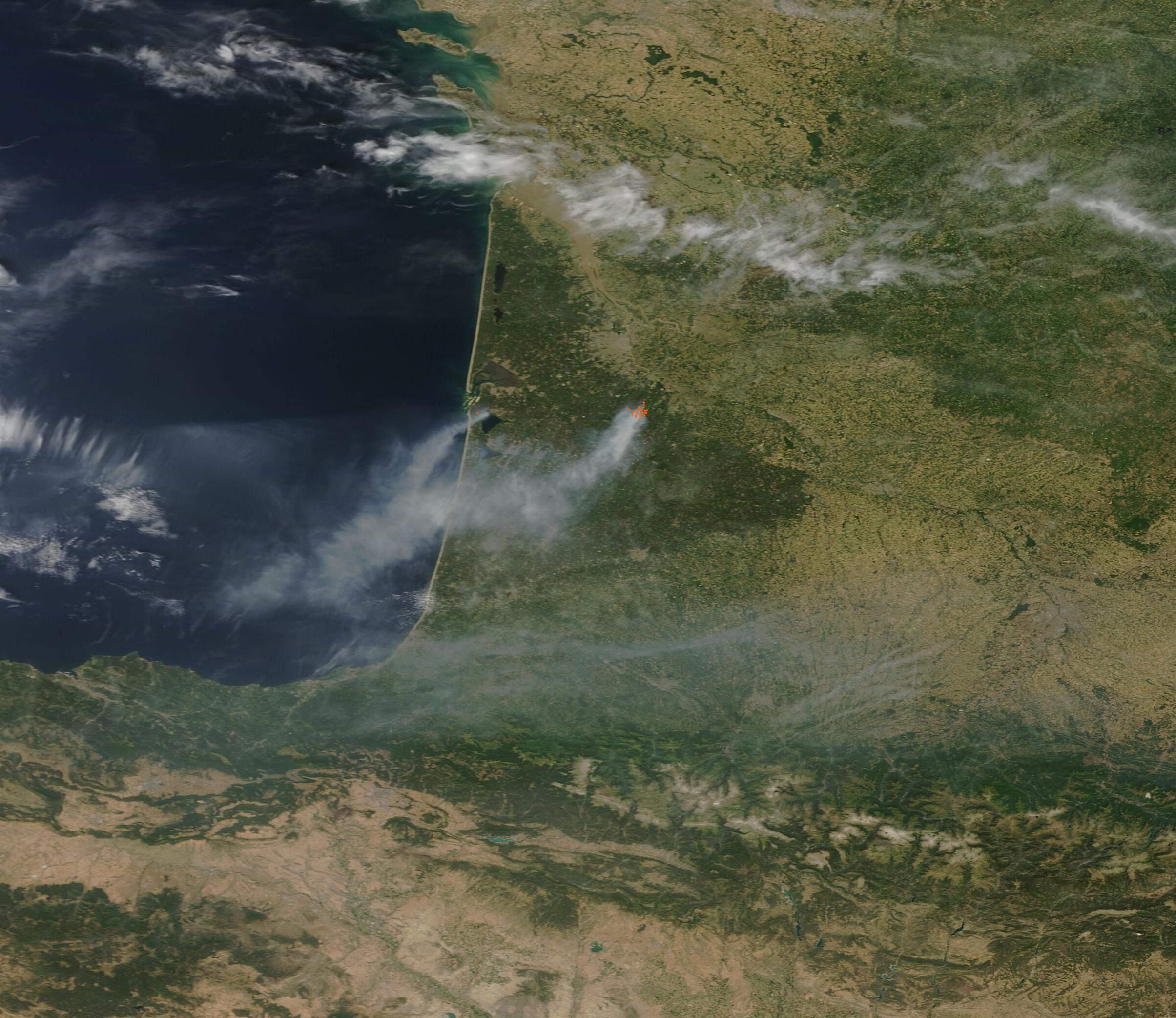
Evacuated residents returned to the Var and Gironde departments on July 28 to survey the damage left by massive wildfires [1].
The scale of the destruction highlights the increasing vulnerability of southern France to extreme weather events, as heat waves and dry winds accelerate the spread of forest fires [4, 5].
In the Var department, firefighters and residents observed the aftermath of blazes that burned 1,000 hectares [4]. The fires in this region forced the evacuation of 2,500 people [4].
Further north in the Gironde and Landes departments, the devastation was more widespread. In Landes, the fires consumed 2,500 hectares [1]. In the Gironde department, reports on the total area burned since July 22 vary between 8,700 hectares [1] and 42,000 hectares [6].
The human toll in the Gironde region was significant due to the speed of the flames. While some reports indicated approximately 40,000 people were evacuated or in the process of leaving the Arcachon basin [3], other data suggests that 220,000 people have been evacuated from Gironde since July 22 [6].
These fires were ignited and spread rapidly across the two departments due to a combination of a severe heat wave and strong, dry winds [4, 5]. Firefighters worked to stabilize the situation as residents returned to find their landscapes transformed by the flames [1, 3].
The return of residents on Sunday marked a transition from emergency containment to the assessment of property, and environmental loss [1].
“Evacuated residents returned to the Var and Gironde departments on July 28 to survey the damage.”
The discrepancy in reported damage and evacuation numbers in the Gironde region suggests the chaotic nature of the disaster's peak, but the overall scale confirms a systemic risk. The convergence of heat waves and dry winds in southern France is creating a pattern of more frequent and larger-scale wildfires, placing immense pressure on regional emergency services and civilian infrastructure.


