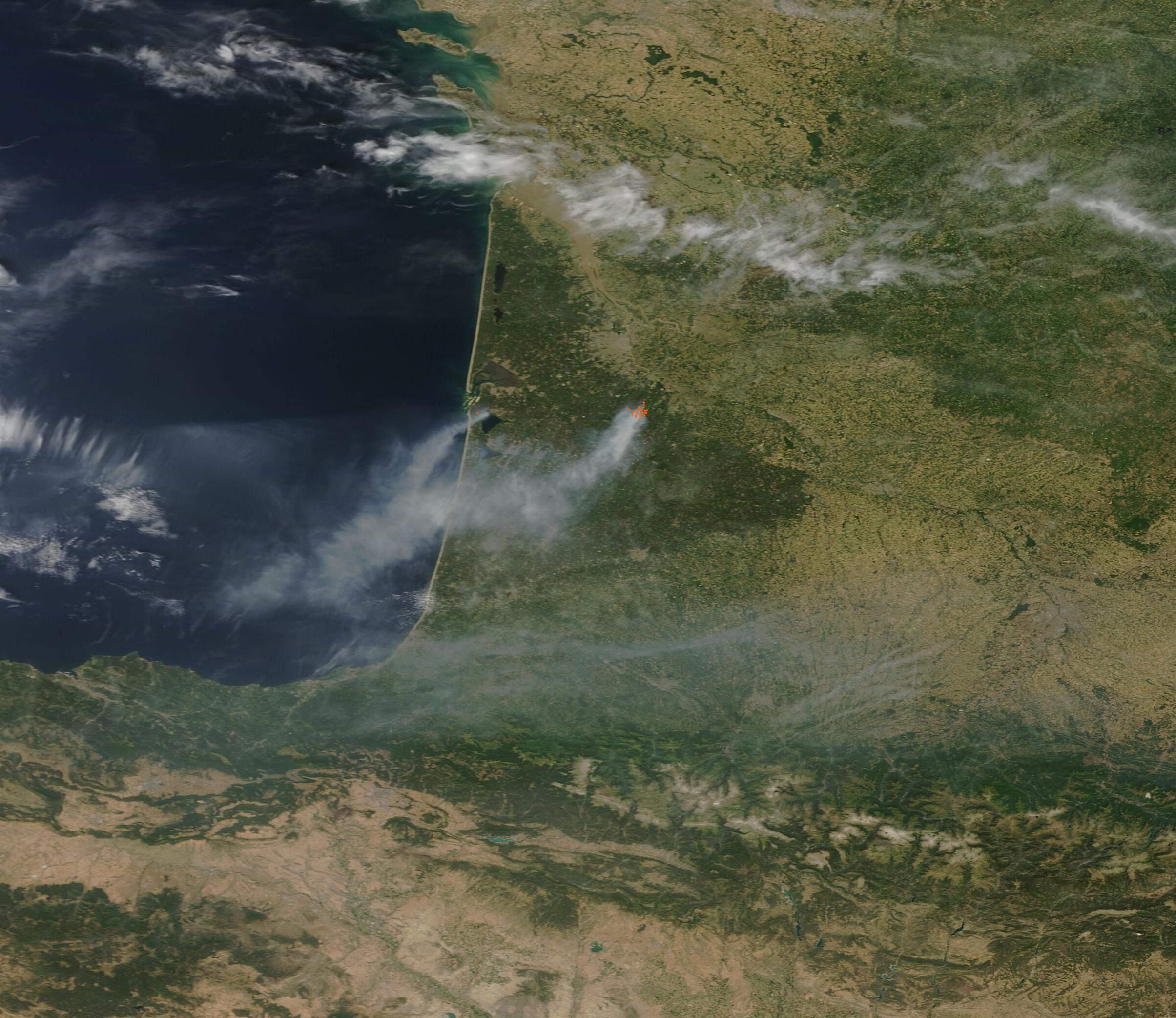
Residents in the town of Ares and surrounding communities in southwest France are returning home following evacuations caused by devastating wildfires [1, 2].
This return comes as a relief to thousands of displaced people, but the situation remains precarious. Authorities said the fire is still active and further evacuations may be necessary if conditions shift.
The wildfires were first reported on Sunday, July 26, 2026 [3]. The scale of the disaster was immense, with the blaze reaching a size four times that of Paris [5]. At its peak, the fire was approximately 15 kilometers away from Bordeaux [1].
Roughly 300,000 people were forced from their homes as the fires swept through the Gironde department [1]. The intensity of the blaze was fueled by extreme heat, with temperatures expected to rise above 40 °C [6].
Conditions began to improve recently due to cooler temperatures, higher humidity, and light rain [2, 4]. These factors improved firefighting efforts and allowed officials to lift some evacuation orders. Tens of thousands of evacuees were allowed to return home starting Thursday, July 30 [2, 4]. Other reports indicate that thousands of displaced residents have begun the process of returning to their properties [2].
Returning residents are finding a landscape of leftover ruins in some areas [2]. Despite the ability to return, the threat is not entirely gone; the active nature of the fire requires continued vigilance from both the public and emergency services [1, 2].
“The blaze was four times the size of Paris”
The scale of the Gironde wildfires highlights the increasing vulnerability of Southern Europe to extreme weather events. While temporary climatic shifts like rain and lower temperatures provided a window for residents to return, the fact that the fire remains active suggests a prolonged recovery period and a heightened risk of reignition in drought-stricken regions.


