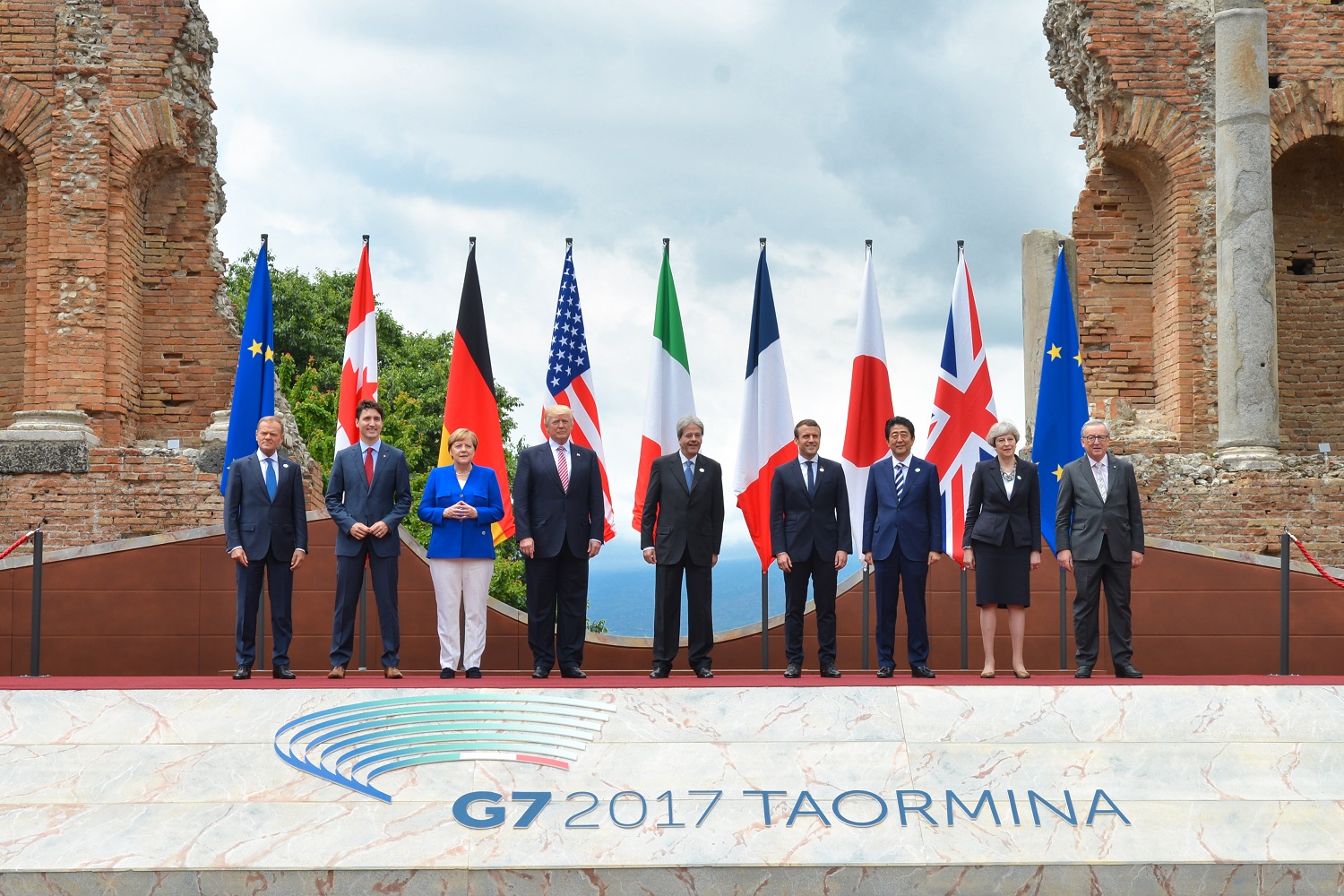
World leaders gathered Monday for the 52nd [1] G7 summit to discuss escalating wars, the global economy, and energy security.
The meeting arrives at a critical juncture as nations grapple with trade tensions and geopolitical instability. The summit serves as a primary venue for the U.S. and its allies to coordinate responses to international conflicts and economic uncertainty.
President Donald Trump and Ukrainian President Volodymyr Zelensky are among the key attendees. The gathering focuses on addressing global challenges, including the ongoing impact of wars and the stability of the global financial system.
Reports on the location of the event vary. Some sources place the summit in Evian-les-Bains, France [2], while others report the gathering is taking place in Kananaskis, Canada [3]. The event is described as a three-day [4] summit, with the Canada-based reports specifying the dates as June 15-17 [3].
International dynamics remain strained. The Winnipeg Free Press said, "President Donald Trump has long bet that he can scare allies into submission — a gamble that is increasingly being tested" [5]. This tension underscores the diplomatic hurdles leaders face while attempting to maintain a unified front on energy security and trade.
Other leaders in attendance include Giorgia Meloni and Friedrich Merz. The group aims to mark a half-century of international cooperation [3] while navigating current frictions between member states.
Despite the conflicting reports on the venue, the agenda remains consistent across sources. Leaders are expected to negotiate terms on economic recovery and the containment of regional conflicts to prevent further global escalation.
“President Donald Trump has long bet that he can scare allies into submission — a gamble that is increasingly being tested.”
The discrepancy in reporting regarding the summit's location suggests a fragmented information environment, but the core objective remains the stabilization of Western alliances. With the U.S. leadership employing a high-pressure diplomatic style, the G7's ability to reach a consensus on Ukraine and global trade will test whether the bloc can maintain a cohesive strategy against non-member adversaries.


