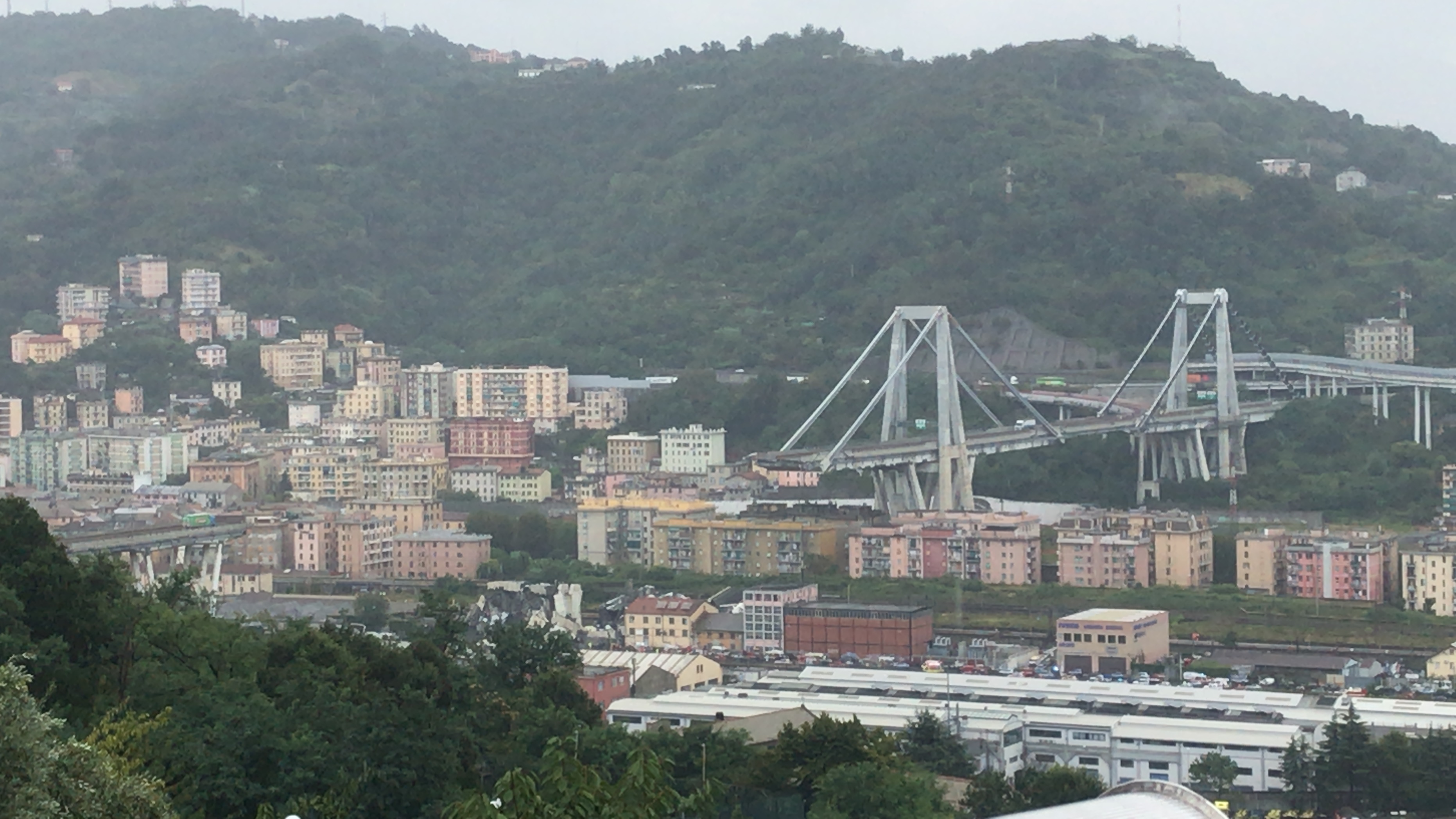
An Italian court sentenced 32 people to prison on Thursday for their roles in the 2018 collapse of the Morandi bridge in Genoa [1], [3].
The verdicts mark a long-awaited legal conclusion to one of Italy's deadliest infrastructure failures, establishing accountability for the corporate and technical negligence that led to the disaster.
Giovanni Castellucci, the former CEO of motorway operator Autostrade, received the most significant sentence. Reports on the exact length of his term vary between 11 [5] and 12 years [4]. The court said the defendants were guilty of negligence and manslaughter related to the failure of the bridge [1], [6].
The collapse occurred in August 2018 [2], when a section of the bridge fell, killing 43 people [1]. The disaster prompted an extensive investigation into the maintenance and structural integrity of the motorway system managed by Autostrade.
Verdicts were read for 57 defendants during the proceedings [7], though 32 individuals ultimately received prison sentences [1]. The Genoa Court of First Instance oversaw the sentencing process, which addressed the failure to implement necessary safety measures, and the ignoring of structural warning signs [1], [3].
The legal process focused on whether the operators of the bridge prioritized profit over public safety. By convicting high-level executives alongside technical staff, the court said there was a systemic failure in oversight that spanned from the corporate office to the engineering level [1], [3].
“An Italian court sentenced 32 people to prison on Thursday”
These convictions signal a shift in how Italian courts handle corporate liability for infrastructure failure. By sentencing a former CEO to over a decade in prison, the judiciary is emphasizing that executive negligence in public safety can carry severe criminal penalties, potentially influencing future maintenance protocols for the nation's aging transport networks.
'%2F%3E%0A%20%20%20%20%3Crect%20width%3D'1600'%20height%3D'900'%20fill%3D'url(%23v)'%2F%3E%0A%20%20%20%20%3Cg%20opacity%3D'0.08'%20fill%3D'%23ffffff'%3E%0A%20%20%20%20%20%20%3Ccircle%20cx%3D'1420'%20cy%3D'180'%20r%3D'220'%2F%3E%0A%20%20%20%20%20%20%3Ccircle%20cx%3D'1500'%20cy%3D'760'%20r%3D'120'%2F%3E%0A%20%20%20%20%3C%2Fg%3E%0A%20%20%20%20%3Cline%20x1%3D'80'%20y1%3D'172'%20x2%3D'220'%20y2%3D'172'%20stroke%3D'%23ffffff'%20stroke-width%3D'3'%20stroke-opacity%3D'0.6'%2F%3E%0A%20%20%20%20%3Ctext%20x%3D'80'%20y%3D'140'%20font-family%3D'Inter%2C%20-apple-system%2C%20Helvetica%2C%20sans-serif'%20font-weight%3D'700'%20font-size%3D'28'%20fill%3D'%23ffffff'%20letter-spacing%3D'6'%3EHANNA%20%C2%B7%20NEWS%3C%2Ftext%3E%0A%20%20%20%20%3Ctext%20x%3D'80'%20y%3D'230'%20font-family%3D'Inter%2C%20-apple-system%2C%20Helvetica%2C%20sans-serif'%20font-weight%3D'600'%20font-size%3D'40'%20fill%3D'%23ffffffb3'%20letter-spacing%3D'4'%3EWORLD%3C%2Ftext%3E%0A%20%20%20%20%3Ctext%20x%3D'80'%20y%3D'622'%20font-family%3D'Playfair%20Display%2C%20Georgia%2C%20serif'%20font-weight%3D'800'%20font-size%3D'86'%20fill%3D'%23ffffff'%20letter-spacing%3D'-1'%3EWater%20Main%20Break%20Floods%20West%3C%2Ftext%3E%3Ctext%20x%3D'80'%20y%3D'721'%20font-family%3D'Playfair%20Display%2C%20Georgia%2C%20serif'%20font-weight%3D'800'%20font-size%3D'86'%20fill%3D'%23ffffff'%20letter-spacing%3D'-1'%3EHollywood%20Streets%2C%20Opens%3C%2Ftext%3E%3Ctext%20x%3D'80'%20y%3D'820'%20font-family%3D'Playfair%20Display%2C%20Georgia%2C%20serif'%20font-weight%3D'800'%20font-size%3D'86'%20fill%3D'%23ffffff'%20letter-spacing%3D'-1'%3ESinkhole%3C%2Ftext%3E%0A%20%20%20%20%3Ctext%20x%3D'80'%20y%3D'870'%20font-family%3D'Inter%2C%20-apple-system%2C%20Helvetica%2C%20sans-serif'%20font-weight%3D'500'%20font-size%3D'22'%20fill%3D'%23ffffff66'%20letter-spacing%3D'2'%3Enews.hanna-ai.com%3C%2Ftext%3E%0A%20%20%3C%2Fsvg%3E)

