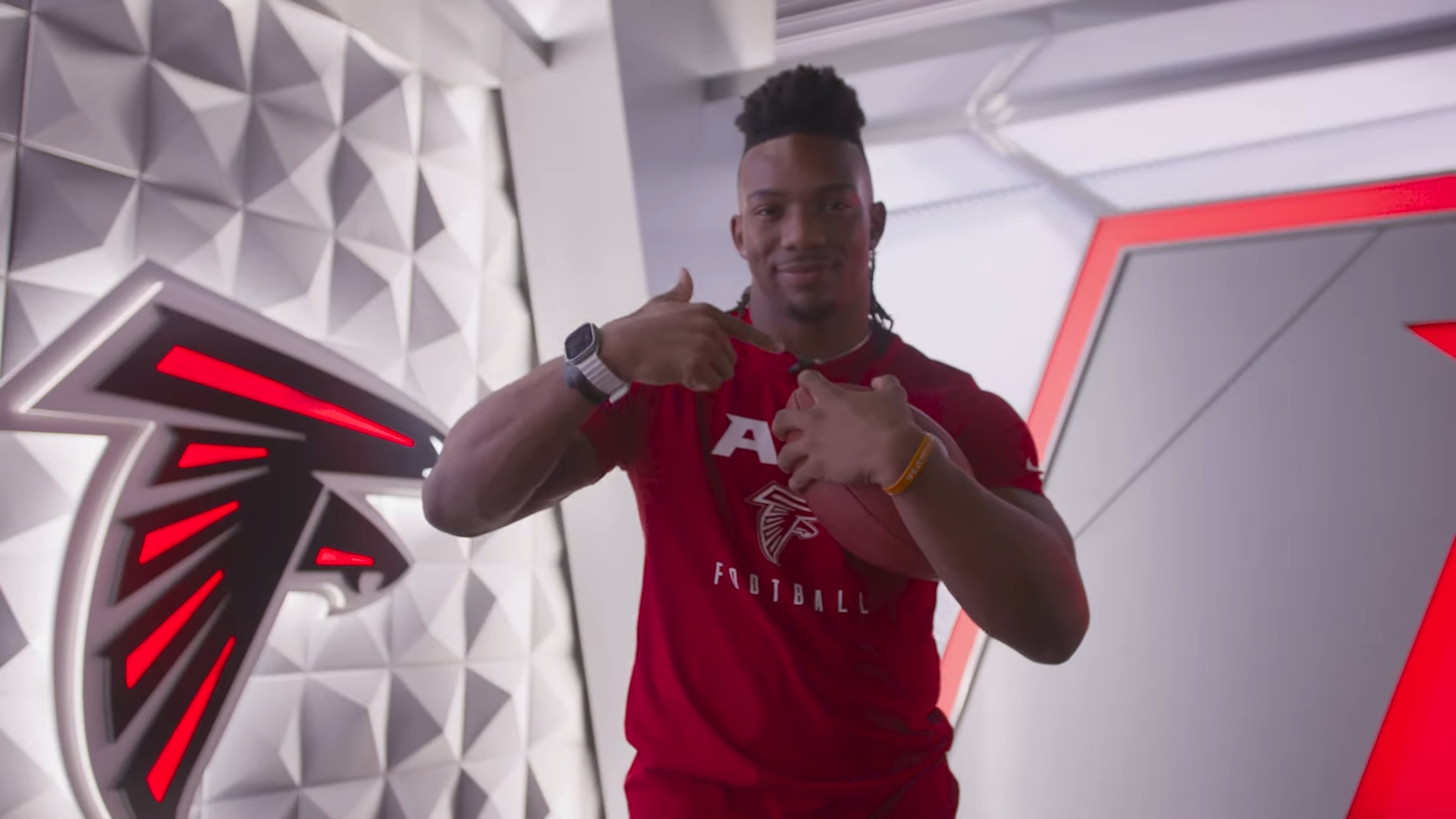
Detroit Lions running back Jahmyr Gibbs and Atlanta Falcons running back Bijan Robinson are reportedly in a standoff over market-setting contract extensions.
This situation is significant because it could redefine the financial valuation of the running back position in the NFL. Both players have demonstrated elite production, putting their respective teams in a position where they must decide how much to pay to retain superstar talent at a position often viewed as replaceable.
Reports suggest the two stars are playing a "game of chicken" to see who will secure the first massive deal of the 2026 offseason [1, 2, 3]. The tension comes as both players seek to establish a new benchmark for running back compensation. Gibbs enters these discussions following a season where he ranked fifth in the NFL with 1,839 yards from scrimmage [1].
Gibbs has also earned three consecutive Pro Bowl selections [4]. His value is further highlighted by the Detroit Lions' intent to increase his involvement in the passing game [1]. The Lions have already shown a willingness to commit to their core roster, having signed Jack Campbell to a four-year extension [1].
Discussions regarding these extensions occurred throughout the 2026 offseason. The timeline began during the organized team activity period, which started May 27 and consisted of nine practice sessions [4]. Negotiations and reports of the stalemate continued through mid-June [1].
There are conflicting reports regarding Gibbs' current mindset. Some sources said the Detroit organization knows they must pay their superstar more than any other running back has ever received [2]. However, other reports said Gibbs' focus is on anything but a monster extension with the Lions at this time [3].
Despite the conflicting reports on his immediate focus, the pressure remains on both the Lions and Falcons. Both organizations are balancing the desire to maintain a competitive roster with the risk of overpaying for a position that historically sees steep declines in value over time.
“Both players have demonstrated elite production, putting their respective teams in a position where they must decide how much to pay.”
The outcome of these negotiations will likely set the ceiling for all running back contracts for the next several years. If either Gibbs or Robinson secures a record-breaking deal, it creates a ripple effect that forces other teams to increase their spending to retain similar talent, potentially shifting how NFL teams allocate their salary cap toward the offensive backfield.

