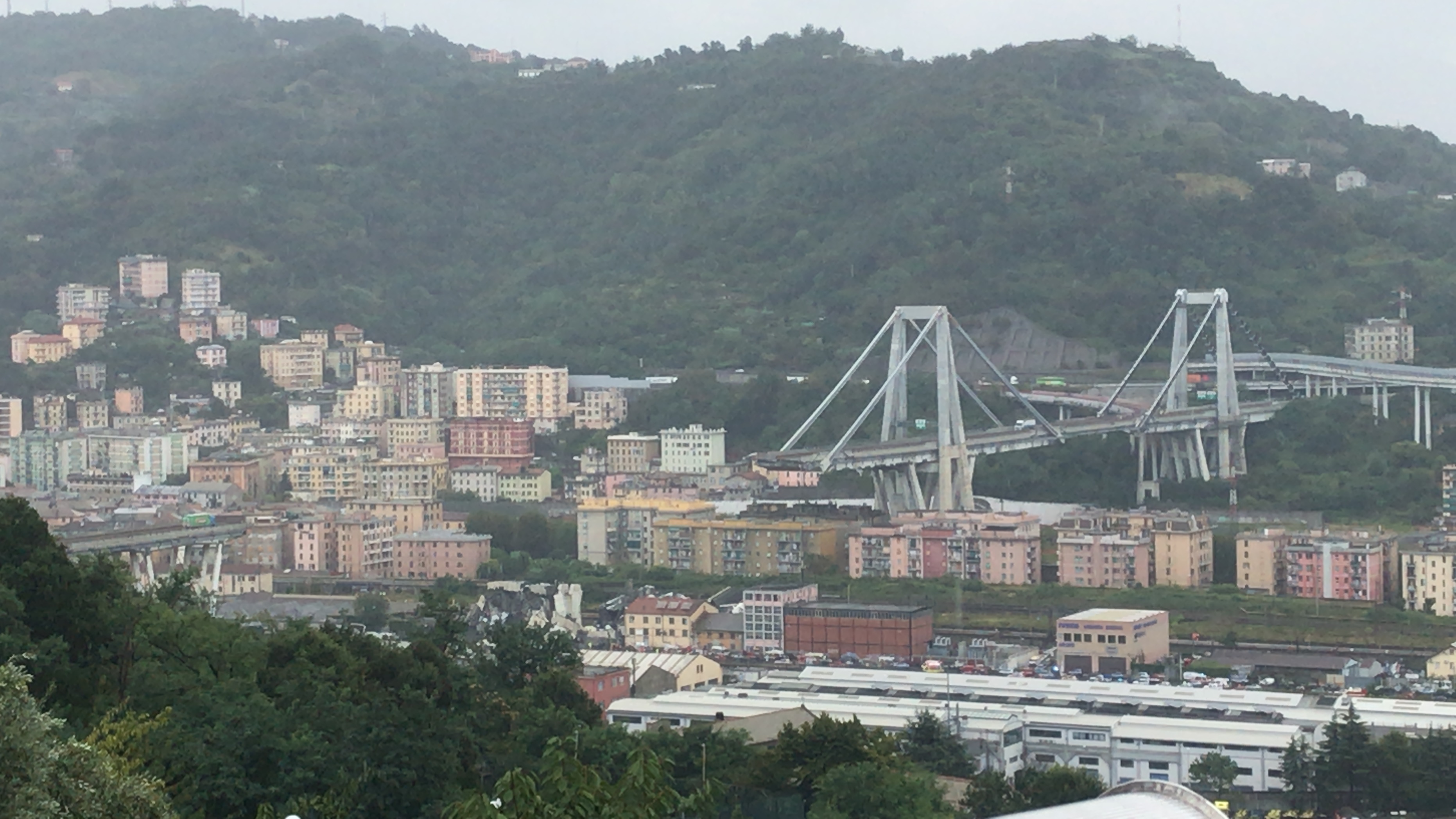
An Italian court in Genoa sentenced Giovanni Castellucci, the former head of motorway operator Atlantia, to 12 years in prison on Thursday [1].
The ruling marks a critical legal milestone in the aftermath of one of Italy's deadliest infrastructure failures. It establishes corporate accountability for the systemic negligence that led to a massive loss of life.
Castellucci was convicted of manslaughter and negligence for failing to ensure the safety of the Morandi bridge [1], [2]. The bridge collapsed on Aug. 14, 2018, resulting in the deaths of 43 people [1], [3].
The court found that the former executive played a key role in the failure to maintain the structure, which led to the tragedy [2], [3]. The legal proceedings focused on whether the operator ignored warning signs of structural decay to prioritize profit over public safety.
While the sentencing of the former CEO is a focal point, several other individuals were also found guilty. Reports on the total number of convictions vary, with some sources stating 32 people were convicted [4], and others citing as many as 57 [5].
The Morandi bridge collapse triggered a national crisis in Italy, exposing the deterioration of the country's aging motorway network. The disaster led to years of litigation and a complete overhaul of how the state monitors critical infrastructure [2], [3].
Castellucci's 12-year sentence reflects the severity of the negligence identified by the court [1]. The proceedings in Genoa have served as a primary venue for the victims' families to seek justice for the 2018 disaster [3].
“Giovanni Castellucci was sentenced to 12 years in prison for his role in the 2018 Morandi bridge collapse.”
This sentencing signals a shift in the Italian judiciary's approach to corporate negligence, moving beyond fines to impose significant prison time on high-ranking executives. By holding the former head of Atlantia personally accountable for the 43 deaths, the court emphasizes that infrastructure maintenance is a legal obligation of leadership, not just a technical failure of engineering.

'%2F%3E%0A%20%20%20%20%3Crect%20width%3D'1600'%20height%3D'900'%20fill%3D'url(%23v)'%2F%3E%0A%20%20%20%20%3Cg%20opacity%3D'0.08'%20fill%3D'%23ffffff'%3E%0A%20%20%20%20%20%20%3Ccircle%20cx%3D'1420'%20cy%3D'180'%20r%3D'220'%2F%3E%0A%20%20%20%20%20%20%3Ccircle%20cx%3D'1500'%20cy%3D'760'%20r%3D'120'%2F%3E%0A%20%20%20%20%3C%2Fg%3E%0A%20%20%20%20%3Cline%20x1%3D'80'%20y1%3D'172'%20x2%3D'220'%20y2%3D'172'%20stroke%3D'%23ffffff'%20stroke-width%3D'3'%20stroke-opacity%3D'0.6'%2F%3E%0A%20%20%20%20%3Ctext%20x%3D'80'%20y%3D'140'%20font-family%3D'Inter%2C%20-apple-system%2C%20Helvetica%2C%20sans-serif'%20font-weight%3D'700'%20font-size%3D'28'%20fill%3D'%23ffffff'%20letter-spacing%3D'6'%3EHANNA%20%C2%B7%20NEWS%3C%2Ftext%3E%0A%20%20%20%20%3Ctext%20x%3D'80'%20y%3D'230'%20font-family%3D'Inter%2C%20-apple-system%2C%20Helvetica%2C%20sans-serif'%20font-weight%3D'600'%20font-size%3D'40'%20fill%3D'%23ffffffb3'%20letter-spacing%3D'4'%3EWORLD%3C%2Ftext%3E%0A%20%20%20%20%3Ctext%20x%3D'80'%20y%3D'622'%20font-family%3D'Playfair%20Display%2C%20Georgia%2C%20serif'%20font-weight%3D'800'%20font-size%3D'86'%20fill%3D'%23ffffff'%20letter-spacing%3D'-1'%3EWater%20Main%20Break%20Floods%20West%3C%2Ftext%3E%3Ctext%20x%3D'80'%20y%3D'721'%20font-family%3D'Playfair%20Display%2C%20Georgia%2C%20serif'%20font-weight%3D'800'%20font-size%3D'86'%20fill%3D'%23ffffff'%20letter-spacing%3D'-1'%3EHollywood%20Streets%2C%20Opens%3C%2Ftext%3E%3Ctext%20x%3D'80'%20y%3D'820'%20font-family%3D'Playfair%20Display%2C%20Georgia%2C%20serif'%20font-weight%3D'800'%20font-size%3D'86'%20fill%3D'%23ffffff'%20letter-spacing%3D'-1'%3ESinkhole%3C%2Ftext%3E%0A%20%20%20%20%3Ctext%20x%3D'80'%20y%3D'870'%20font-family%3D'Inter%2C%20-apple-system%2C%20Helvetica%2C%20sans-serif'%20font-weight%3D'500'%20font-size%3D'22'%20fill%3D'%23ffffff66'%20letter-spacing%3D'2'%3Enews.hanna-ai.com%3C%2Ftext%3E%0A%20%20%3C%2Fsvg%3E)
