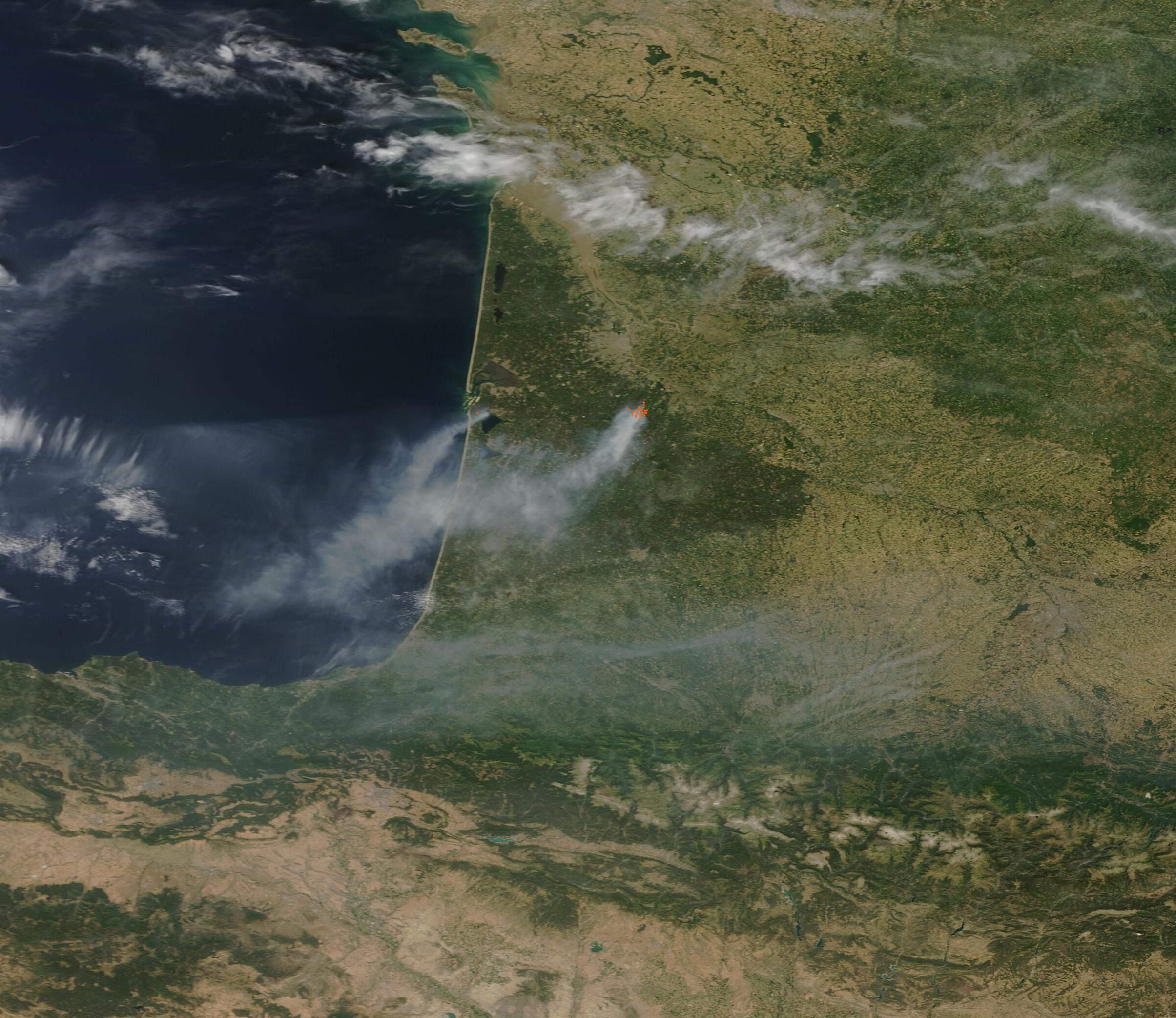
French authorities ordered the evacuation of 55,000 people [1] across five communes near Bordeaux during the night of July 25 to July 26.
The scale of the displacement highlights the volatility of the region's wildfires, which now threaten one of France's largest urban centers. The rapid spread of the flames has forced the closure of major transport arteries and the relocation of thousands of residents on short notice.
The evacuation orders affect the communes of Marcheprime, Cestas, Mios, Biganos, and Le Barp [1, 2]. The Préfecture de la Gironde issued the orders following a rapid resurgence of the forest fire. Préfet Sébastien Le Cornu said, "La situation demeure particulièrement critique" [3].
Emergency services report that the fire has already consumed 42,000 hectares [4]. The Service départemental d’incendie et de secours (SDIS) Gironde said that the "monster fire" is now located 15 kilometers from the Bordeaux metropolitan area [5].
Logistical disruptions have intensified as the fire encroaches on infrastructure. Authorities have closed the A63 motorway [4], and train services south of Bordeaux remain suspended [4]. The Préfecture de la Gironde said via a communique that the night was expected to be "compliquée" [6].
To combat the blaze, Préfet Le Cornu requested the deployment of A400M aircraft starting Sunday afternoon [7]. These strategic assets are intended to provide heavy aerial support to ground crews struggling to contain the perimeter as the fire pushes toward urban zones.
“"La situation demeure particulièrement critique"”
The proximity of a 42,000-hectare blaze to a major city like Bordeaux demonstrates the increasing risk that extreme weather and fuel loads pose to urban fringes. The suspension of the A63 motorway and rail lines indicates that these fires are not merely environmental disasters but significant economic disruptions that can sever regional logistics and supply chains.


