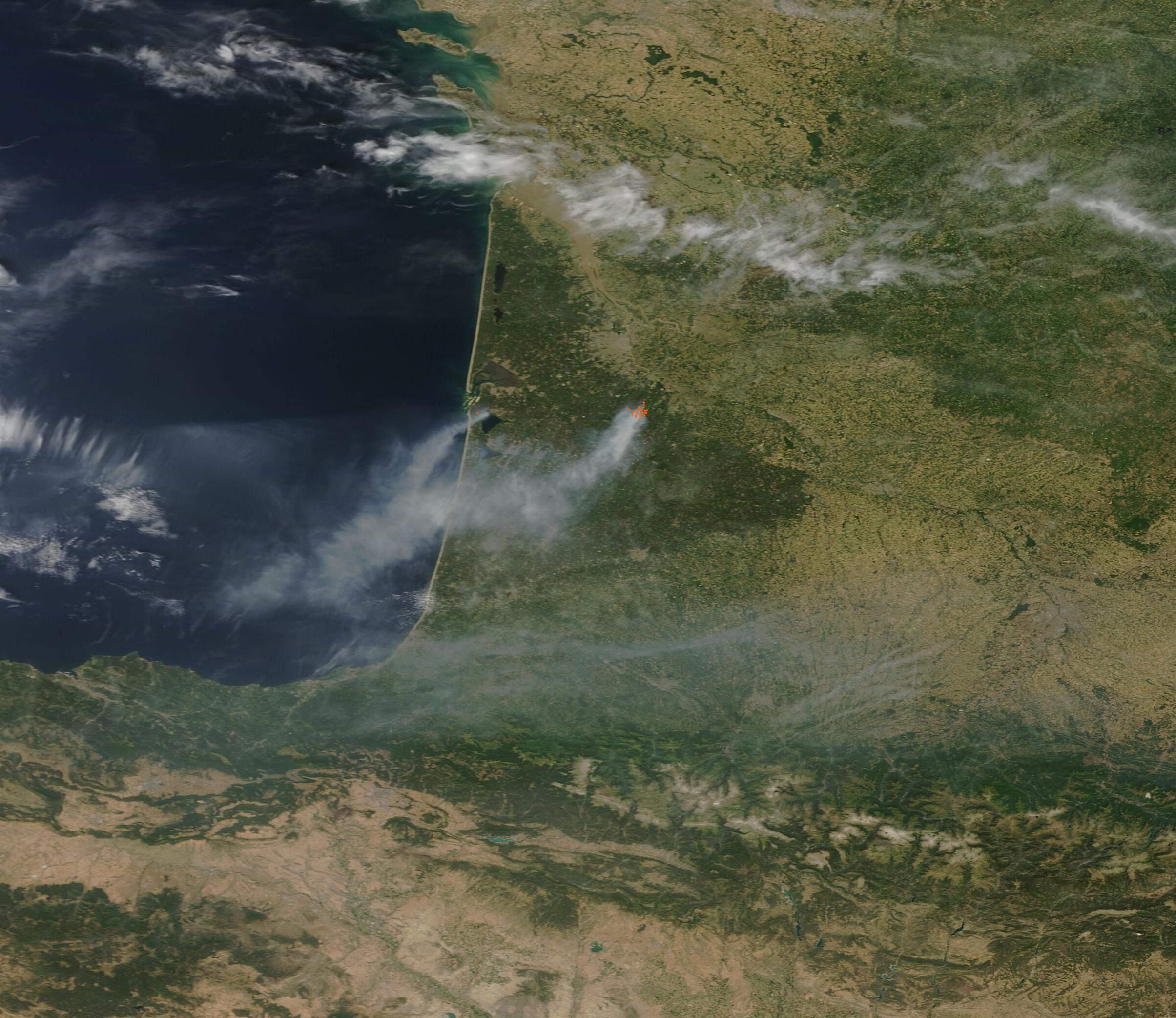
A large wildfire in the Gironde department of southwestern France has generated a thick smoke plume harmful to human health.
The disaster has forced thousands of residents to flee their homes and created a public health crisis as toxic air quality affects neighboring communes. The scale of the blaze has overwhelmed local resources, requiring the deployment of specialized military aircraft and international support.
Authorities said the smoke is causing short-term irritation of the eyes, nose, throat, and bronchi [1]. The fire has been active since Wednesday in early July 2026 [1, 5]. Due to the intensity of the blaze, between 167,000 [2] and 200,000 [4] people have been evacuated from the fire zone.
Destruction has been significant, with 140 houses destroyed by the fire [3]. Firefighters, including sapeurs-pompiers and support from other regions, continue to battle the flames [1, 2]. To combat the spread, the military transport aircraft A400M has been utilized for water drops [3].
Experts said the fire has been particularly difficult to control due to unusual convective conditions [6]. This behavior has created self-feeding fires that operate outside normal patterns, contributing to the unprecedented scale of the destruction [6].
The regional impact extends beyond the immediate fire line. In other parts of the country, such as the Pyrénées-Orientales, nearly 5,000 hectares have burned during the current fire season [5]. The Gironde blaze remains a primary focus for emergency services as they attempt to contain the perimeter and protect remaining residential areas [1, 2].
“The smoke is causing short-term irritation of the eyes, nose, throat, and bronchi.”
The emergence of self-feeding fire behavior in Gironde suggests a shift in wildfire dynamics, where the fire creates its own weather conditions to sustain growth. This makes traditional containment strategies less effective and increases the risk to public health through prolonged exposure to hazardous smoke plumes.


