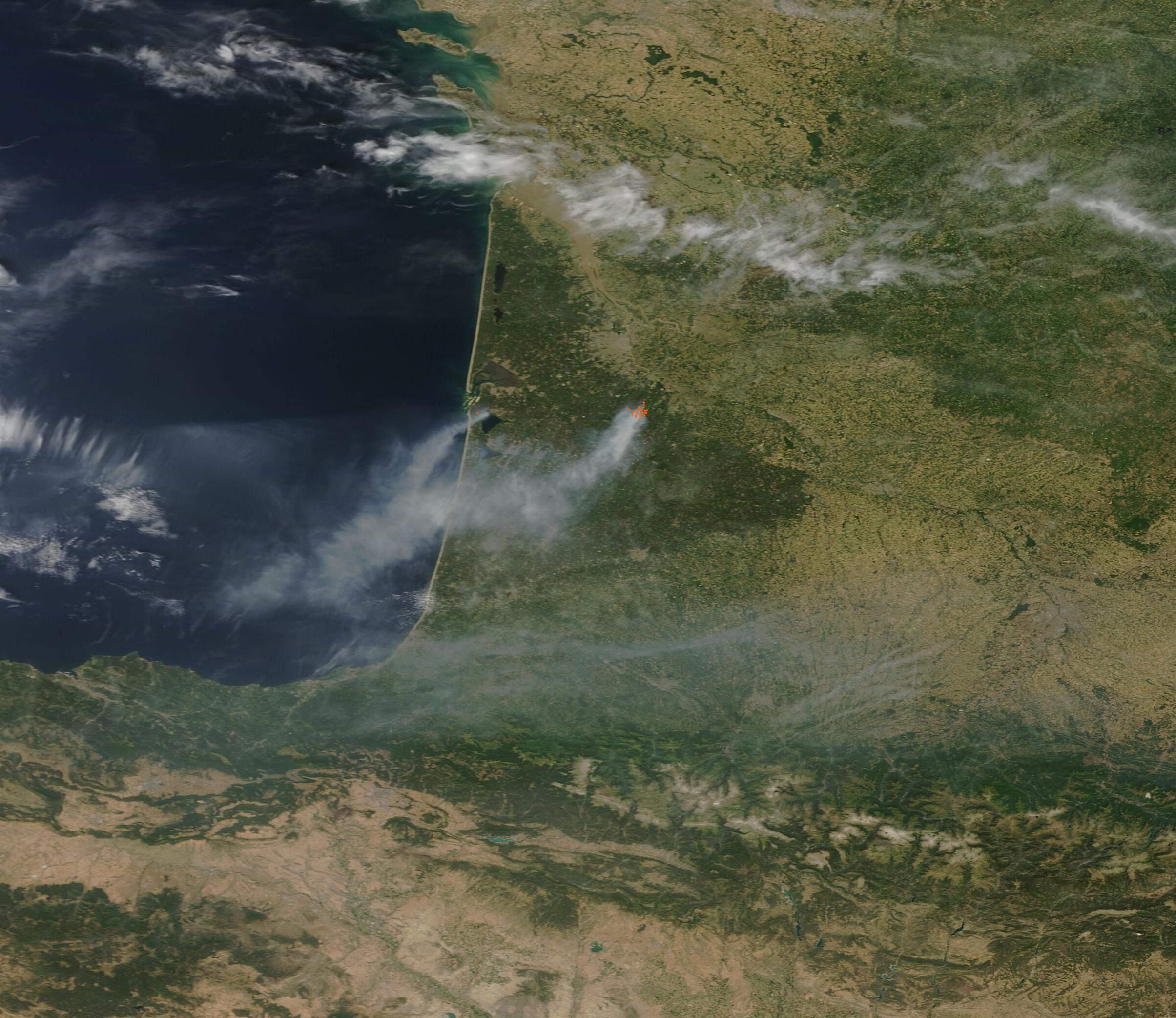
A massive wildfire swept through the Gironde department of southwestern France on Thursday, forcing the evacuation of approximately 20,000 people [1].
The scale of the disaster highlights the increasing volatility of summer fire seasons in France, where extreme weather and dry vegetation are creating unpredictable and lethal conditions for first responders.
Emergency crews battled flames that burned between 3,000 [2] and 3,400 [3] hectares, according to official reports. The fire's rapid spread was fueled by strong, unfavorable winds and dry vegetation. Local authorities said that pine cones acted like fire-bombs, accelerating the blaze and complicating containment efforts [2].
Witnesses and reporters described the emergence of a "fire tornado" [4] as the blaze tore through the landscape. These swirling columns of flame intensified the destruction and made the environment nearly impossible for firefighters to navigate.
The human cost of the disaster intensified in the area around Mérignac. Two firefighters died while battling the flames [5]. The deaths followed a day of chaotic evacuations that primarily affected civilians, and campers in the region [1].
The Director General of Civil Security said the current situation is "a fire season unprecedented in its scale" [4].
Firefighters continue to monitor the region to prevent further flare-ups. The combination of high temperatures and wind-driven embers remains a critical threat to the southwestern coast.
“"A fire season unprecedented in its scale"”
The occurrence of fire-tornadoes and the rapid acceleration caused by pyrophoric vegetation like pine cones indicate a shift toward more aggressive wildfire behavior in France. The loss of experienced firefighters in Mérignac, combined with the massive scale of civilian evacuations, suggests that traditional containment strategies may be insufficient against the increasing intensity of climate-driven fire events in the Gironde region.


