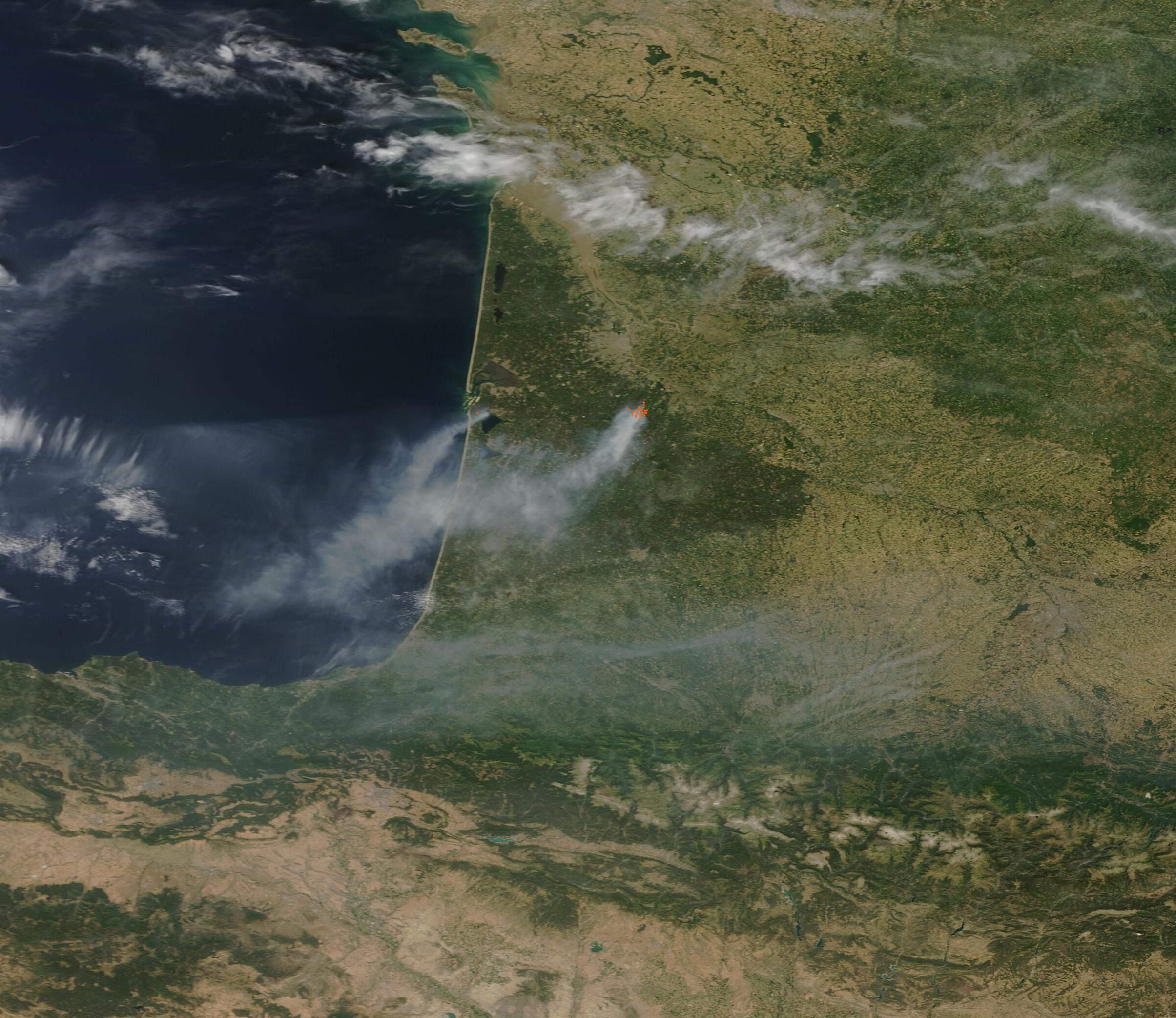
Wildfires in the Gironde department of southwest France have destroyed 42,000 hectares of pine forests and forced mass evacuations this July [1].
The scale of the destruction threatens local ecosystems and residential infrastructure, while extreme weather conditions continue to hinder containment efforts.
Aerial footage captured Tuesday shows charred landscapes, destroyed homes, and thick smoke drifting across the region [2]. The Gendarmerie Nationale and firefighters are working to manage the crisis, which has seen more than 220,000 people evacuated from their homes [3].
Authorities report that the situation remains volatile. The prefect of Gironde said there were 14 new fire outbreaks reported on Tuesday [4]. These flare-ups are fueled by exceptional heat and very dry conditions, which make the environment unstable.
Lieutenant-colonel Éric Brocardi, spokesperson for the National Federation of Firefighters, said the situation is still fragile and unstable [5]. He said there is no clear or distinct axis of propagation, making it difficult for teams to predict where the flames will move next [6].
Interior Minister Laurent Nuñez said the current state of affairs is an exceptional situation [7]. The Gironde fires are part of a larger national trend; since the start of the year, fires have burned a total of 115,000 hectares across France [8].
Emergency crews remain on high alert as they monitor satellite data and aerial surveillance to identify new ignition points before they spread through the dense pine groves.
“The situation is always fragile and always unstable.”
The recurrence of 'reprises de feu' (fire flare-ups) suggests that traditional containment lines are insufficient against the current level of soil and vegetation dryness. The lack of a clear propagation axis indicates a chaotic fire behavior that complicates resource allocation, signaling that southwest France is facing a volatile wildfire season where previous containment does not guarantee future safety.


