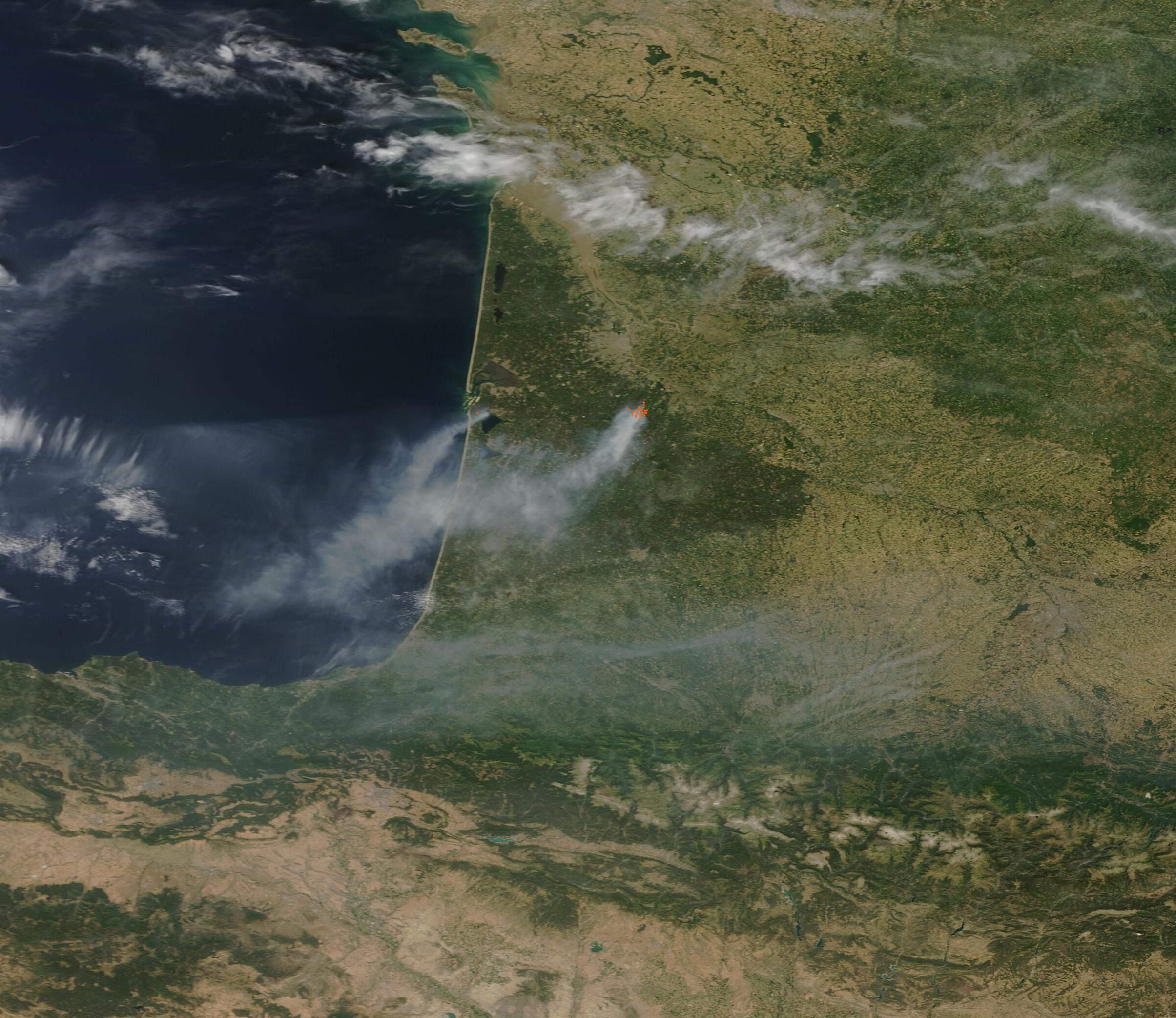
Historic wildfires have burned thousands of hectares north of the Arcachon basin in Gironde, prompting a massive emergency response this week [1].
The scale of the disaster threatens populated areas and requires an unprecedented coordination of civilian and military resources to prevent further loss of life and property.
Emergency crews are currently operating in the Lège-Cap-Ferret area, where flames have threatened residential neighborhoods [2]. The fires have raged for less than a week, fueled by extreme heat and dry conditions [1]. Reports on the total area burned vary, with some estimates stating more than 12,500 hectares of forest have been destroyed [2], while other reports describe the area as equivalent to twice the size of Marseille [1].
The mobilization effort involves a diverse coalition of responders. A total of 2,500 firefighters are on the ground [1]. They are supported by 1,500 military personnel, and 1,200 members of the interior security forces [1]. To combat the blazes from above, authorities have deployed 18 aerial resources [1].
The humanitarian impact has been significant, with 44,000 people evacuated from their homes [2]. Despite the intensity of the fires, responders have received substantial spontaneous reinforcements from volunteers to assist in the effort [3].
One firefighter said, "Tant qu’ils ont besoin de nous, on sera à leurs côtés," meaning they will remain by the side of the affected populations as long as they are needed [3].
“Historic wildfires have burned an area equivalent to twice the size of Marseille”
The scale of the Gironde wildfires, characterized by the evacuation of tens of thousands of residents and the deployment of over 5,000 combined security and emergency personnel, underscores the increasing volatility of Mediterranean and Atlantic climates. The reliance on military support and aerial assets suggests that the fires have exceeded the capacity of standard regional firefighting infrastructure.


