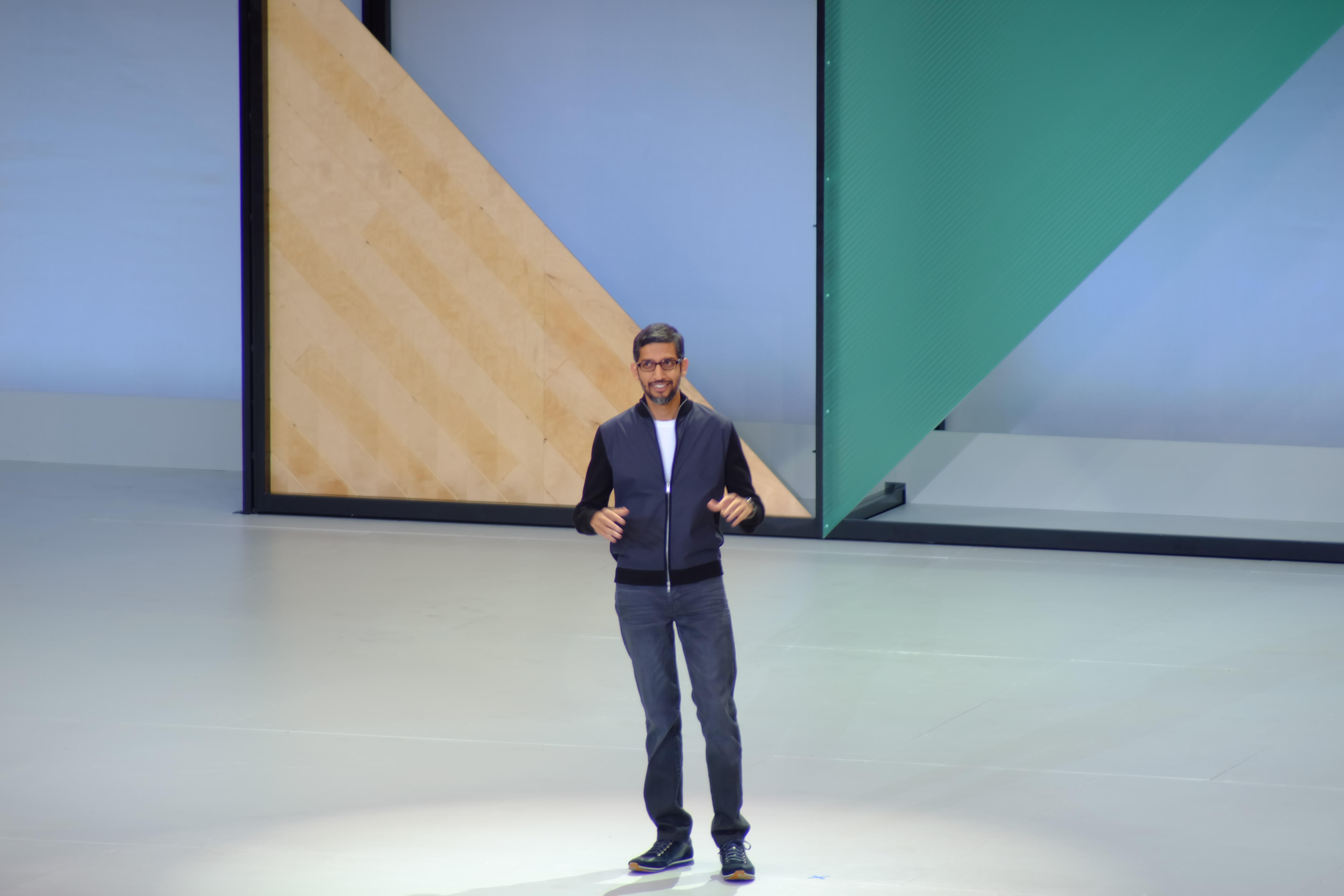
Google introduced an AI-powered upgrade to its Search engine, featuring an intelligent search box and new Gemini AI models, at the I/O 2026 conference.
This overhaul represents the most significant shift in the company's core product in years. By integrating generative AI directly into the homepage and results pages, Google aims to move from a list of links to a conversational interface that can synthesize information in real time.
During the event at the Shoreline Amphitheatre in Mountain View, California, CEO Sundar Pichai announced a redesign of the search bar. He said the company is rolling out an expandable, AI-powered search box that will let users start a conversation with Search directly from the homepage.
This update is described as the biggest change to the search bar in 25 years [2]. While some reports characterize the box as expandable, other accounts describe it as an "intelligent" box that integrates AI agents.
Alongside the interface changes, Google launched Gemini 3.5 Flash and Gemini Omni. A Google AI lead said these next-generation models are designed to be faster and more capable across Search, Workspace, and Android [3]. These models power the AI Overviews that now appear at the top of search results to provide quick, synthesized answers.
The company is leaning into this technology as user adoption grows. A Google spokesperson said AI Mode in Google Search has now surpassed 1 billion monthly users [1].
These updates are part of a broader strategy to improve relevance and user experience by weaving generative AI into the fabric of the web's most visited site. The new models aim to reduce latency and increase the complexity of queries the system can handle without losing speed.
“"AI Mode in Google Search has now surpassed 1 billion monthly users."”
Google's transition toward a conversational search interface marks a pivot from being a directory of the web to an AI agent that processes information for the user. By scaling to 1 billion monthly users in AI Mode, the company is attempting to defend its search monopoly against emerging AI-native competitors while fundamentally changing how traffic is distributed across the internet.


