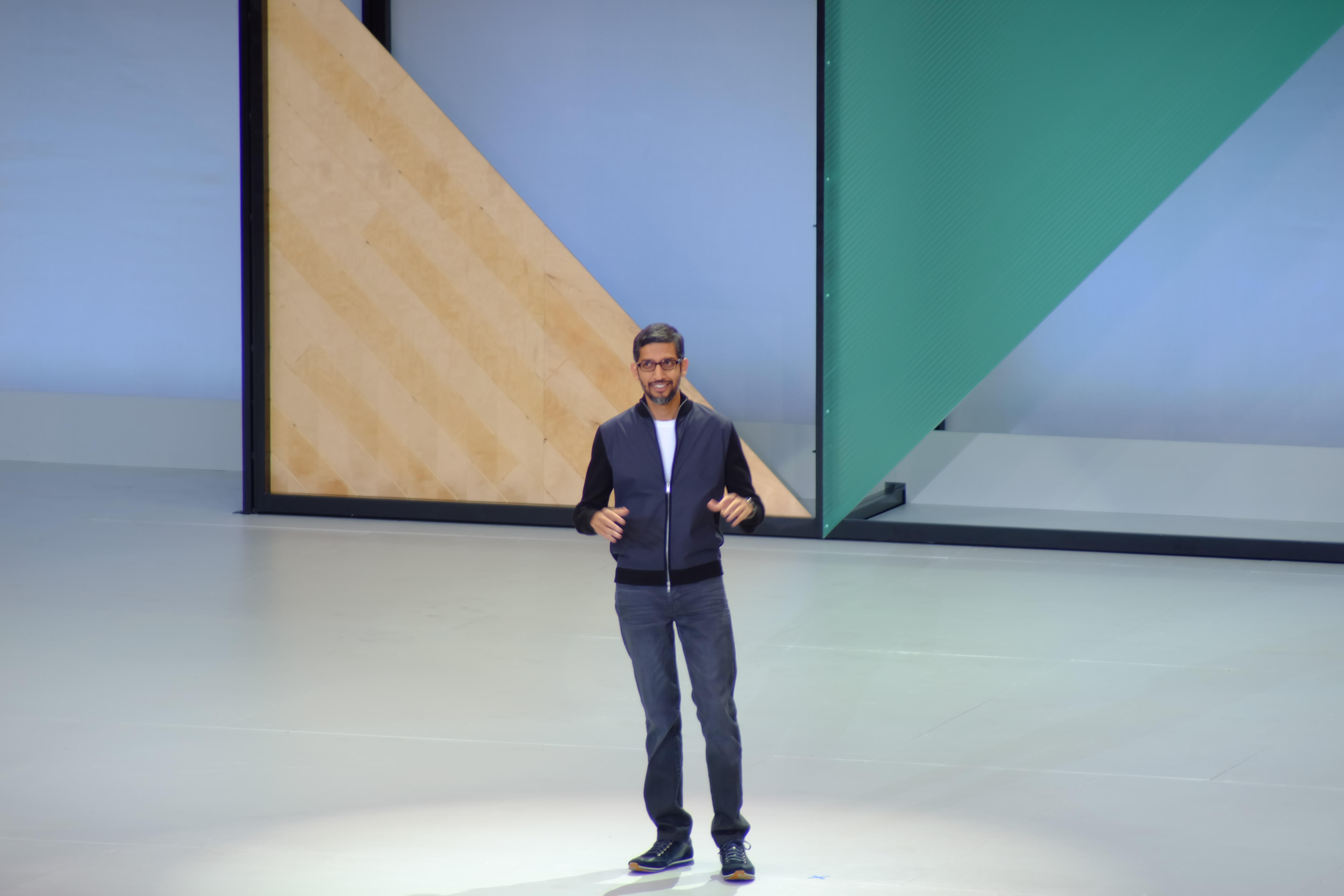
Google began its I/O 2026 developer conference on May 19, 2026 [1], featuring a keynote address from CEO Sundar Pichai.
The event serves as a critical attempt to reassure Wall Street investors and establish the company as the dominant leader in the artificial intelligence sector [2].
Streaming from the Googleplex in Mountain View, California, the showcase is billed as the company's largest AI event to date [3]. The keynote began at 10:30 p.m. IST [1], reaching a global audience via livestream.
Pichai used the platform to introduce significant updates to the Gemini AI ecosystem. These updates aim to integrate generative intelligence more deeply into the company's existing product suite, ensuring that Google remains competitive against other AI developers [2].
Beyond software, the conference highlighted hardware advancements. Google unveiled Android XR glasses, marking a push into extended reality that blends digital information with the physical world [3]. This hardware strategy is intended to create new entry points for AI interaction outside of traditional screens.
Market analysts are monitoring the event closely due to the company's history of volatility following developer conferences. In a previous I/O event, Google's stock surged 140% [4].
The conference comes at a time when Alphabet is under pressure to translate its massive AI research into scalable, revenue-generating products. By showcasing both the Gemini updates and new wearable hardware, the company is attempting to prove that its AI strategy is comprehensive — covering both the cloud and the edge.
“Google's I/O 2026 is billed as the company's biggest AI showcase.”
This event signals Google's shift from purely experimental AI to a commercial integration phase. By pairing Gemini updates with XR hardware, Alphabet is attempting to lock users into an ecosystem where AI is not just a chatbot, but an ambient layer of the user's physical environment, thereby defending its search monopoly against AI-native competitors.


