
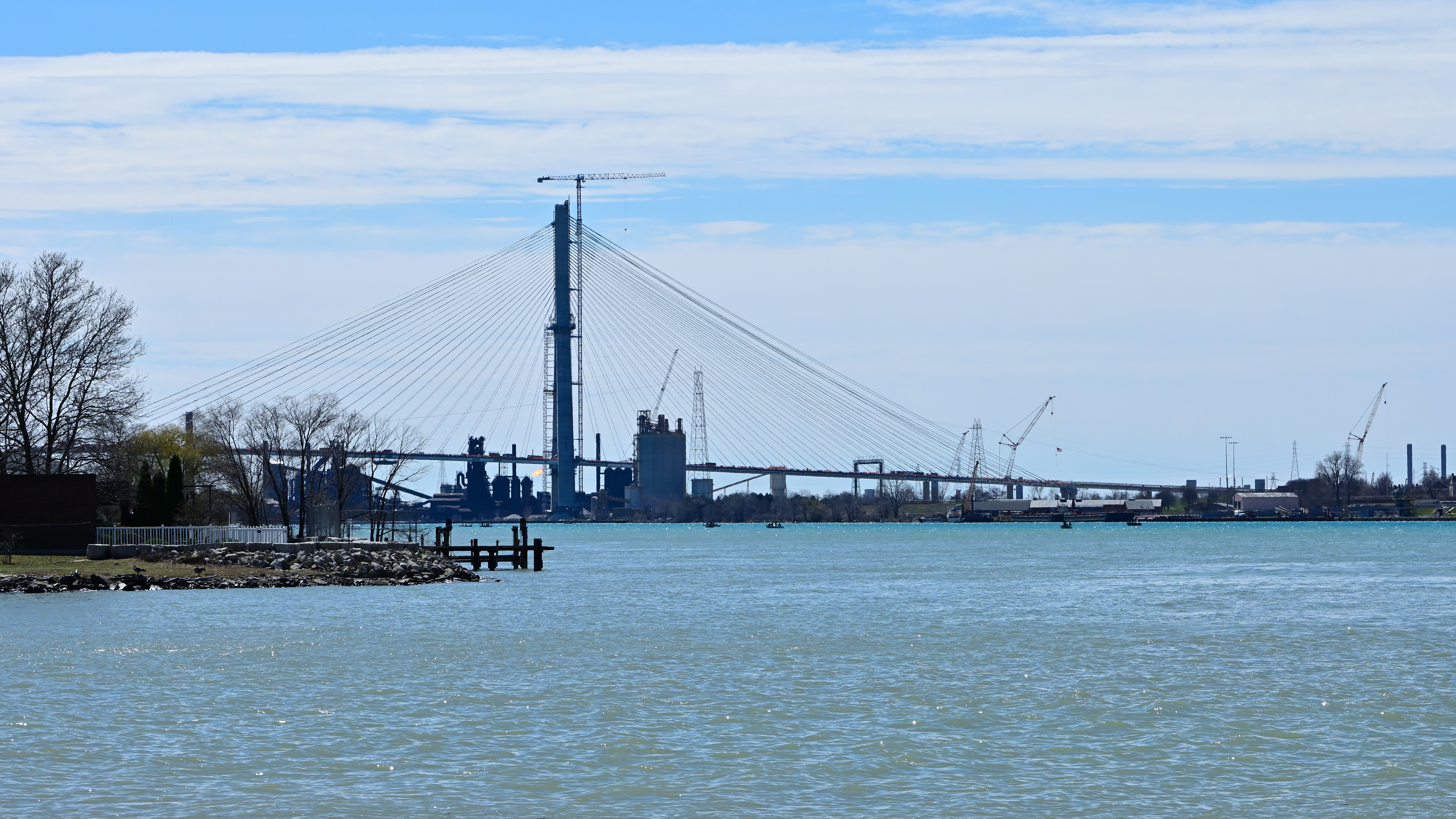
Sen. Gary Peters (D-Mich.) questioned whether U.S. Customs is prepared to operate the Gordie Howe International Bridge during a Senate Appropriations Committee hearing on Thursday [3].
The bridge's opening is critical for trade between Detroit, Michigan, and Windsor, Ontario, but the project remains stalled by diplomatic and administrative hurdles.
Department of Homeland Security Secretary Markwayne Mullin said that U.S. Customs is ready to begin operations, though he noted that the process requires the final sign-off from the contractor and the resolution of differences between the U.S. and Canada [2].
“We are ready to go, but we need the final sign‑off from the contractor and resolution of U.S.–Canada differences,” Mullin said [2].
While some reports indicate the bridge could be only days away from completion [1], other officials suggest the delay is political. Michigan Democratic leadership urged President Trump to authorize the opening of the bridge as the project nears its end [3].
Evan Solomon, the Canadian federal minister for AI and Federal Economic Development, said that the primary obstacle is not the infrastructure itself. Solomon said the barrier to opening may lie within broader negotiations rather than the bridge [4].
The bridge spans the Detroit River and is intended to streamline the movement of goods, and people between the two nations [5]. However, the intersection of infrastructure completion and ongoing trade disputes has created a bottleneck for the final launch.
““We are ready to go, but we need the final sign‑off from the contractor and resolution of U.S.–Canada differences.””
The readiness of U.S. Customs indicates that the operational side of the border crossing is prepared, shifting the focus of the delay toward geopolitical leverage. By tying the opening of a nearly completed infrastructure project to trade negotiations, the administration may be using the bridge as a bargaining chip in broader U.S.–Canada diplomatic talks.


'%2F%3E%0A%20%20%20%20%3Crect%20width%3D'1600'%20height%3D'900'%20fill%3D'url(%23v)'%2F%3E%0A%20%20%20%20%3Cg%20opacity%3D'0.08'%20fill%3D'%23ffffff'%3E%0A%20%20%20%20%20%20%3Ccircle%20cx%3D'1420'%20cy%3D'180'%20r%3D'220'%2F%3E%0A%20%20%20%20%20%20%3Ccircle%20cx%3D'1500'%20cy%3D'760'%20r%3D'120'%2F%3E%0A%20%20%20%20%3C%2Fg%3E%0A%20%20%20%20%3Cline%20x1%3D'80'%20y1%3D'172'%20x2%3D'220'%20y2%3D'172'%20stroke%3D'%23ffffff'%20stroke-width%3D'3'%20stroke-opacity%3D'0.6'%2F%3E%0A%20%20%20%20%3Ctext%20x%3D'80'%20y%3D'140'%20font-family%3D'Inter%2C%20-apple-system%2C%20Helvetica%2C%20sans-serif'%20font-weight%3D'700'%20font-size%3D'28'%20fill%3D'%23ffffff'%20letter-spacing%3D'6'%3EHANNA%20%C2%B7%20NEWS%3C%2Ftext%3E%0A%20%20%20%20%3Ctext%20x%3D'80'%20y%3D'230'%20font-family%3D'Inter%2C%20-apple-system%2C%20Helvetica%2C%20sans-serif'%20font-weight%3D'600'%20font-size%3D'40'%20fill%3D'%23ffffffb3'%20letter-spacing%3D'4'%3EWORLD%3C%2Ftext%3E%0A%20%20%20%20%3Ctext%20x%3D'80'%20y%3D'694'%20font-family%3D'Playfair%20Display%2C%20Georgia%2C%20serif'%20font-weight%3D'800'%20font-size%3D'110'%20fill%3D'%23ffffff'%20letter-spacing%3D'-1'%3ECanadian%20Youth%20Face%20Toughest%3C%2Ftext%3E%3Ctext%20x%3D'80'%20y%3D'820'%20font-family%3D'Playfair%20Display%2C%20Georgia%2C%20serif'%20font-weight%3D'800'%20font-size%3D'110'%20fill%3D'%23ffffff'%20letter-spacing%3D'-1'%3ESummer%20Job%20Market%20in%20Decades%3C%2Ftext%3E%0A%20%20%20%20%3Ctext%20x%3D'80'%20y%3D'870'%20font-family%3D'Inter%2C%20-apple-system%2C%20Helvetica%2C%20sans-serif'%20font-weight%3D'500'%20font-size%3D'22'%20fill%3D'%23ffffff66'%20letter-spacing%3D'2'%3Enews.hanna-ai.com%3C%2Ftext%3E%0A%20%20%3C%2Fsvg%3E)
