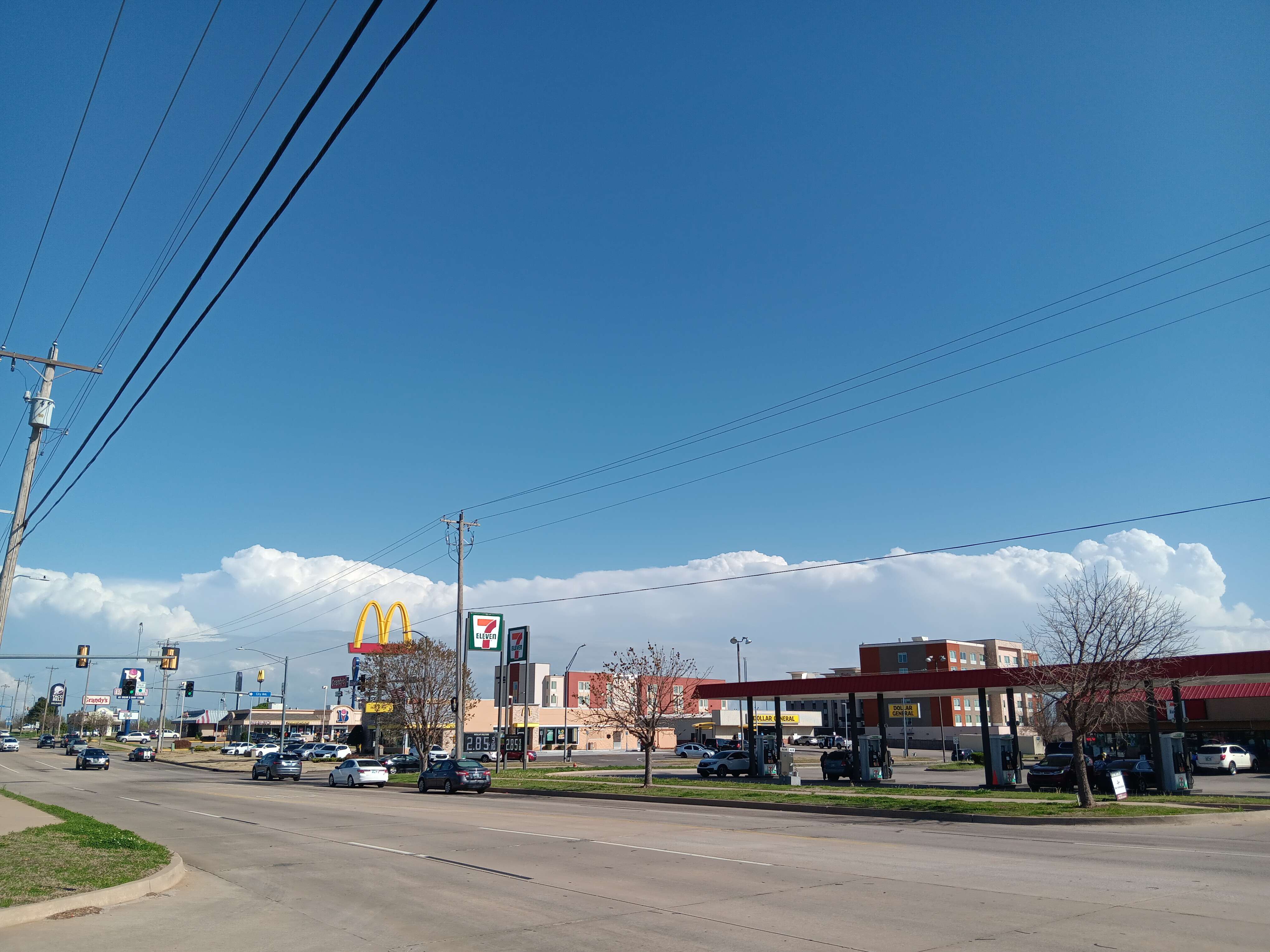
A gustnado is a brief, low-level whirlwind that forms along a storm's outflow or gust front rather than from a supercell [1, 2].
Distinguishing these phenomena is critical for public safety and accurate weather reporting. While gustnadoes can look like tornadoes, they originate from different atmospheric mechanisms and generally pose a different level of risk to life and property.
Chris Bianchi, a meteorologist for 9 News Australia's Weather Impact Team, explained the phenomenon in a recent video [1]. He described the process of how these vortices emerge during storm activity. According to the National Weather Service, a gustnado is a short-lived, low-level vortex that forms along a gust front, not from the mesocyclone of a supercell [4].
This distinction is based on the source of the rotation. A Yahoo News article said, "Think of a gustnado as a brief swirl of wind along the storm's outflow/gust front, while a tornado forms from organized rotation within the thunderstorm itself" [2]. Because they lack the deep-rooted rotation of a true tornado, gustnadoes are often less destructive.
Recent observations have placed these whirlwinds in various locations, including Gun Lake in Michigan and near Burnips in Canada [2, 3]. In Colorado, a gustnado touched down near Denver Airport, which was cited as the first confirmed 2026 tornado in that state [5].
There is some inconsistency in how these events are classified. While the Associated Press said that gustnadoes are not classified as true tornadoes [2], other reports have listed them as such in local records [5]. Despite these classification differences, the physical impact remains similar. The Associated Press said gustnadoes are small whirlwinds that rarely cause damage [2], a sentiment echoed by reports from UpNorthLive [3] and data from the Denver Airport event, which caused no damage [5].
“A gustnado is a short-lived, low-level vortex that forms along a gust front, not from the mesocyclone of a supercell.”
The confusion between gustnadoes and tornadoes highlights a gap in public understanding of storm dynamics. While both produce rotating columns of air, the lack of a mesocyclone in a gustnado means it lacks the sustained power of a traditional tornado. This distinction allows meteorologists to provide more accurate risk assessments during volatile weather events.


