Researchers at Hanbat National University have developed a new predictive model for designing two-dimensional (2D) perovskites [1].
This development addresses critical gaps in understanding how screening environments affect excitonic properties. By providing a framework to predict these interactions, the model allows scientists to design materials that are more efficient and stable for use in optoelectronic devices [1, 2].
Perovskites are a class of materials used in high-tech applications, including solar energy and spintronics. "Two-dimensional (2D) perovskites have emerged as promising optoelectronic materials," a researcher said [3]. While these materials show potential, achieving consistent performance has remained a significant hurdle for the scientific community.
One specific area of focus involves chiral 2D metal halide perovskites (MHPs). These materials are considered among the most promising for future technologies that exploit the spin of electrons in spintronics, but a scientist said that getting them to perform consistently has proven difficult [2].
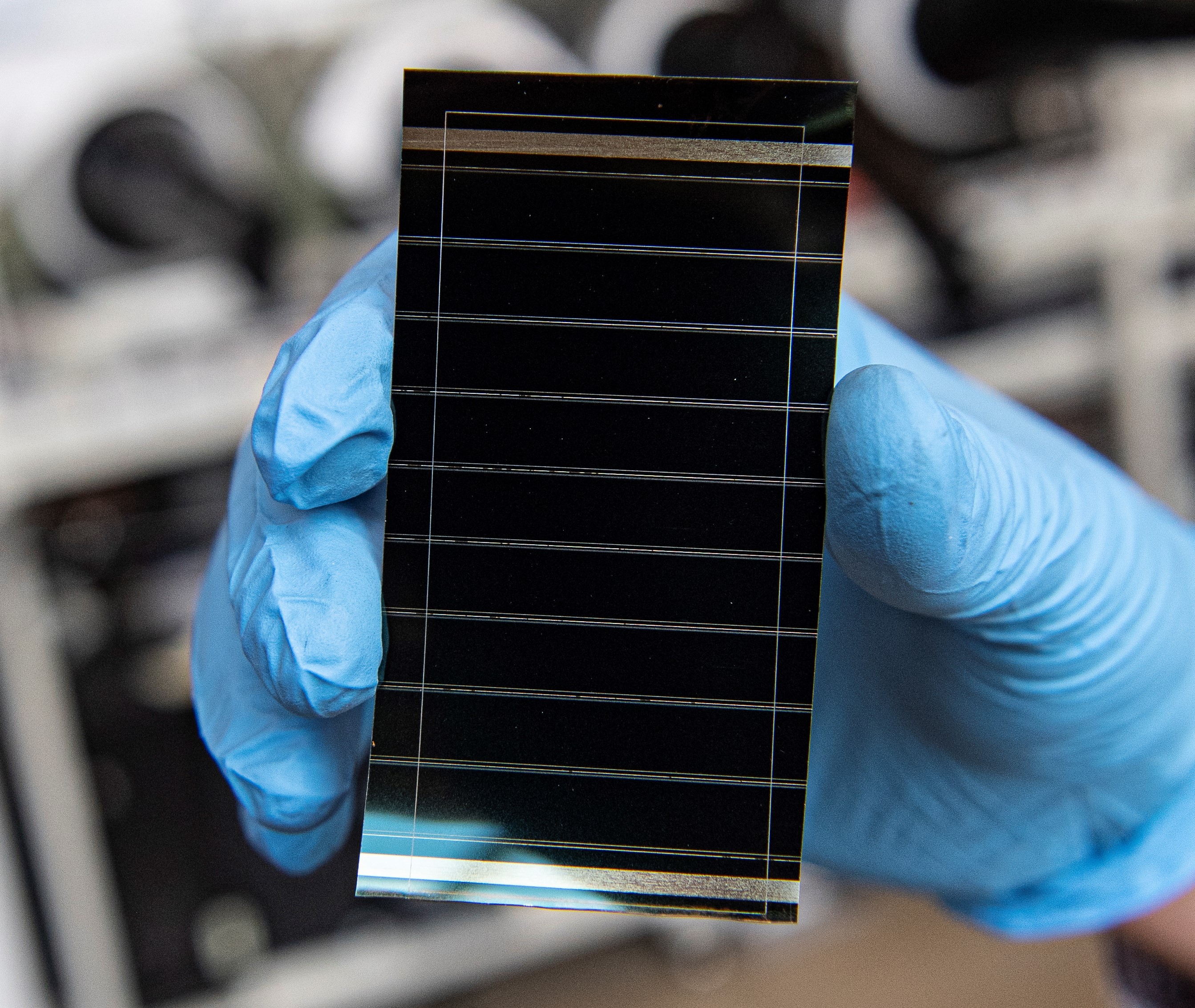
The new predictive framework aims to streamline the design process to enable more efficient and stable solar cells [4]. This is particularly relevant as the industry seeks higher efficiency ratings for hybrid modules. Recent developments in the field have seen the construction of 3D-2D solar modules that are 22.36% efficient [5].
By bridging the gap between theoretical design and physical performance, the Hanbat National University team provides a tool to optimize how these materials capture and process light. This approach reduces the reliance on trial-and-error experimentation in the lab [1, 2].
“Two-dimensional (2D) perovskites have emerged as promising optoelectronic materials”
The transition from trial-and-error material science to predictive modeling marks a shift toward accelerated development of next-generation semiconductors. By solving the stability and consistency issues of 2D perovskites, this research could lower the cost of high-efficiency solar cells and advance the viability of spintronics, which could lead to faster, lower-power electronic devices.