
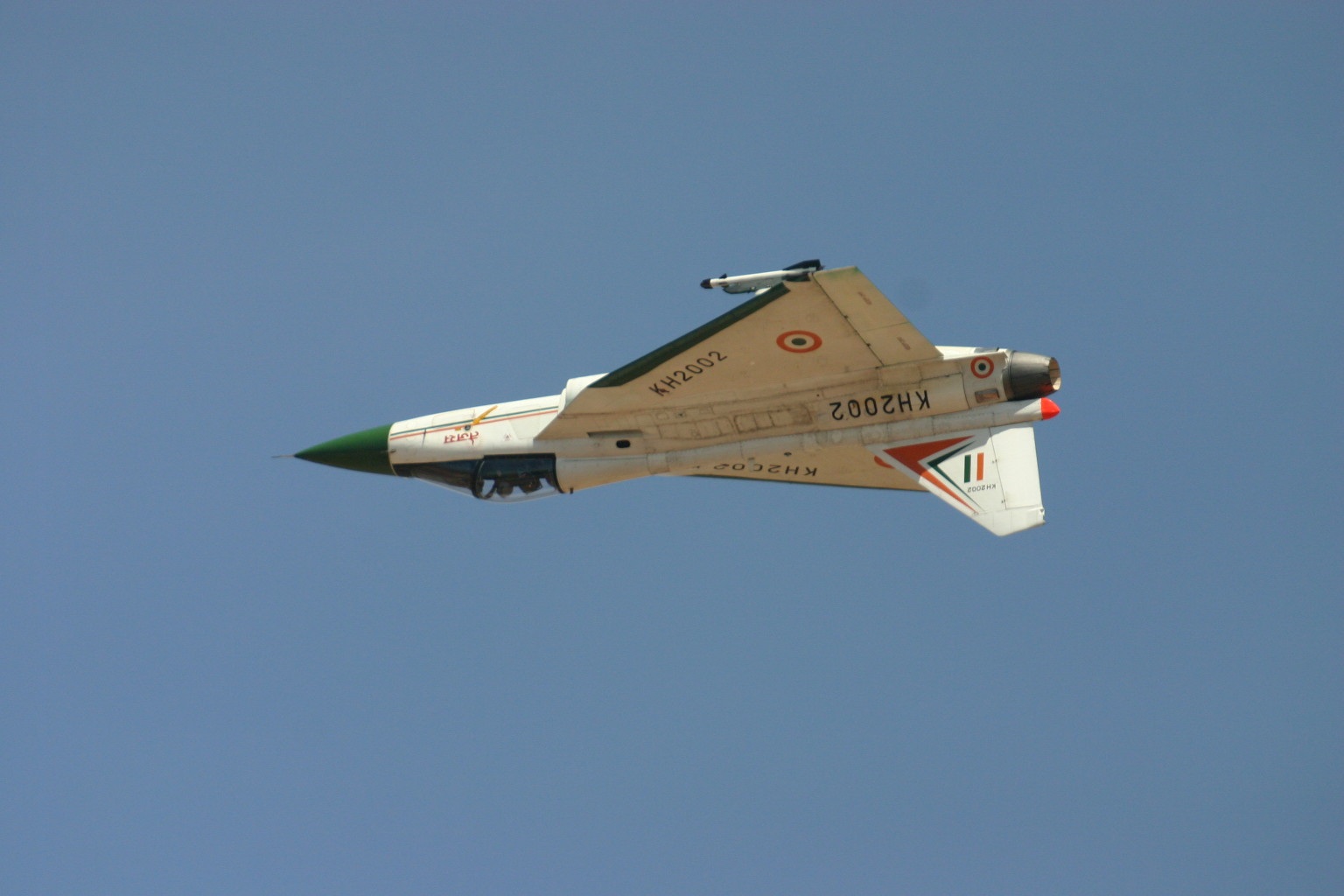
India has cleared the next phase of the Advanced Medium Combat Aircraft (AMCA) program to develop an indigenous fifth-generation stealth fighter.
The move represents a strategic shift toward reducing reliance on foreign military platforms while expanding the role of the private sector in high-tech defense manufacturing.
Defence Minister Rajnath Singh and Andhra Pradesh Chief Minister N. Chandrababu Naidu laid the foundation stone for a Rs 16,000-crore [1] infrastructure project on May 15, 2026. The facility will be located in Puttaparthi, within the Sri Sathya Sai district of Andhra Pradesh [1], [3].
As part of the program's progression, the Defence Ministry issued a Request for Proposal (RFP) valued at Rs 15,000-crore [2]. Three private sector firms have been shortlisted to compete for the project: Tata, L&T, and Bharat Forge [2]. Notably, Hindustan Aeronautics Limited (HAL) is not among the players in this specific race [2].
The AMCA program aims to provide the Indian Air Force with a stealth aircraft capable of advanced electronic warfare and precision strikes. By pivoting toward private industry for development and infrastructure, the government seeks to accelerate the production timeline and foster a domestic ecosystem for aerospace engineering [2], [4].
Despite these milestones, the program continues to face challenges regarding engine development. The integration of a powerful, indigenous engine remains a critical hurdle for the aircraft to meet the performance specifications required for fifth-generation fighters [5].
The infrastructure in Andhra Pradesh is expected to serve as a hub for the testing and assembly of these advanced systems, marking a significant leap in India's indigenous defense capabilities [3].
“India has cleared the next phase of the Advanced Medium Combat Aircraft (AMCA) program.”
The transition of the AMCA program from state-led development to a private-sector competitive model indicates a policy shift in India's 'Atmanirbhar Bharat' (self-reliant India) initiative. By sidelining HAL in favor of firms like Tata and L&T, the government is attempting to break traditional bureaucratic bottlenecks in aerospace production. However, the project's ultimate success depends on solving the engine hurdle, as stealth airframes are ineffective without propulsion systems that match global standards.


