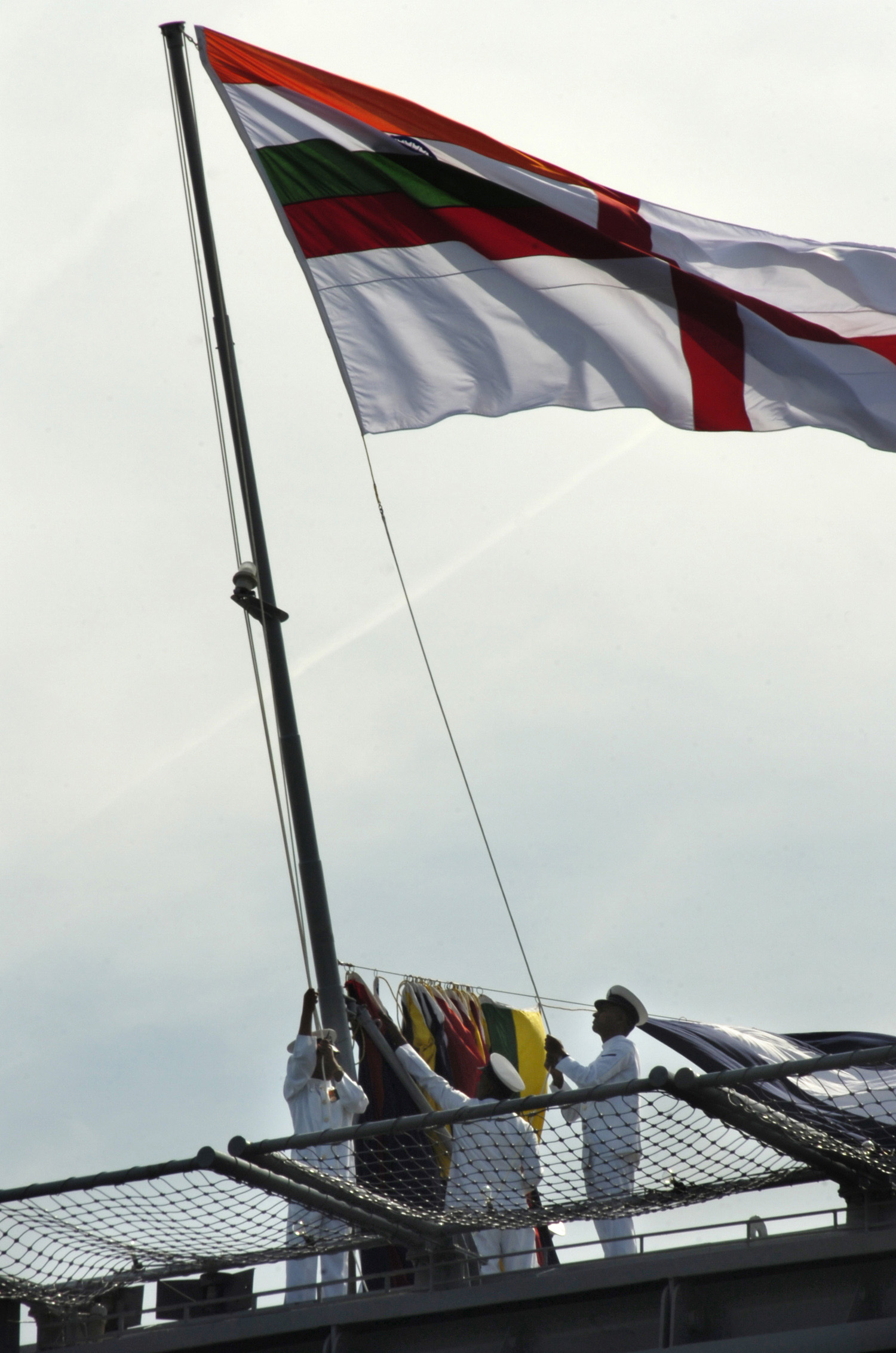
Union Defence Minister Rajnath Singh commissioned the indigenously built stealth frigate INS Mahendragiri on July 11, 2026 [1].
The induction of the vessel strengthens India's naval capabilities in the Indo-Pacific region. By utilizing domestic manufacturing, the project advances the government's goal of reducing reliance on foreign military imports.
The ceremony took place at the Visakhapatnam Naval Dockyard in Andhra Pradesh [2]. Singh was accompanied by Andhra Pradesh Governor S. Abdul Nazeer during the proceedings [3]. The ship is officially assigned to the Eastern Fleet of the Indian Navy [4].
Singh said the vessel is combat-ready to safeguard India's maritime interests and strengthen the national resolve for a secure Indo-Pacific [5]. He said the achievement is a key part of the country's broader strategic shift toward self-reliance.
"This milestone reflects India's Aatmanirbhar Bharat defence push," Singh said [6].
The stealth frigate is designed to operate with a reduced radar signature, making it more difficult for enemy sensors to detect. This capability is intended to bolster the security of India's maritime borders, and protect trade routes in the eastern waters.
Singh said the government is proud to induct INS Mahendragiri into the Eastern Fleet [7]. The commissioning follows a series of trials to ensure the ship meets operational standards for high-seas deployment.
“"This milestone reflects India's Aatmanirbhar Bharat defence push."”
The commissioning of the INS Mahendragiri signifies a tactical shift in India's naval strategy, emphasizing 'Aatmanirbhar Bharat' or self-reliance in defense production. By integrating stealth technology into its Eastern Fleet, India enhances its deterrence capabilities and maritime domain awareness in the Indo-Pacific, signaling a move toward strategic autonomy in ship-building and regional security.


