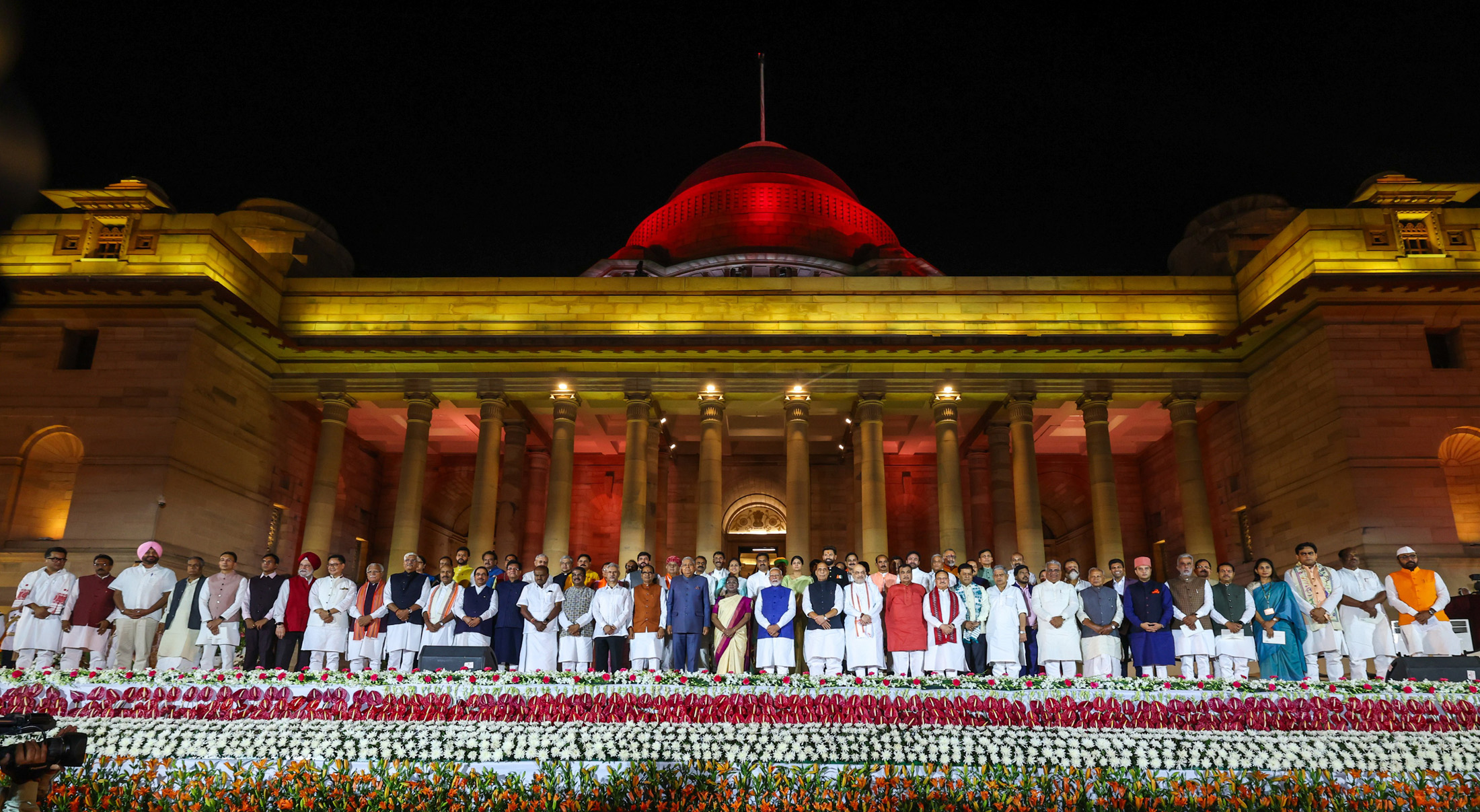
Indian Prime Minister Narendra Modi welcomed Japanese Prime Minister Sanae Takaichi to New Delhi on Thursday for the 16th India-Japan Annual Summit [1].
The meeting signals a push to deepen strategic ties between two major Asian powers facing shared economic and security challenges in the Indo-Pacific region.
The summit began with a ceremonial reception at the forecourt of Rashtrapati Bhavan on July 2, 2026 [2]. Prime Minister Modi hosted the event, which included a Guard of Honour for the visiting Japanese leader [3].
Bilateral talks during the summit are expected to focus on critical infrastructure, and technological advancement. The two leaders intend to discuss the development of artificial intelligence and the creation of resilient supply chains to reduce dependencies on volatile markets [4].
Economic security remains a primary pillar of the discussions. The agenda includes clean energy initiatives, and cooperation on the Indo-Pacific to maintain regional stability [4]. These talks come as both nations navigate an increasingly complex geopolitical landscape involving China and other regional actors [4].
Other key points of cooperation include the ongoing progress of the bullet train project and addressing the current energy crisis [4]. The partnership aims to synchronize diplomatic efforts to ensure a free and open Indo-Pacific, emphasizing the importance of rules-based governance in international waters [4].
This visit marks a continuation of the strategic partnership that has evolved over the last 16 summits [1]. The ceremonial welcome serves as the formal opening to a series of high-level meetings designed to solidify trade agreements, and security protocols between the two nations [3].
“The meeting signals a push to deepen strategic ties between two major Asian powers.”
The 16th Annual Summit reflects a strategic pivot toward 'economic security,' where India and Japan seek to decouple critical supply chains from adversarial influences. By prioritizing AI and clean energy, both nations are attempting to synchronize their technological standards and infrastructure to counterbalance China's regional influence and ensure stability in the Indo-Pacific.

![Contains modified Copernicus Sentinel data [2022], processed by <a href="https://twitter.com/Pierre_Markuse" rel="noreferrer nofollow">Pierre Markuse</a> Lusail Stadium, 23 km north of Doh](https://upload.wikimedia.org/wikipedia/commons/e/e2/Lusail_Stadium%2C_23_km_north_of_Doha%2C_Qatar_-_15_Nov_2022_%2852511219242%29.jpg)