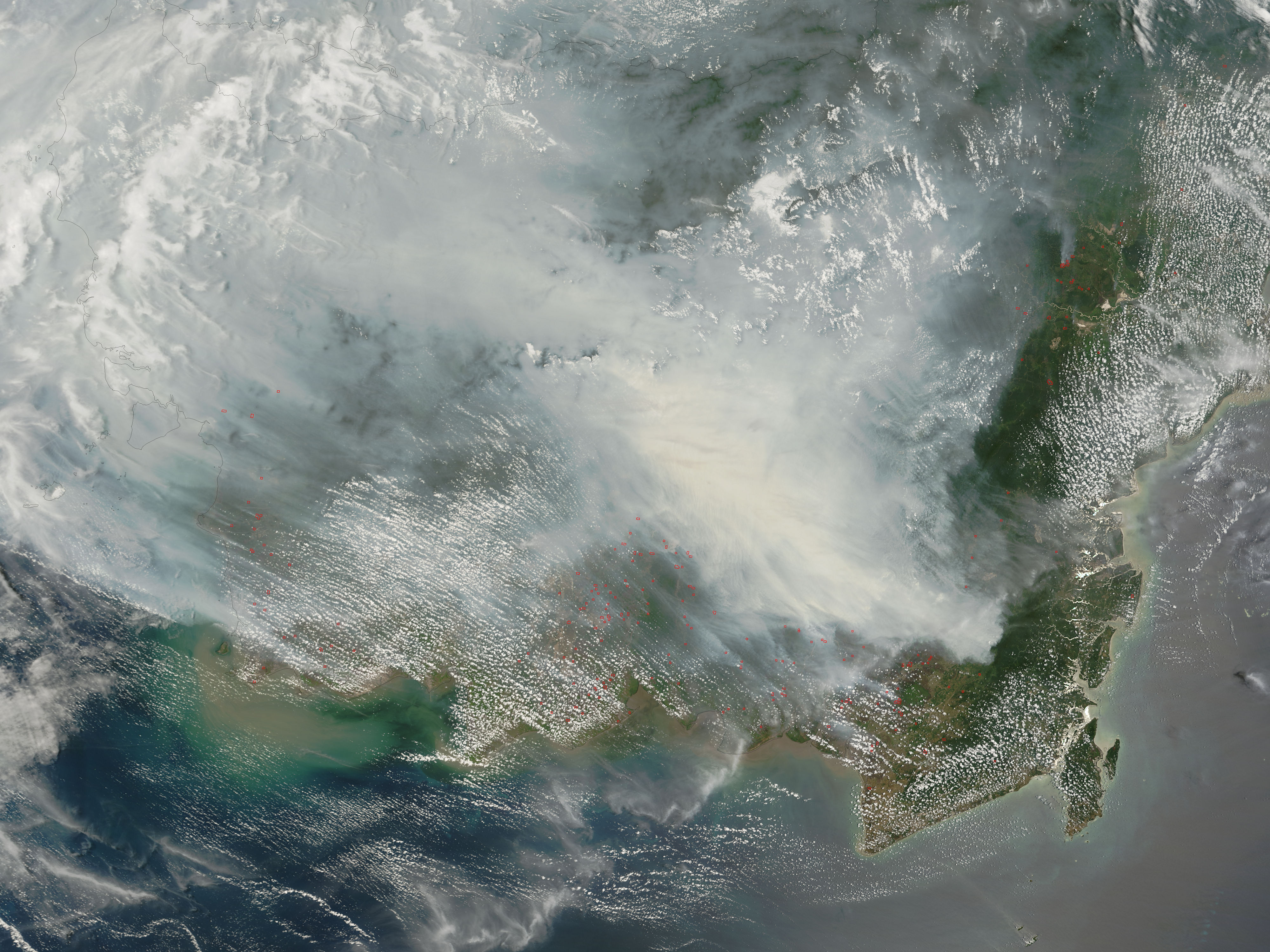
Indonesian firefighters are struggling to control a large peatland wildfire in Kalimantan on the island of Borneo [1].
These fires are particularly dangerous because peatlands can burn underground, making them difficult to extinguish and prone to reigniting. The current blaze threatens local ecosystems and contributes to significant atmospheric pollution through heavy smoke.
Emergency crews face a double challenge due to the nature of the peat and severe weather conditions [1]. A prolonged dry season has intensified the risk of ignition and the speed of the fire's spread [1].
Meteorological data indicates that the El Niño phenomenon is exacerbating these dry conditions [1]. This climate pattern typically reduces rainfall in Southeast Asia, leaving the organic soil of the peatlands highly combustible, a factor that complicates containment efforts for ground crews.
Firefighters continue to operate in Kalimantan as they attempt to dampen the soil and create firebreaks [1]. The struggle remains ongoing as the region continues to experience the effects of the weather pattern.
“Indonesian firefighters are struggling to control a large peatland wildfire in Kalimantan”
Peatland fires in Indonesia represent a critical intersection of climate volatility and environmental vulnerability. Because peat stores massive amounts of carbon, these blazes not only destroy local biodiversity but also release significant greenhouse gases, creating a feedback loop that intensifies the effects of El Niño.


