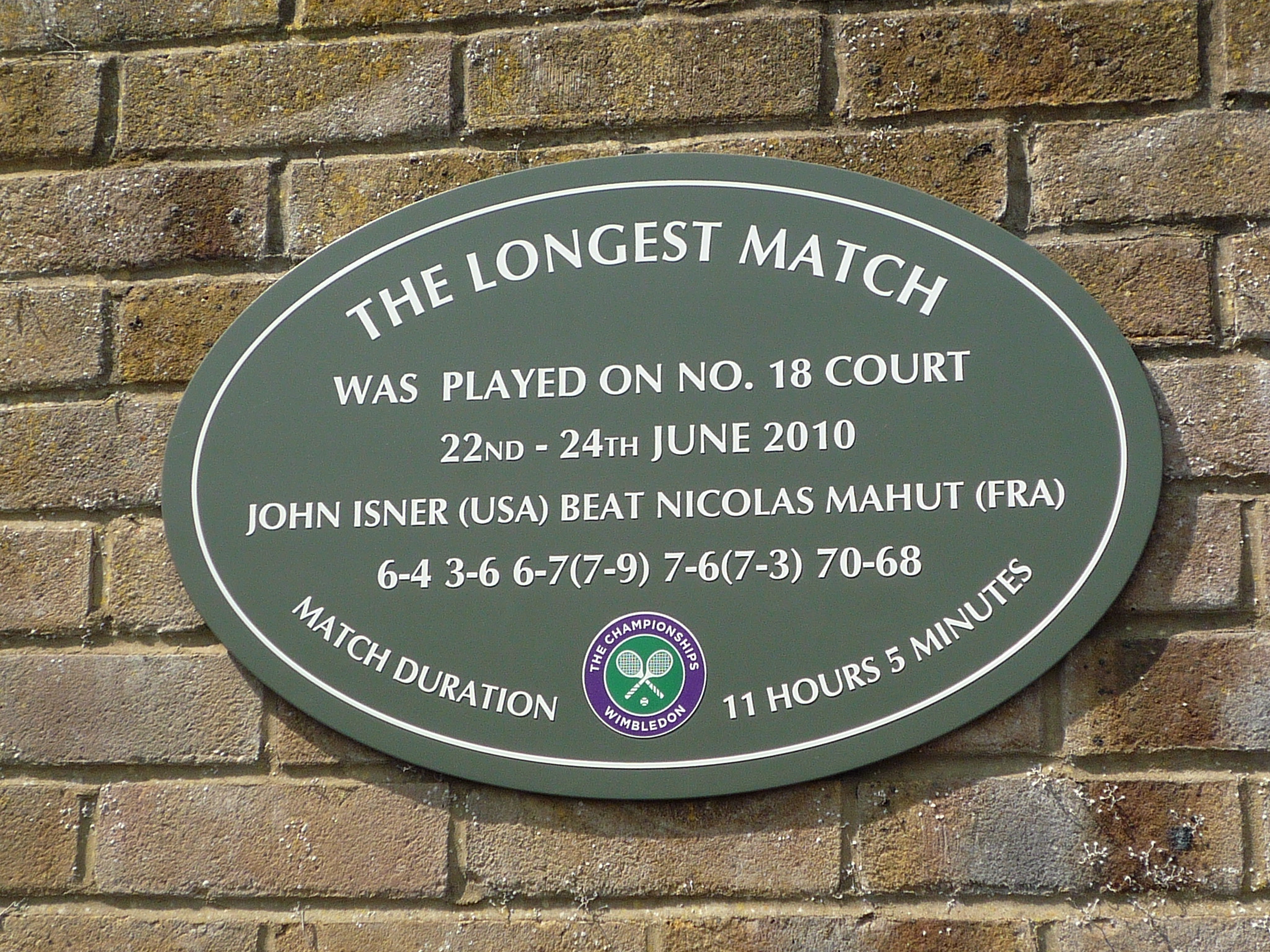
John Isner defeated Nicolas Mahut in the longest match in Wimbledon history, a contest that lasted over 11 hours [1, 2].
The match remains a significant benchmark in professional tennis due to its unprecedented duration and physical toll on the athletes. It highlighted the extremes of endurance in the sport and the impact of the tournament's scoring rules at the time.
The encounter took place at the All England Lawn Tennis and Croquet Club in London, United Kingdom [1, 2]. The match stretched across three days of play, concluding on June 24, 2010 [2].
Isner and Mahut battled through a first-round match that tested the limits of professional competition. The duration of the event set a record for the tournament that has not been surpassed. Because the match spanned multiple days, it required significant scheduling adjustments for the tournament organizers.
While the match is remembered for its length, it also serves as a historical marker for the evolution of tennis match formats. The physical demands of such a marathon often lead to discussions regarding player welfare, and the necessity of tie-break rules in deciding long sets.
The event concluded with Isner securing the victory after more than 11 hours of active play [1, 2]. This result solidified the match's place in the record books as the longest ever played at the prestigious grass-court event.
“The longest match in Wimbledon history, lasting over 11 hours”
This match serves as a primary example of the physical volatility possible under traditional tennis scoring. The extreme length of the Isner-Mahut encounter contributed to subsequent debates and eventual rule changes regarding final-set tie-breaks in Grand Slam tournaments to prevent matches from extending indefinitely.


