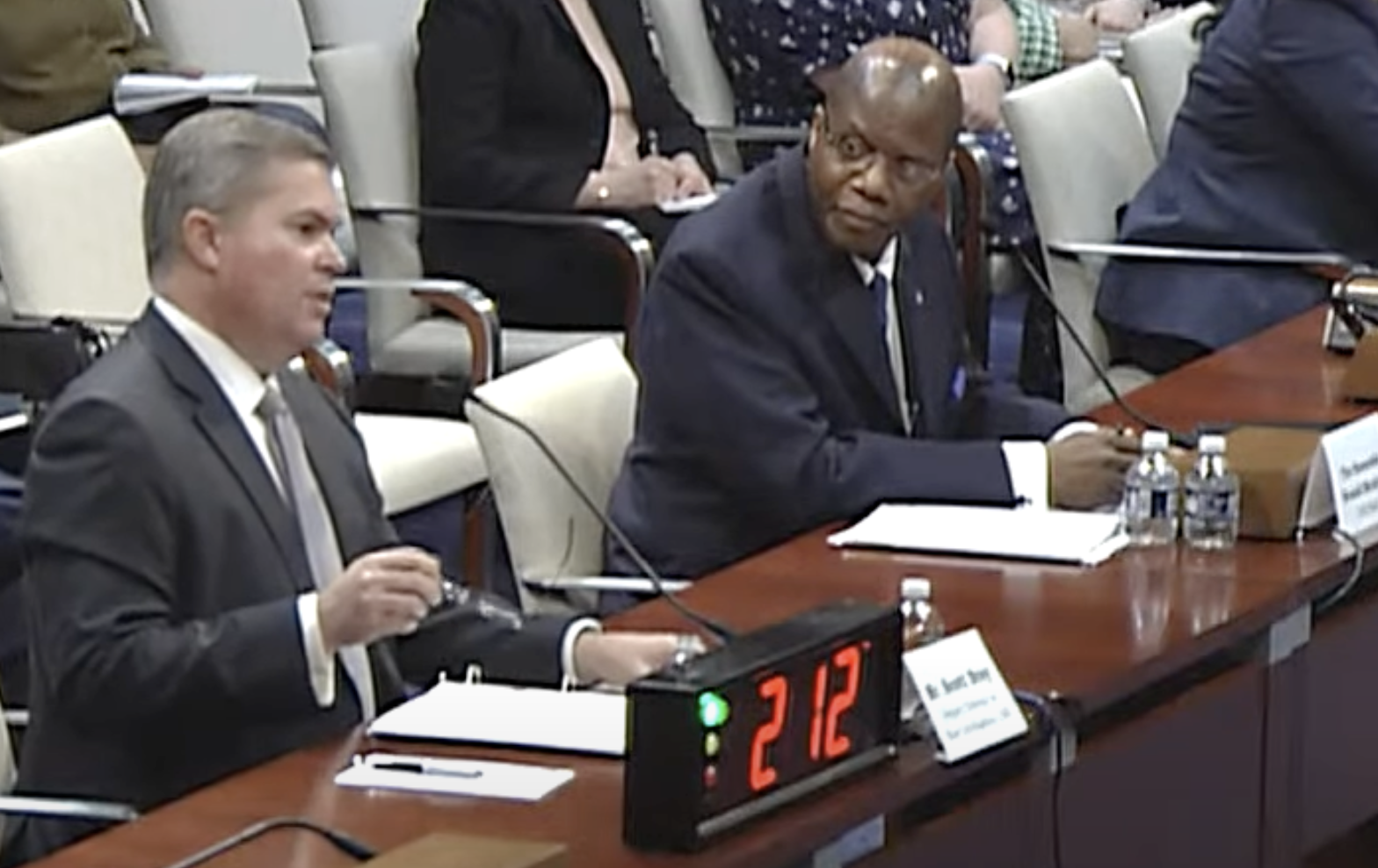
Sen. Angus King (I-Maine) questioned Jay Clayton during a Senate Intelligence Committee hearing on Wednesday to evaluate the nominee's fitness for the role of Director of National Intelligence [1].
The hearing serves as a critical vetting process to determine if Clayton can lead the U.S. intelligence community and maintain neutrality regarding election-integrity issues.
The proceedings took place at the United States Capitol in Washington, D.C., where the committee focused on Clayton's qualifications [1], [2]. Sen. King led a portion of the interrogation, focusing on how the nominee would handle sensitive intelligence related to the security of domestic elections [3], [4].
Committee members sought to clarify Clayton's positions before moving toward a final confirmation vote. The exchange between King and Clayton highlighted tensions regarding the intersection of national security and political narratives surrounding election results [2], [5].
The Director of National Intelligence is responsible for overseeing the entire U.S. intelligence enterprise and providing coordinated briefings to the president. Because the role requires high-level coordination across multiple agencies, the committee scrutinized Clayton's ability to operate without partisan influence [1], [4].
This hearing occurred on July 15, 2026 [1], as part of the broader confirmation process for the administration's intelligence leadership. The committee's questioning aimed to ensure that the future director would prioritize verified intelligence over political pressure [3].
“The hearing serves as a critical vetting process to determine if Clayton can lead the U.S. intelligence community.”
The intensity of the questioning by Sen. King suggests a deep concern among some lawmakers regarding the potential politicization of the Office of the Director of National Intelligence. If Clayton is confirmed, his approach to election-integrity intelligence will likely be a primary point of friction between the executive branch and congressional oversight committees.


