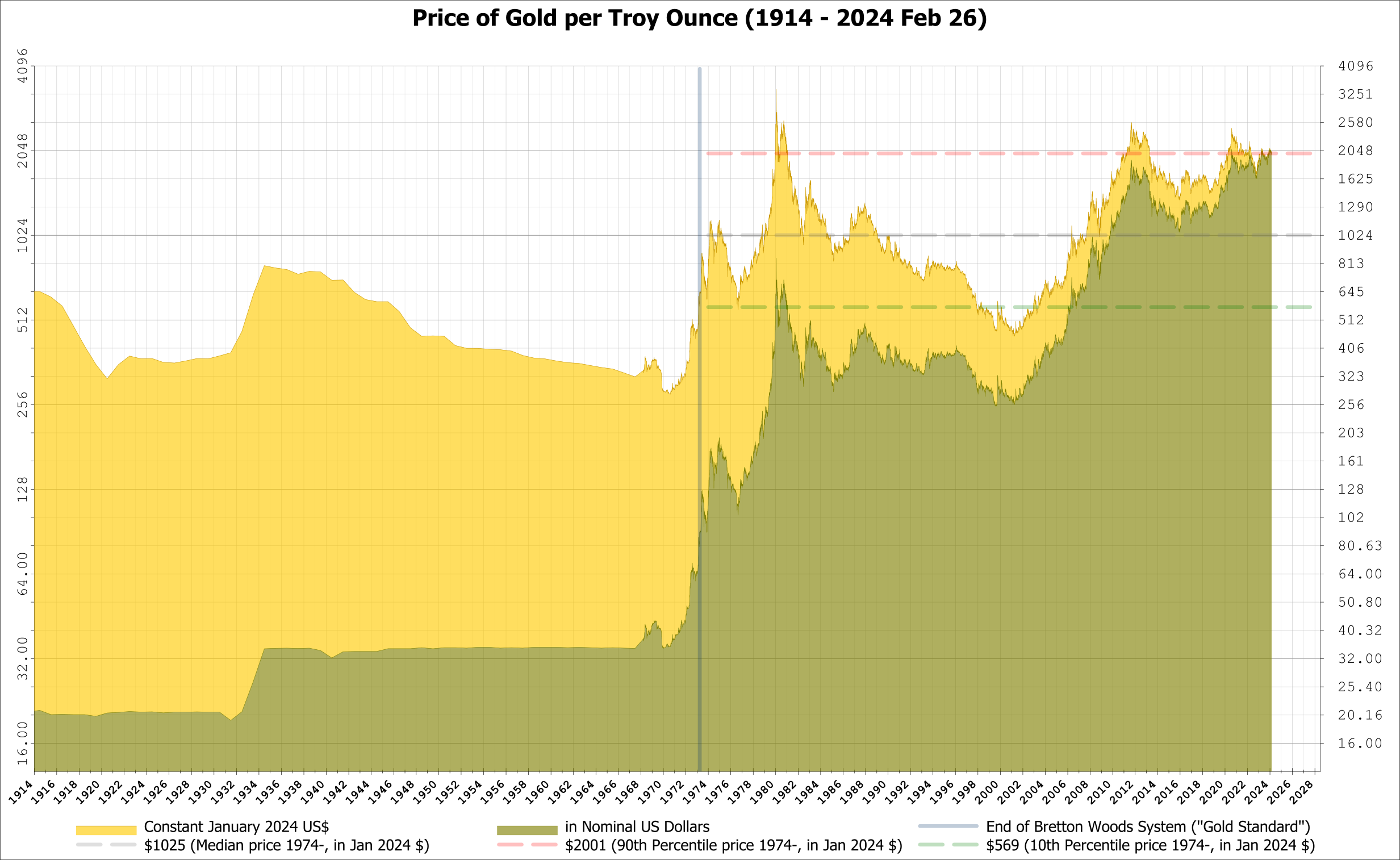
Billionaire hedge-fund manager John Paulson said gold is in the early stages of a long-term bull market and will trend upward.
This outlook suggests a shift in investor sentiment toward safe-haven assets. As global economic volatility increases, the movement of high-profile capital into gold can signal a lack of confidence in traditional currency stability.
Paulson, the founder of Paulson & Co., said his analysis during an appearance on CNBC Television’s program “The Exchange” [1]. He said that gold prices rallied in a second straight day of dip-buying [2]. According to Paulson, the metal is positioned for a sustained climb rather than a short-term spike [3].
The hedge-fund manager identified two primary catalysts for this trend. First, he said central banks will keep buying gold [4]. This institutional demand provides a structural floor for prices, reducing the risk of a sharp collapse during market corrections.
Second, Paulson pointed to heightened geopolitical and economic uncertainty [4, 5]. These factors typically drive investors toward gold as a hedge against inflation, and political instability. He said that the current environment is conducive to a long-term upside trend [3].
Beyond the metal itself, Paulson has looked toward the companies that extract it. He highlighted 10 stocks he considers to have huge upside potential, which include several gold miners [6]. This strategy suggests a dual approach of holding the physical commodity while leveraging the operational growth of mining firms.
Paulson's confidence in the asset class remains high despite broader market fluctuations. He said that the current phase is only the beginning of a larger cycle [3].
“Gold is in the early stages of a long-term bull market.”
The endorsement of gold by a prominent hedge-fund manager reflects a broader macroeconomic hedge against instability. When central banks increase their gold reserves, it often indicates a strategic move to diversify away from the U.S. dollar, potentially signaling a long-term shift in the global monetary landscape.


