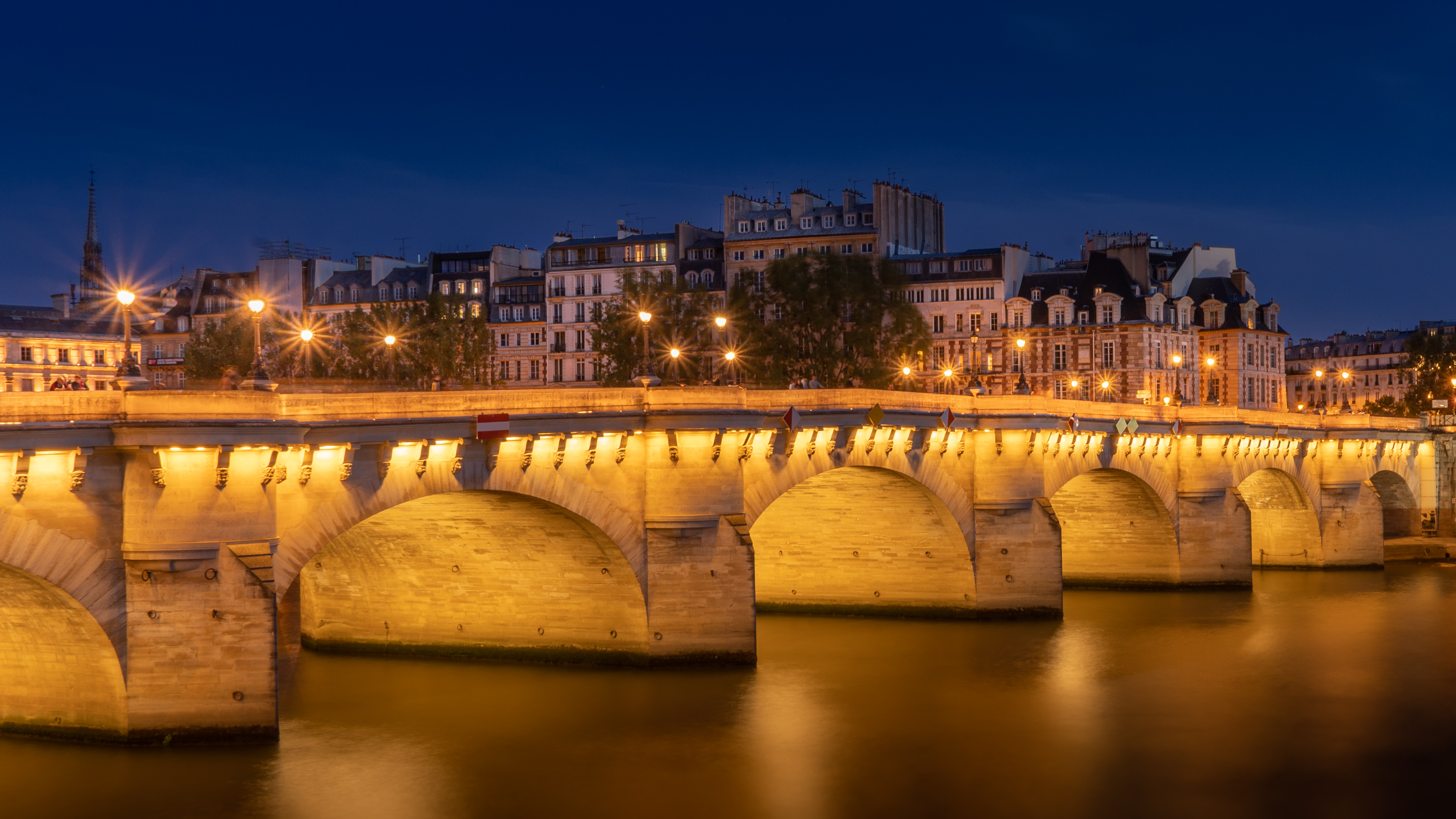
French street artist JR began installing a monumental temporary work that wraps the Pont Neuf bridge in a walk-through cave structure this week [1].
The project transforms one of the most historic landmarks in Paris into a rocky cavern, merging contemporary street art with classical architecture. By altering the physical experience of the bridge, the installation invites pedestrians to engage with the city's urban landscape in a distorted, immersive environment.
Pont Neuf, which officially opened to the public in 1607 [3], is the oldest bridge in Paris. The installation spans the Seine River and serves as a tribute to the pioneering wrapping projects of artists Christo and Jeanne-Claude [1, 4]. JR, often referred to as the "French Banksy," designed the work to spark a dialogue between the past and present on the historic site [1, 5].
Reports said the project involves inflating a giant cave over the bridge [2]. This specific concept is part of a larger artistic exploration for the artist; this installation marks the third iteration of the cave concept in three years [6].
While some reports indicate the transformation is slated for the summer of 2026 [6], other sources said that the process of the bridge "vanishing" under the structure has already begun [2]. The temporary nature of the work ensures that the bridge will eventually return to its original state, maintaining the cycle of ephemeral art in public spaces.
The installation aims to challenge the permanence of stone and history by enveloping it in a temporary, inflatable shell [1, 4]. This approach mirrors the philosophy of Christo and Jeanne-Claude, who famously wrapped the Pont Neuf in the 1980s to change the viewer's perception of the structure.
“The project transforms one of the most historic landmarks in Paris into a rocky cavern.”
By referencing the legacy of Christo and Jeanne-Claude on the same landmark, JR is positioning his work within a lineage of environmental art that questions the relationship between public infrastructure and artistic intervention. The use of an inflatable 'cave' on a 400-year-old bridge highlights the contrast between the enduring nature of Parisian history and the fleeting presence of modern street art.


