
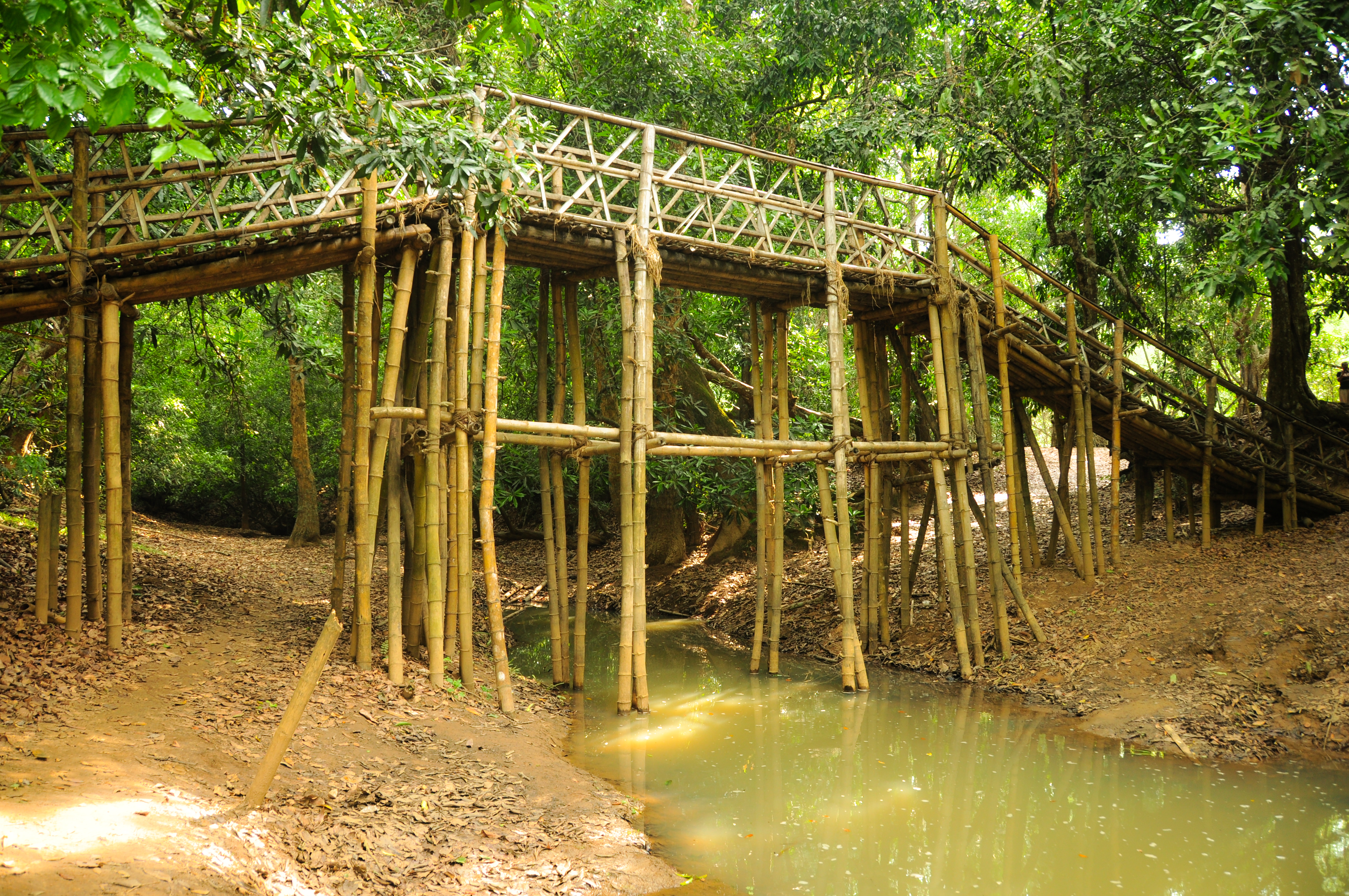
Residents of Kallarkutty, Kerala, continue to use a fragile bamboo bridge for daily travel after floods destroyed their original concrete crossing [1].
The continued reliance on this makeshift structure highlights a critical gap in infrastructure recovery and poses ongoing safety risks for the local population.
The original concrete bridge was washed away during the floods of 2018 [1]. Since that event, the community has depended on the bamboo construction to maintain access to essential services and travel routes [1]. This makeshift bridge serves as the only available path for the villagers, leaving them with no alternative for their daily commutes [2].
Local residents use the structure despite the inherent instability of the materials. The bridge was erected as an emergency measure following the disaster, yet it has remained the primary transit point for years [1]. The lack of a permanent replacement has forced the community to navigate the crossing daily, a necessity that persists despite the fragility of the bamboo [2].
Infrastructure failures of this nature often leave rural populations isolated from urban centers. In Kallarkutty, the absence of a reinforced concrete bridge means that the community remains vulnerable to further environmental disruptions [1]. The current state of the crossing reflects a prolonged delay in the restoration of public works in the region [2].
“The original concrete bridge was washed away during the floods of 2018.”
The persistence of a bamboo bridge as a primary transit route years after a natural disaster indicates a failure in long-term disaster recovery and infrastructure investment. It suggests that rural areas in Kerala may face significant delays in receiving government aid or construction priority compared to urban centers, leaving residents in a state of perpetual vulnerability.

'%2F%3E%0A%20%20%20%20%3Crect%20width%3D'1600'%20height%3D'900'%20fill%3D'url(%23v)'%2F%3E%0A%20%20%20%20%3Cg%20opacity%3D'0.08'%20fill%3D'%23ffffff'%3E%0A%20%20%20%20%20%20%3Ccircle%20cx%3D'1420'%20cy%3D'180'%20r%3D'220'%2F%3E%0A%20%20%20%20%20%20%3Ccircle%20cx%3D'1500'%20cy%3D'760'%20r%3D'120'%2F%3E%0A%20%20%20%20%3C%2Fg%3E%0A%20%20%20%20%3Cline%20x1%3D'80'%20y1%3D'172'%20x2%3D'220'%20y2%3D'172'%20stroke%3D'%23ffffff'%20stroke-width%3D'3'%20stroke-opacity%3D'0.6'%2F%3E%0A%20%20%20%20%3Ctext%20x%3D'80'%20y%3D'140'%20font-family%3D'Inter%2C%20-apple-system%2C%20Helvetica%2C%20sans-serif'%20font-weight%3D'700'%20font-size%3D'28'%20fill%3D'%23ffffff'%20letter-spacing%3D'6'%3EHANNA%20%C2%B7%20NEWS%3C%2Ftext%3E%0A%20%20%20%20%3Ctext%20x%3D'80'%20y%3D'230'%20font-family%3D'Inter%2C%20-apple-system%2C%20Helvetica%2C%20sans-serif'%20font-weight%3D'600'%20font-size%3D'40'%20fill%3D'%23ffffffb3'%20letter-spacing%3D'4'%3EWORLD%3C%2Ftext%3E%0A%20%20%20%20%3Ctext%20x%3D'80'%20y%3D'694'%20font-family%3D'Playfair%20Display%2C%20Georgia%2C%20serif'%20font-weight%3D'800'%20font-size%3D'110'%20fill%3D'%23ffffff'%20letter-spacing%3D'-1'%3EIran%20Launches%20Ballistic%3C%2Ftext%3E%3Ctext%20x%3D'80'%20y%3D'820'%20font-family%3D'Playfair%20Display%2C%20Georgia%2C%20serif'%20font-weight%3D'800'%20font-size%3D'110'%20fill%3D'%23ffffff'%20letter-spacing%3D'-1'%3EMissiles%20at%20Israel%3C%2Ftext%3E%0A%20%20%20%20%3Ctext%20x%3D'80'%20y%3D'870'%20font-family%3D'Inter%2C%20-apple-system%2C%20Helvetica%2C%20sans-serif'%20font-weight%3D'500'%20font-size%3D'22'%20fill%3D'%23ffffff66'%20letter-spacing%3D'2'%3Enews.hanna-ai.com%3C%2Ftext%3E%0A%20%20%3C%2Fsvg%3E)

