
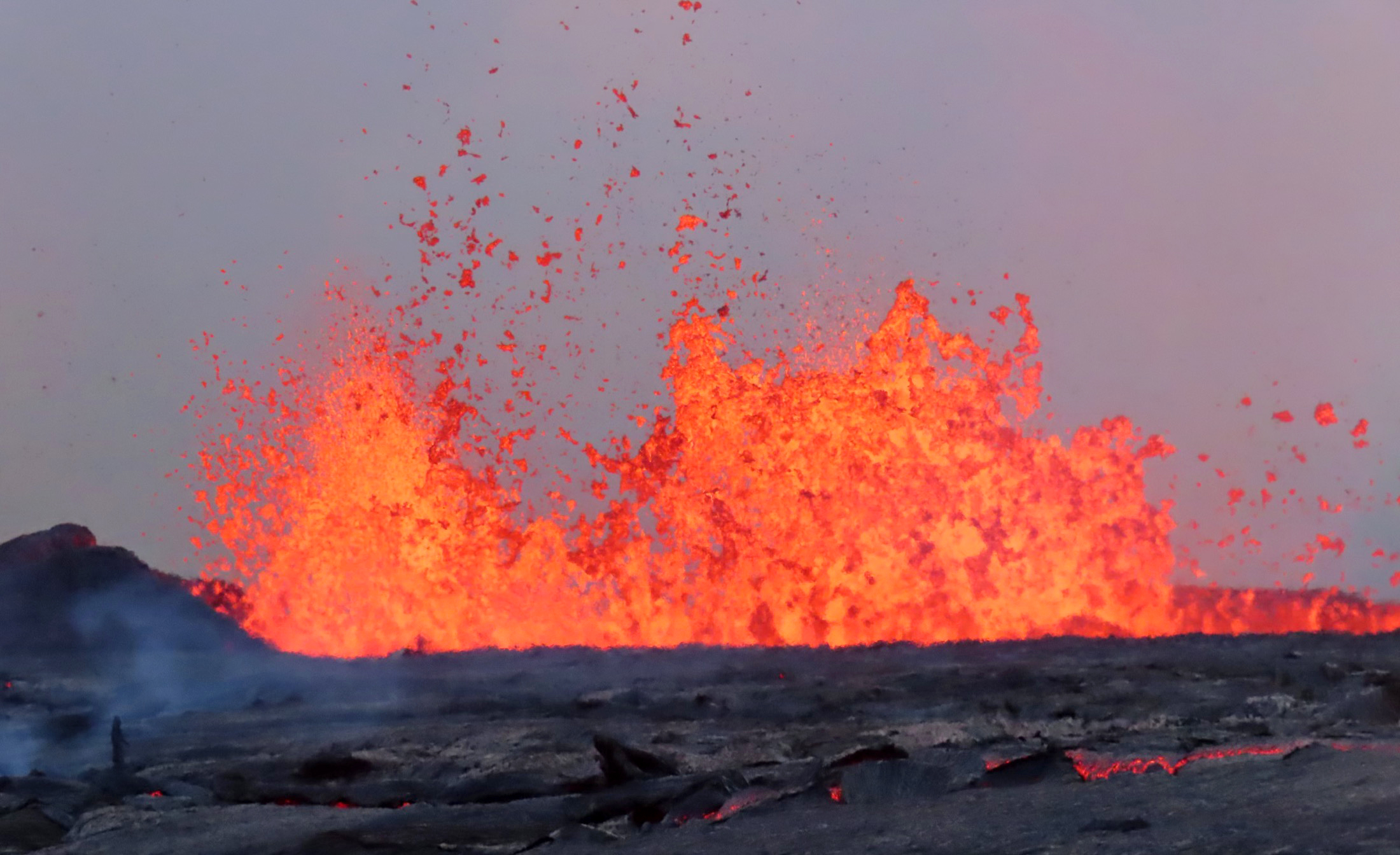
Kilauea volcano on Hawai‘i’s Big Island has begun erupting again, producing lava fountains that are being streamed live to the public [1, 2].
This renewed activity follows a significant seismic event that disrupted the region's stability. The eruption represents a critical shift in the volcano's current cycle, drawing international attention to the volatile nature of the magma system on the Big Island.
The activity was triggered by a magnitude-6.0 earthquake [3] that occurred on May 22, 2026 [4]. The quake destabilized the volcano’s magma system, which prompted the U.S. Geological Survey to forecast renewed eruptive activity [5, 6].
Following the seismic shock, officials monitored the site for signs of surfacing magma. This sequence led to the onset of episode 48 of lava fountaining [7]. This specific phase of activity was expected to begin on Monday, May 27, 2026 [7].
Live footage has captured the lava fountains as they emerge from the earth. The eruption follows a pattern where seismic instability often precedes the movement of magma toward the surface, a process that creates the dramatic fountaining seen in recent days [1, 2].
Local authorities and scientists continue to monitor the flow and intensity of the eruption. The event serves as a reminder of the constant geological activity defining the U.S. Pacific islands, where the interaction between tectonic plates and volcanic hotspots remains highly active [5].
“Kilauea volcano on Hawai‘i’s Big Island has begun erupting again”
The correlation between the magnitude-6.0 earthquake and the subsequent eruption of episode 48 highlights the direct link between seismic triggers and volcanic activity at Kilauea. By tracking these precursors, geologists can better predict eruptive windows, though the unpredictability of magma movement continues to pose challenges for land management and safety on the Big Island.


