
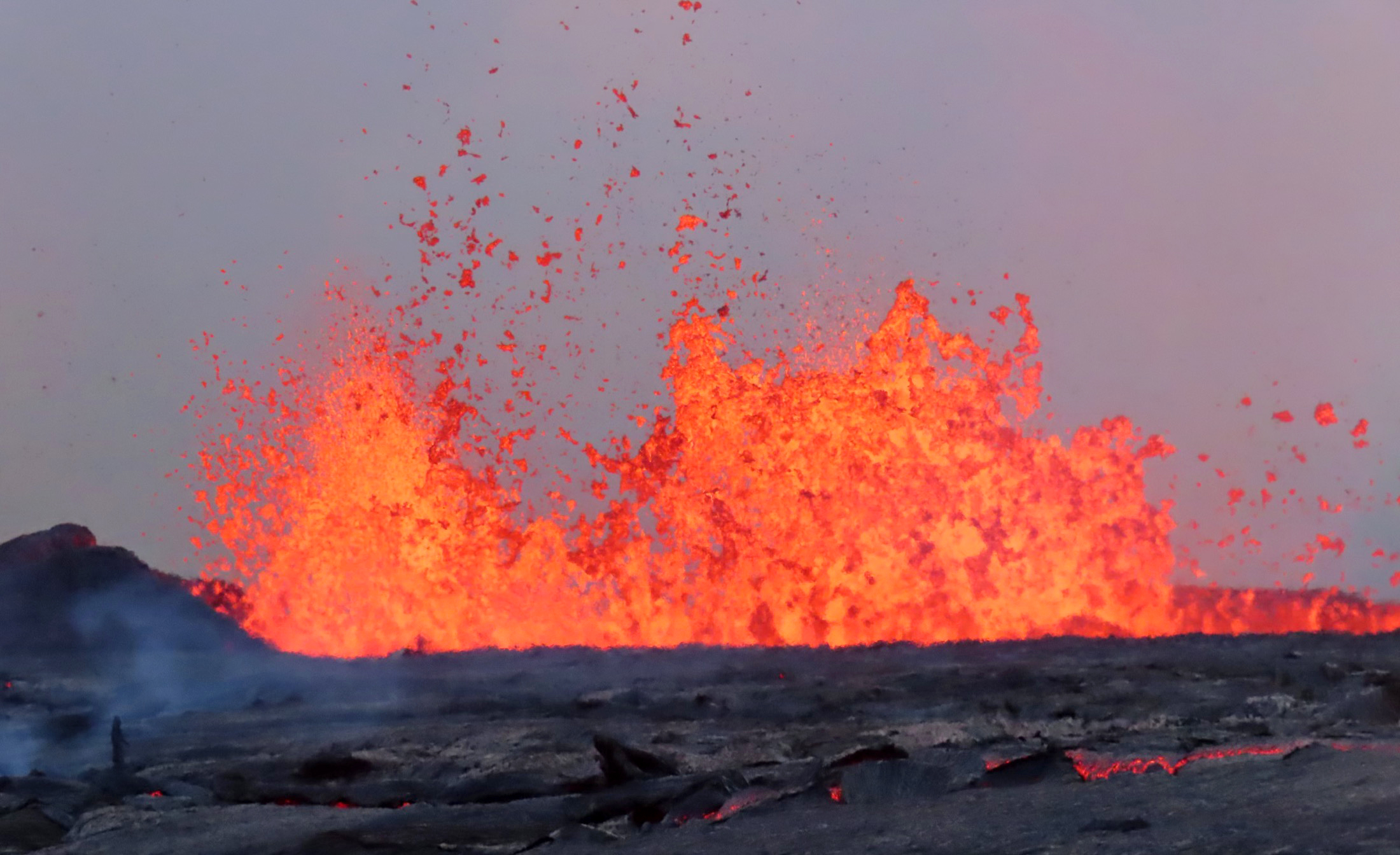
The Kilauea volcano on the Big Island of Hawaii has entered a new eruption phase, sending fountains of lava hundreds of meters high.
As one of the most active volcanoes in the world, Kilauea's frequent activity poses a constant challenge for aviation and local infrastructure on the island. The current event follows ongoing magmatic activity that triggered the eruption.
Reports indicate that the volcano began erupting on a Thursday in April 2026 [2]. The U.S. Geological Survey (USGS) said that the volcano expelled lava at heights reaching up to 425 meters [3]. Other reports placed the maximum height of the lava fountains at 300 meters [2], while some aviation alerts noted fountains exceeding 150 meters [4].
This event represents a significant episode in the volcano's history. Sources differ on the exact count of the eruption sequence, with some reports identifying this as episode 39 [3], and others listing it as episode 45 [2].
"El volcán Kilauea de Hawái, uno de los más activos del mundo, ha entrado en erupción nuevamente este jueves," El Periódico said [2].
The USGS provided data regarding the scale of the event, saying that the volcano expulsa lava a una altura de hasta 425 metros [3].
Monitoring agencies have maintained a high state of alert, particularly for aviation. The red code for aviation was utilized due to the risks associated with high-altitude lava fountains and volcanic ash [4]. This level of monitoring is standard for Kilauea given its history of sudden magmatic shifts.
“The U.S. Geological Survey (USGS) reported that the volcano expelled lava at heights reaching up to 425 meters.”
The recurring eruptions of Kilauea underscore the volatile nature of the Hawaii hotspot. The discrepancy in eruption episode numbering suggests a complex classification system by monitoring bodies, but the consistent reporting of high lava fountains emphasizes the immediate risk to air traffic and the necessity of the USGS's real-time monitoring to prevent aviation disasters.


