
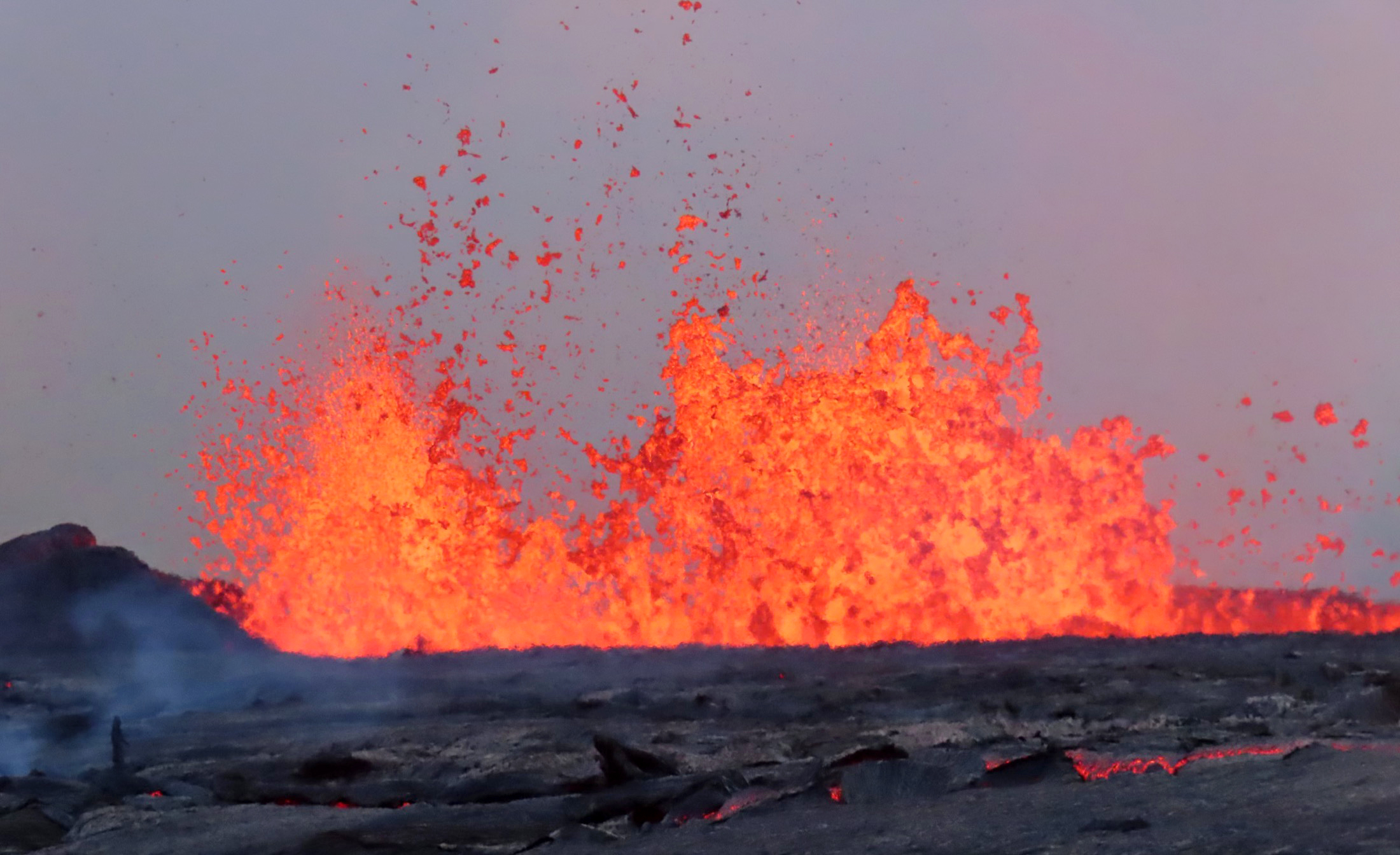
Lava began bubbling up and erupting from the Kilauea volcano on the Big Island of Hawaii on May 14, 2024 [1].
The event highlights the persistent volcanic activity of one of the world's most active volcanoes, requiring constant monitoring by federal agencies to ensure public safety.
The United States Geological Survey (USGS) said the eruptive episode started, with lava fountains observed early Thursday morning around 1:30 a.m. local time [1, 3]. Resident Justin Hirako captured footage of the activity as lava bubbled from the earth [1].
Reports on the scale of the eruption vary. Some data indicate lava reached more than 330 feet [2], while other reports state lava exploded roughly 200 meters into the air [4]. The highest estimate suggests lava fountains rose about 1,000 feet above the ground [3].
This activity is not an isolated event. According to reporting, this was the 45th eruptive episode at Kilauea in the last 18 months [3]. The USGS continues to monitor the site for geological changes and potential risks to the surrounding area [1].
Kilauea's frequent eruptions contribute to the ongoing growth and shaping of the Big Island. The USGS tracks these episodes to provide early warnings, and scientific data on magma movement within the volcanic system [1].
“Lava fountains rose about 1,000 feet above ground”
The frequency of these episodes—45 in 18 months—indicates a period of high instability and active magma transport for Kilauea. This pattern suggests that the volcano is in a sustained phase of activity rather than a single event, necessitating long-term vigilance from the USGS to manage land-use and safety risks on the Big Island.


