
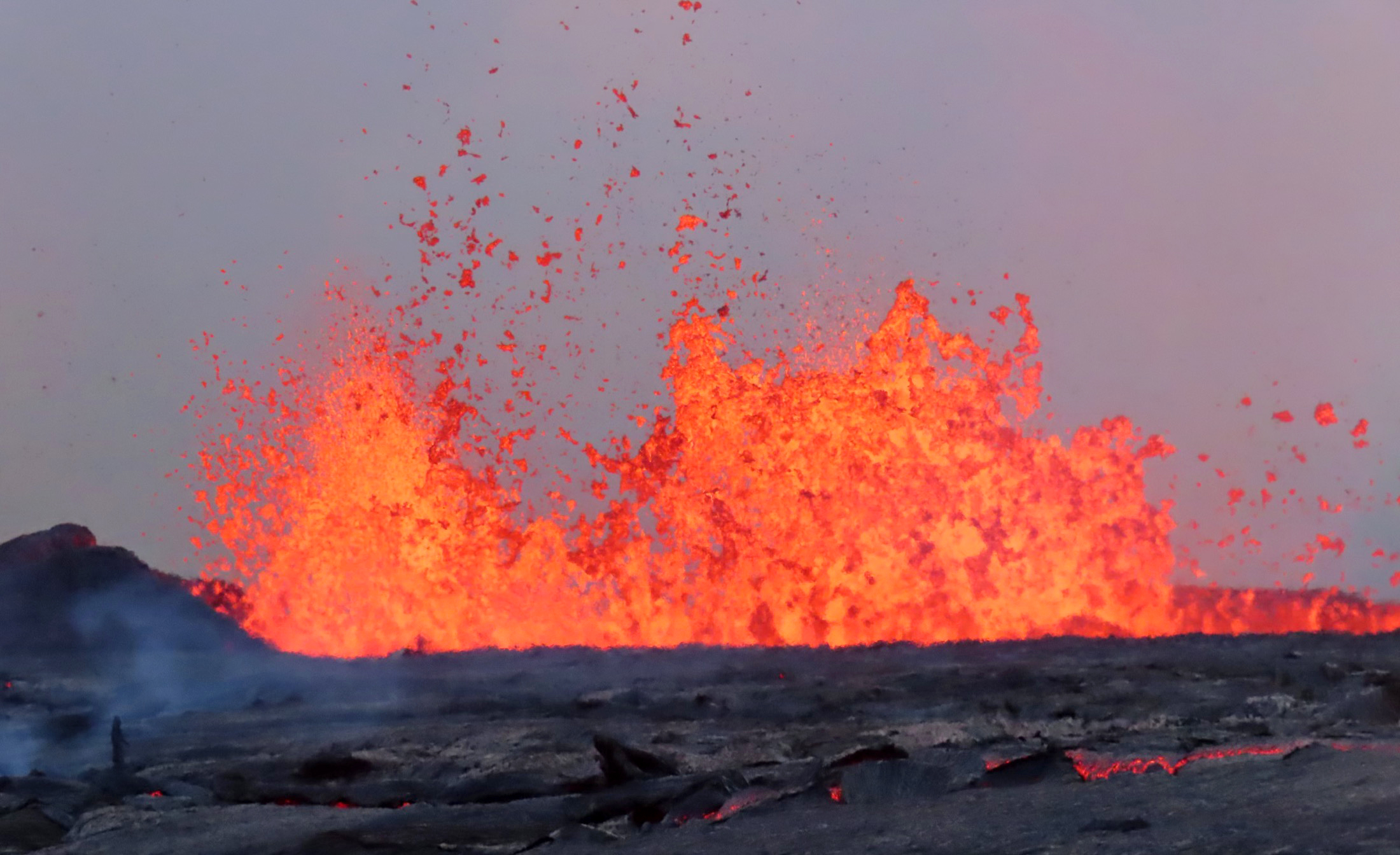
Hawaii's Kīlauea volcano has erupted again, sending lava fountains up to 500 feet into the air [2].
The activity signals a period of high volatility for the Big Island, as geological pressure from magma swelling and seismic shifts creates hazardous conditions for the surrounding area.
According to reports, lava is pouring from multiple vents [4]. The U.S. Geological Survey (USGS) said lava fountains will burst from the summit crater between today and Tuesday [5]. Other reports indicate that these fountains are expected to become particularly intense around June 1, 2026 [1].
The eruption follows a period of significant geological instability. A magnitude 6.0 earthquake recently rocked the Big Island, which increased pressure beneath the surface [3]. This seismic event, combined with magma swelling beneath the summit, prompted the current activity [3].
USGS scientists continue to monitor the volcano as the summit swells. The agency said the window of peak intensity extends through the early part of this week [5]. While the volcano is known for frequent activity, the scale of the current fountains and the preceding earthquake have drawn increased attention from monitoring agencies.
Images from the site show impressive lava fountains and active flows. The eruption is occurring in the summit crater area, where magma has been accumulating. The combination of high-altitude lava plumes, and multiple active vents creates a complex environment for responders and scientists tracking the flow of the lava.
“Lava reached up to 500 feet into the air”
The synchronicity of a magnitude 6.0 earthquake and rapid magma swelling suggests a high-pressure event that could lead to prolonged eruptive activity. Because Kīlauea is one of the world's most active volcanoes, these events provide critical data for the USGS to refine predictive models for volcanic hazards and lava flow patterns in the U.S.


